 English
Einführung
Ein Café hängt an der Kasse ein Schild mit der Aufschrift „Senden Sie eine SMS an COFFEE an 55555 für ein kostenloses Getränk.“ Innerhalb einer Woche haben sich einige Hundert Menschen angemeldet. Jeder hat nach den Texten gefragt, also ist jeder froh, sie zu bekommen. Die Öffnungsraten sind hoch und fast niemand antwortet STOP.
Das ist es, was ein gutes SMS-Opt-In bewirkt. Es verwandelt einen Fremden in einen Abonnenten, der von Ihnen hören möchte. Eine schlechte Nummer bewirkt das Gegenteil und kann dazu führen, dass Ihre Nummer gesperrt wird.
In diesem Leitfaden wird erklärt, was ein Opt-in ist, wie man es hauptsächlich einholt und welche Formulierungen verwendet werden sollten. Außerdem wird erläutert, was aufgezeichnet werden muss und welche Fehler vermieden werden sollten. Es handelt sich um allgemeine Informationen, nicht um Rechtsberatung. Der Wortlaut und die Hinweise zur Aufzeichnung folgen den CTIA Messaging Principles and Best Practices (Mai 2023).
Wichtige Erkenntnisse
- Bei einer SMS-Anmeldung sagt eine Person „Ja, schreiben Sie mir eine SMS“, bevor Sie etwas senden.
- Gute Opt-Ins sind klar. Die Leute sollten wissen, wer Sie sind, was Sie senden und wie oft.
- Sie können sie über ein Webformular, mit einem Stichwort, an der Kasse, per QR-Code oder telefonisch abholen.
- Senden Sie direkt nach der Anmeldung eine Bestätigungstext und geben Sie an, wie Sie aufhören können.
- Halten Sie fest, wann und wie jede Person zugestimmt hat. Es ist Ihr Beweis.
- Verwenden Sie niemals eine gekaufte oder gemietete Liste. Bauen Sie Ihr eigenes.
Was ist ein SMS-Opt-In?
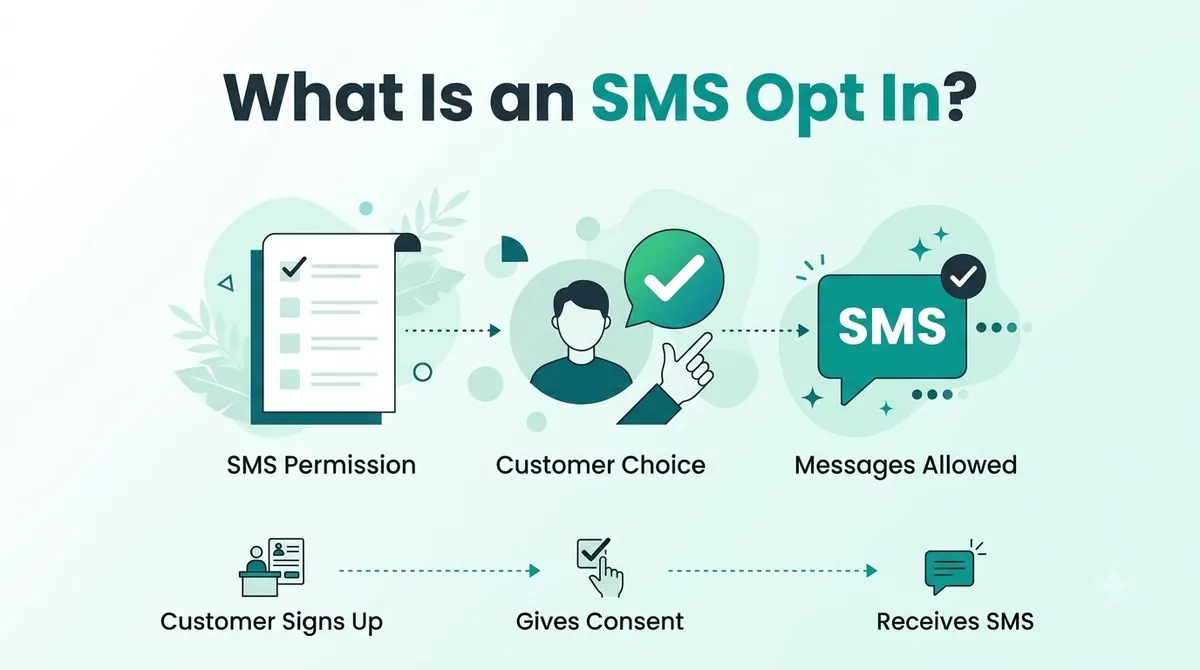
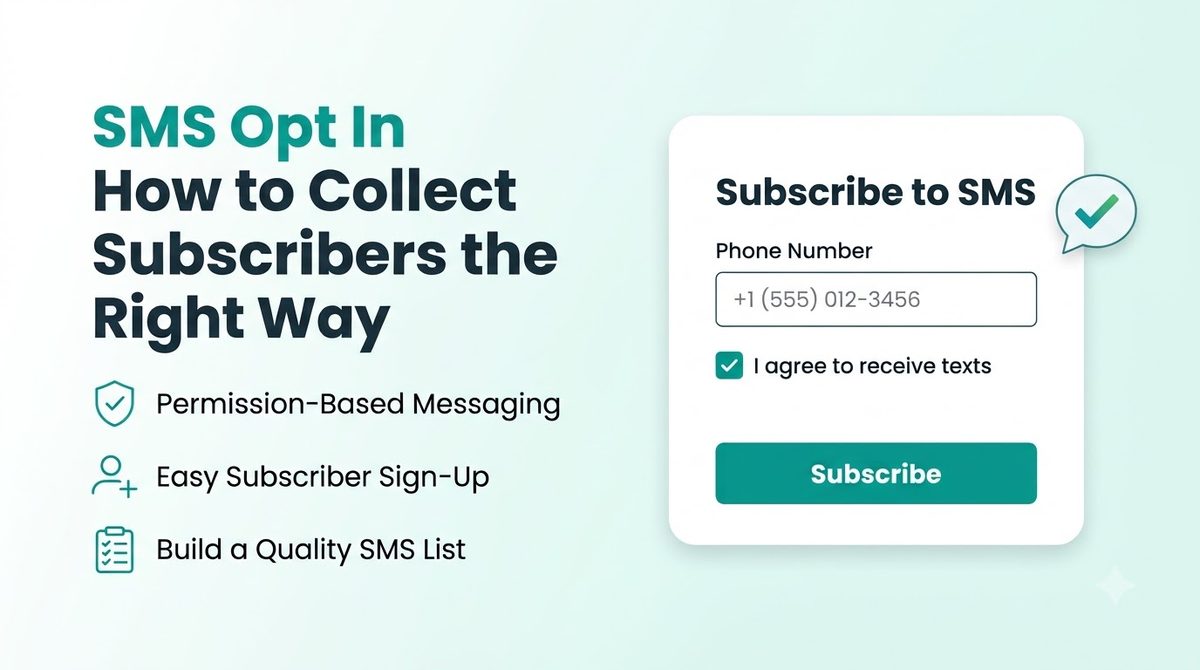
Eine SMS-Anmeldung ist der Moment, in dem ein Kunde zustimmt, Textnachrichten von Ihrem Unternehmen zu erhalten. Es könnte sich um ein angekreuztes Kästchen auf einem Formular handeln. Es könnte sich um eine SMS handeln, die sie Ihnen schicken. Es könnte sich um ein Anmeldeformular in Ihrem Geschäft handeln.
Die CTIA ist die Handelsgruppe der US-amerikanischen Mobilfunkanbieter. In den Leitlinien heißt es, dass Nachrichten erst gesendet werden sollten, nachdem sich die Person dafür entschieden hat. Außerdem heißt es, dass die Opt-in-Details klar sein und nicht in den Allgemeinen Geschäftsbedingungen verborgen bleiben sollten.
In diesem Beitrag geht es um die praktische Seite: Wie man Opt-Ins sammelt, die die Leute verstehen und was Sie nachweisen können.
SMS-Opt-In-Compliance: Die Kurzversion
Für Marketingtexte setzt das US-Recht höhere Maßstäbe als ein einfaches Ja. Sie benötigen eine vorherige ausdrückliche schriftliche Zustimmung, d. h. eine klare, unterzeichnete Vereinbarung, die elektronisch erfolgen kann. Die SMS-Marketing-Compliance enthält mehr Details, als hier reinpasst, und wir behandeln sie in unserem Leitfaden zur TCPA-Konformität.
Möglichkeiten zum Sammeln von SMS-Opt-Ins
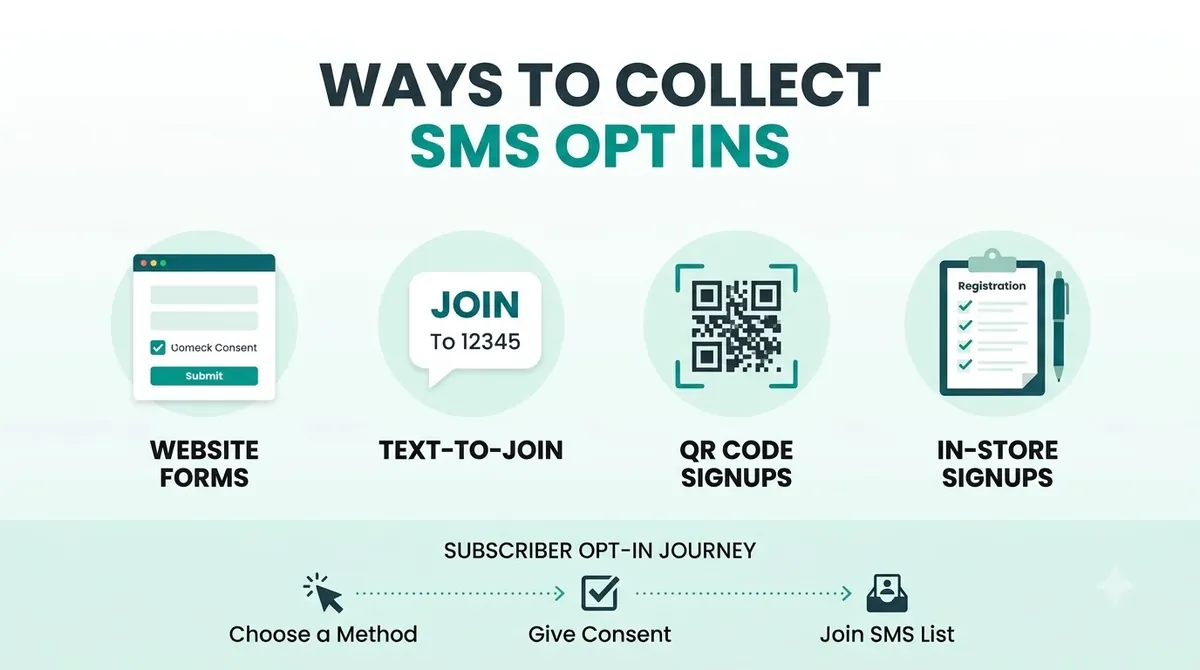
| Verfahren | Wie es funktioniert | Am besten für |
|---|---|---|
| Webformular | Der Kunde gibt seine Nummer ein und kreuzt ein Zustimmungskästchen an | Websites und Landingpages |
| Kontrollkästchen an der Kasse | Ein deaktiviertes Kästchen neben dem Telefonnummernfeld | Online-Shops |
| Stichwort | Der Kunde sendet ein Wort wie JOIN an Ihre Nummer | Schilder, Quittungen und soziale Beiträge |
| QR-Code | Scannen öffnet einen vorab ausgefüllten Text oder ein Formular | Verpackungen, Flyer, Schaufenster |
| Im Laden | Anmeldebogen oder Tablet an der Kasse | Geschäfte, Salons, Restaurants |
| Per Telefon | Der Kunde stimmt während eines Anrufs oder bei einem aufgezeichneten Menü zu | Support-Teams und Kliniken |
Die CTIA listet mehrere Möglichkeiten auf, wie eine Person ihre Einwilligung zeigen kann. Dazu gehören die Eingabe einer Nummer auf einer Website, das Klicken einer Schaltfläche auf einer mobilen Seite und das Senden eines Schlüsselworts. Melden Sie sich an einer Verkaufsstelle an und vereinbaren Sie auch telefonisch die Zählung. Wählen Sie diejenige aus, die zu Ihren Kunden passt. Sie können mehr als eine verwenden.
SMS-Opt-In-Sprache: Was Sie sagen sollten
Klare Formulierungen schützen Sie und Ihre Kunden. Der CTIA-Messaging-Grundsätze und Best Practices Angenommen, ein Call-to-Action sollte fünf Dinge abdecken. Die Leute sollten wissen, was das Programm ist und von welcher Nummer die Nachrichten kommen. Sie sollten wissen, wer Sie sind, welche Anmeldebedingungen gelten, welche Gebühren anfallen und wie Sie sich abmelden können.
Im Klartext sollte Ihre SMS-Opt-in-Sprache Folgendes abdecken:
- Ihr Firmenname.
- Welche Art von Texten werden die Leute erhalten, z. B. Angebote oder Bestellaktualisierungen?
- How often you expect to text.
- That message and data rates may apply.
- How to stop, usually by replying STOP.
- A link to your privacy policy and terms.
SMS Opt In Examples You Can Copy
Your SMS opt in form is the most common place to start, so the first example is for that.
Web form or checkbox (leave the box unticked):
“Yes, text me offers and updates from Your Business at this number. Up to 4 messages a month. Message and data rates may apply. Reply STOP to cancel or HELP for help. Consent is not a condition of purchase. See our Privacy Policy and Terms.”
Keyword sign-up on a sign or receipt:
“Text JOIN to 55555 to get offers from Your Business. Up to 4 msgs/month. Msg and data rates may apply. Reply STOP to cancel, HELP for help. Terms and Privacy at yourbusiness.com/sms.”
In store, on paper or a tablet:
“I agree to receive marketing texts from Your Business at the number above. Frequency varies. Message and data rates may apply. I can reply STOP at any time. Consent is not required to buy anything.”
Swap in your own name, number and message frequency. Marketing consent has extra legal requirements, so ask a lawyer to check the final wording.
Double Opt In SMS and the Welcome Text Message
A double opt-in means two steps. The person signs up, then replies YES to an SMS opt in text message to confirm. It stops people from adding a number that is not theirs and it gives you cleaner proof. The CTIA does not require it. It is a choice, and many businesses use it for exactly those reasons.
Whether or not you use double opt-in, send a welcome text message. For recurring messages, the CTIA says to send a confirmation before any other message. It should include:
- The program name or what the person signed up for.
- How to reach customer care, such as HELP.
- How to opt out.
- That the messages are recurring and how often they will arrive.
- Any fees and how they are billed.
A simple welcome text looks like this:
“Welcome to Your Business texts! Up to 4 msgs/month. Msg and data rates may apply. Reply HELP for help, STOP to cancel.”
Make the first text useful too, such as the promised discount code. People who get what you promised stay subscribed.
How to Get SMS Opt Ins: Step by Step
1. Choose Where People Will Sign Up
Start with the place your customers already are. A checkout box suits an online shop. A till sign suits a cafe. You do not need every method on day one.
2. Write the Offer and the Wording
Tell people what they get. "Get a welcome discount and early access to sales" beats "Sign up for updates". Then add the disclosures from the section above.
3. Do Not Pre-Tick the Box
The customer should take the action. A pre-ticked box makes the consent harder to defend and it annoys people.
4. Send the Confirmation Text
Send it right after sign-up and keep it short. Include your name, how often you will text, how to get help and how to stop.
5. Record Every SMS Consent
The CTIA suggests keeping the time of consent, the method used, the wording the person saw, the campaign, the IP address, the phone number and the name or user ID. A spreadsheet works to start. A platform that logs this for you is better.
6. Honor Opt Outs Fast
Add simple SMS opt out language like "Reply STOP to opt out" to your first message and to regular messages. Handle the reply straight away. See our post on Zwei-Wege-SMS for how replies are handled.
SMS Opt In Best Practices and Common Mistakes
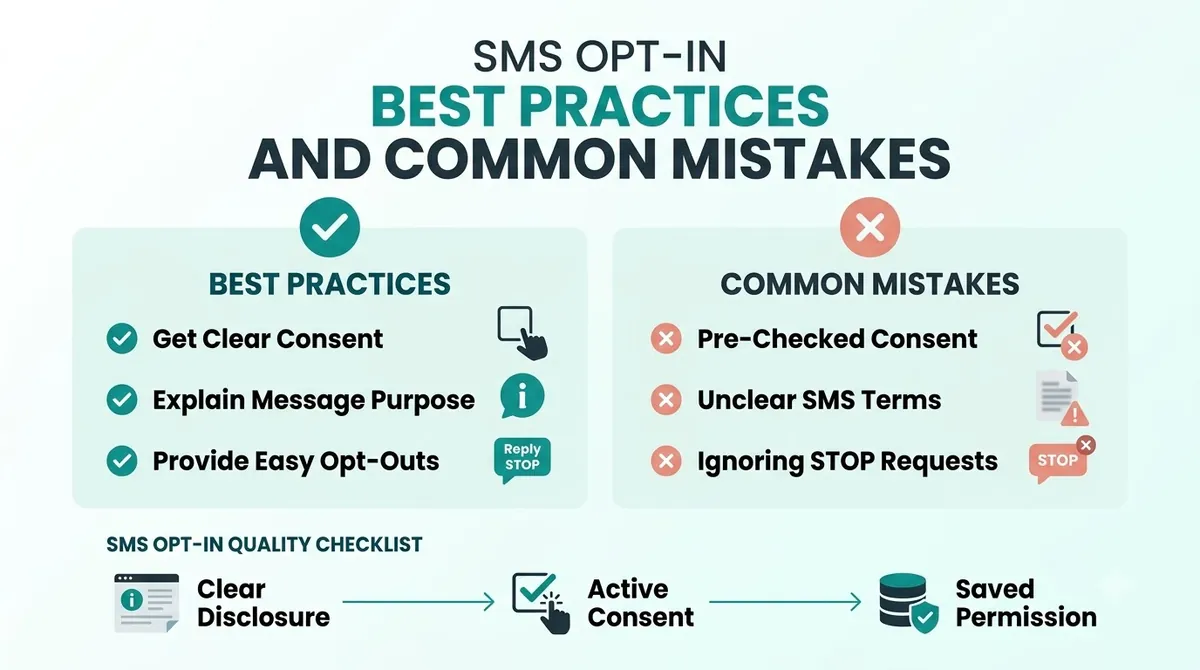
The best practices are the steps above. These are the mistakes that break them.
- Using a bought list. The CTIA says senders should not use opt-in lists that have been rented, sold or shared. Build your own SMS subscriber list, even if it grows slowly.
- Hiding consent in the terms. The opt-in details should be easy to see, not buried.
- Vague promises. If you say "occasional updates" and then send three offers a week, expect STOP replies.
- Reusing consent. An opt-in covers the program the person agreed to. A yes to order updates is not a yes to promotions.
- No proof. If someone says they never signed up and you cannot show when and how they did, you have a problem.
- Forgetting the confirmation text. It tells people it worked and how to leave.
- Sending more than you promised. Keep to the frequency you stated.
SMS Opt In for Small Business: Where to Start
You can set this up in an afternoon:
- Add an unticked consent box next to the phone number field on your form.
- Paste in the wording above and change the details.
- Write your welcome text and test it on your own phone.
- Start a consent log with a date, source and the wording used.
Then run your first campaign to a small group and see how people respond.
SMS Opt In and Carrier Registration
Collecting consent properly also helps with carrier registration. When you register a brand and campaign for 10DLC, you describe how people opt in and often show an example. Clear wording and proof of sign-ups make that easier. Read our 10DLC registration guide for the steps.
SMS Opt In Using SMSLocal
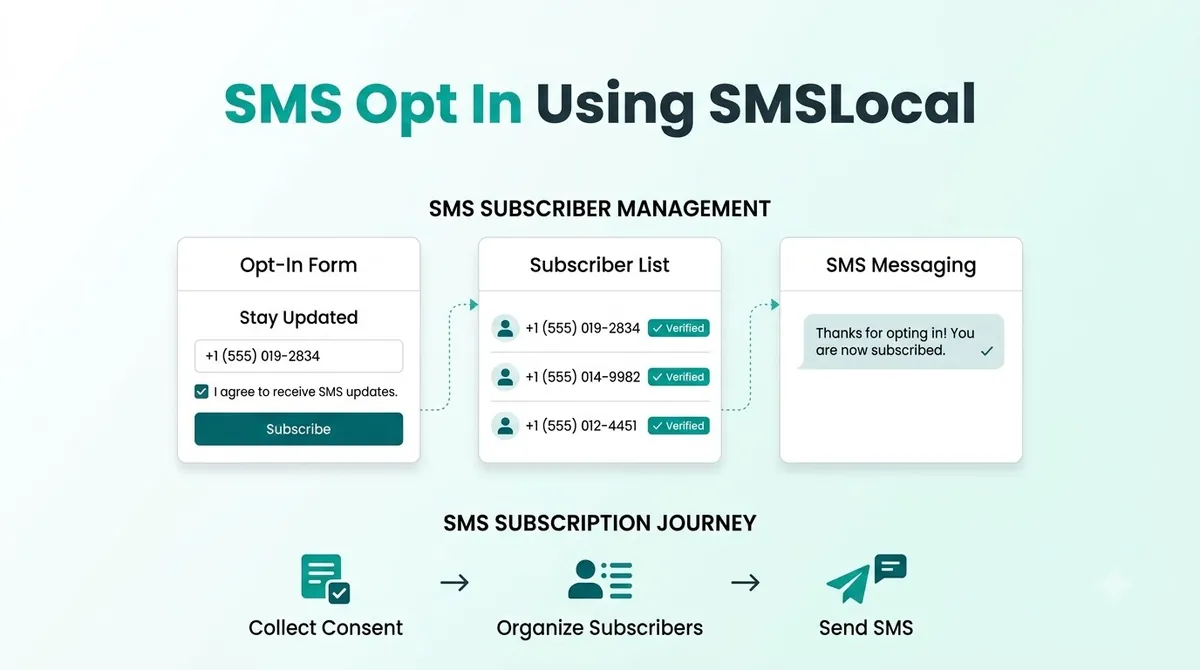
A platform helps you send, track and manage replies. It does not collect consent for you. You still need a clear form, honest wording and a record of every sign-up. Before you launch, work out how STOP replies and your consent log will be handled. The SMSLocal team can explain how opt-outs and replies work for your account.
If you are new to text marketing, our guide to what SMS marketing is is a good place to start.
Make your messages stand out with reliable, fast and effective communication. Elevate your texting game today.
Abschluss
A good SMS opt in is simple. Ask clearly, say what people will get, send a confirmation and keep a record. Do that and your list will be smaller than a bought one, but it will be full of people who want your texts.
Start with one sign-up point and one clear message, then build from there.
Start your free trial with SMSLocal and send registered, reliable messages.
Häufig gestellte Fragen
Dabei erklärt sich ein Kunde damit einverstanden, Textnachrichten von Ihrem Unternehmen zu erhalten. Sie können ein Kästchen ankreuzen, ein Stichwort per SMS senden oder sich im Geschäft anmelden. Sie sollten ihnen erst eine SMS schicken, nachdem sie zugestimmt haben.
Es handelt sich um eine zweistufige Anmeldung. Die Person tritt bei und antwortet dann zur Bestätigung mit JA auf eine SMS. Dies wird von der CTIA nicht verlangt, hilft aber bei der Bestätigung, dass die Nummer der Person gehört.
Darin sollte angegeben sein, wer Sie sind, welche Art von SMS die Leute wie oft erhalten, welche Gebühren anfallen können und wie Sie damit aufhören können. Fügen Sie Links zu Ihren Datenschutzrichtlinien und -bedingungen hinzu.
Ja. Die CTIA listet das Senden eines Schlüsselworts von einem mobilen Gerät aus als eine Möglichkeit auf, wie Menschen ihre Einwilligung zeigen können. Platzieren Sie die vollständigen Offenlegungen neben dem Schlüsselwort auf Ihrem Schild oder Ihrer Quittung.
Nein. Lassen Sie es deaktiviert, damit der Kunde wählt. Dadurch wird die Einwilligung klarer und leichter zu verteidigen.
Zumindest das Datum und die Uhrzeit, wie sich die Person angemeldet hat, den Text, den sie gesehen hat, und ihre Telefonnummer. Die CTIA schlägt außerdem die Kampagne, die IP-Adresse und den Namen oder die Benutzer-ID der Person vor, bei der sie sich bewirbt.