 English
Introduction
Think about the last time a business texted you. Maybe a salon confirmed your appointment, a store told you a package was on its way, or a restaurant sent a coupon for the weekend. You probably read it within a few minutes, and you may have acted on it before you put the phone down.
So what is SMS marketing? At its simplest, a business sends a short text to people who agreed to hear from it, and the message arrives on the screen people check most often.
This guide explains what SMS marketing is, how it works behind the scenes, what you can send, what the rules are in the USA, and how a small team can get started without a big budget.
Key Takeaways
- SMS marketing is permission-based texting for promotions, reminders, updates and conversations.
- Promotional messages need written consent, and every message needs an opt-out.
- Businesses send from registered 10DLC numbers, toll-free numbers or short codes.
- Start with one goal, a clean opt-in list and a short, clear message.
- Track delivery, replies and opt-outs, and adjust from there.
What Is SMS Marketing?
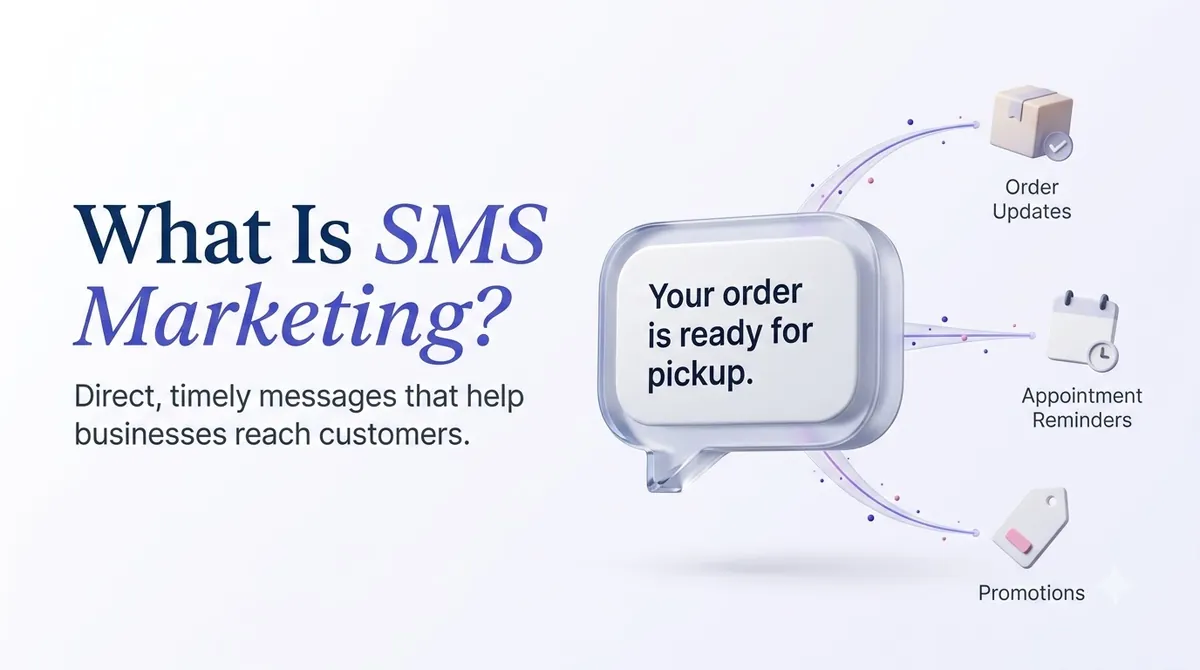
SMS marketing is the practice of sending promotional and customer-focused text messages to people who have given a business permission to contact them. SMS stands for Short Message Service, the same technology behind the ordinary texts on every mobile phone.
The word "marketing" can be misleading. Many of the best SMS messages do not sell anything directly. They remind a patient of an appointment, tell a shopper their order shipped, or give a loyal customer early access to a sale. Selling is one use. Keeping customers informed and connected is the bigger one.
Two things separate SMS marketing from a text a friend sends you:
- It is permission-based. A business may only send marketing texts to people who opted in, and every message needs a clear way to stop receiving them.
- It is sent at scale. Instead of typing one message at a time, a business uses a messaging platform to send the same message, or a personalized version of it, to thousands of contacts at once.
How Does SMS Marketing Work?
You do not need to understand the telecom side to use it, but a quick picture helps you make better decisions.
From your screen to the customer's phone
You write a message in a platform such as SMSLocal and choose who receives it. The platform passes the text to a network of carriers, and the carriers deliver it to each phone. The platform then sends back a delivery report that shows what arrived, what failed and who replied.
The numbers businesses send from
In the United States, businesses typically send from one of three kinds of number:
- A local 10-digit number (10DLC), which looks like an ordinary phone number and feels familiar to customers. Businesses register their brand and campaign before sending.
- A toll-free number, which is popular for customer service and needs its own verification.
- A short code, a five or six-digit number built for high-volume campaigns.
Which one fits depends on how many messages you send and how quickly you need to start. If you are unsure, our guide to A2P messaging explains how business texting differs from texting between friends.
Opt-in comes first
Before anyone gets a marketing text, they have to say yes. That can happen through a web form, a checkbox at checkout, a keyword text such as "Text SALE to 12345," or a paper sign-up sheet at the front desk. Keep a record of how and when each person agreed.
What Kinds of Messages Can You Send?
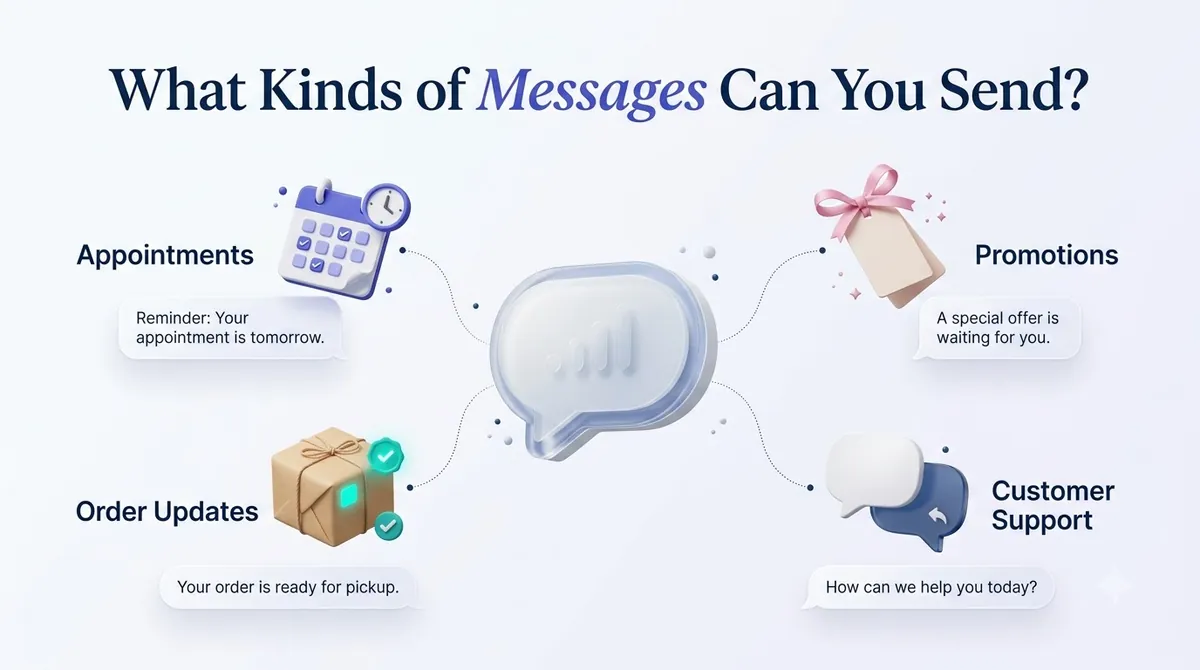
SMS marketing covers more than discount codes. The common message types fall into a few groups.
Promotional messages are the classic use: flash sales, new arrivals, coupons, loyalty rewards, birthday offers and event invitations. These need prior written consent from the customer.
Transactional messages respond to something the customer did: order confirmations, shipping updates, one-time passcodes and receipts. They are expected and useful, which is why customers tend to welcome them. Our post on transactional SMS goes deeper.
Reminders and alerts include appointment reminders, payment due dates, service changes and weather closures.
Conversational messages invite a reply. A customer texts a question, and your team texts back. Two-way conversations turn a broadcast channel into a relationship.
Most businesses mix these. A dental office, for example, might send appointment reminders every week, a recall notice twice a year and a seasonal whitening offer to patients who asked for offers.
Why Businesses Use SMS Marketing
It reaches people where they already are
Almost everyone in the US carries a mobile phone, and a text does not need an app, a login or a data connection to be read. Compared with email, which can sit unopened among dozens of other messages, a text tends to get noticed faster.
It is short by design
A text forces you to say the point in a sentence or two. That discipline helps customers act: a time, a code, a link. If you want to know exactly how long a text can be, read our guide to the SMS character limit.
It supports every size of business
A neighborhood bakery and a national retailer can both send a text. Pricing is usually based on how many messages you send, so a small list costs little to start.
It is measurable
Delivery reports, link clicks and replies show what worked. You can run two versions of a message and keep the winner.
It works alongside other channels
SMS does not have to replace email or social media. A strong plan uses each channel for what it does best, such as email for longer content and SMS for time-sensitive nudges.
The Rules You Need to Follow
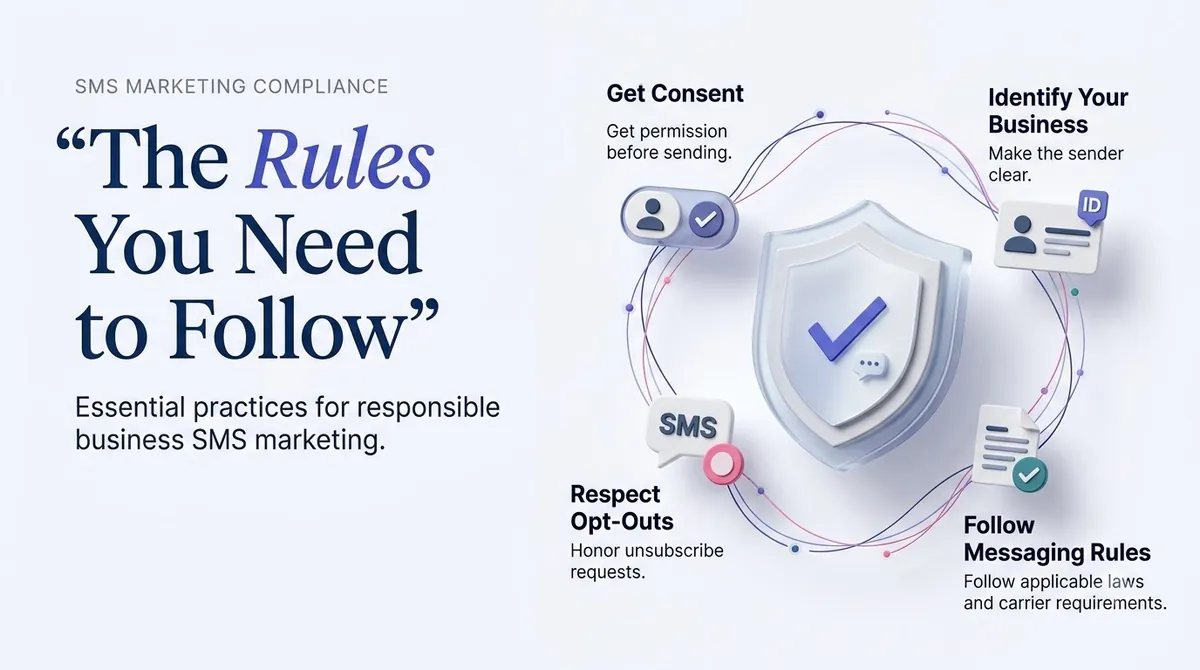
Texting customers is regulated, and breaking the rules can be expensive. These are the basics for US businesses. They are a starting point, not legal advice, so talk to a lawyer about your specific situation.
- Get consent. The Telephone Consumer Protection Act (TCPA) and the FCC's rule at 47 CFR 64.1200 call for prior express written consent for marketing texts sent with an automatic dialing system.
- Identify yourself. Every message should make clear who it is from.
- Offer a simple opt-out. Include wording like "Reply STOP to unsubscribe," and honor requests promptly.
- Respect quiet hours. The FCC rule on telephone solicitations bars them before 8 a.m. or after 9 p.m. in the called party's local time, and many businesses apply the same window to marketing texts.
- Register your campaigns. Carriers expect businesses sending from 10DLC numbers to register their brand and use case before sending.
- Follow carrier and industry guidelines. Industry groups such as CTIA publish messaging standards that carriers enforce.
If you want the carrier side in detail, our 10DLC registration guide covers brand and campaign registration step by step.
Make your messages stand out with reliable, fast and effective communication. Elevate your texting game today.
How to Start SMS Marketing
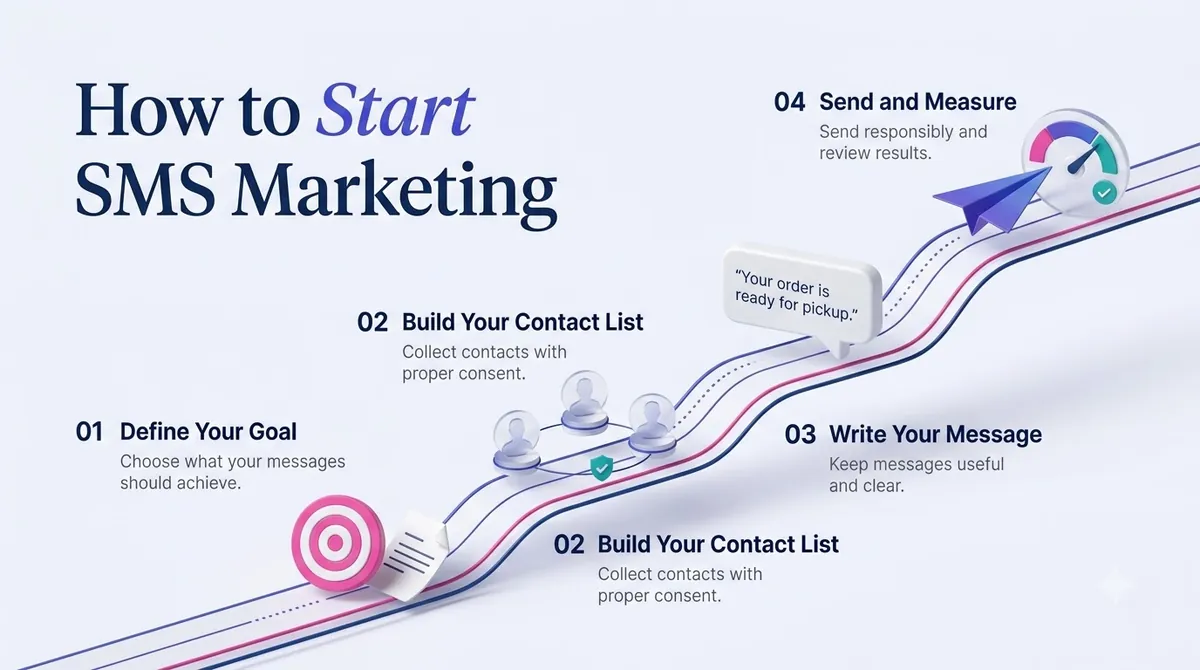
You can launch a basic program in an afternoon. Here is a practical path.
1. Decide what the texts are for. Pick one goal at first, such as reducing missed appointments or bringing back lapsed customers. A narrow goal makes the first campaign easier to judge.
2. Build a list the right way. Add a sign-up box to your website and checkout, put a keyword on a sign in your shop, and ask at the point of service. Tell people what they will receive and how often.
3. Choose a platform. Look for contact management, scheduling, personalization, replies and delivery reporting. With SMSLocal you can import your contacts, write and schedule messages, and review delivery results from one dashboard.
4. Write a message worth reading. Lead with value, say who you are, keep it short and give one clear action. A good example: "Maria's Bakery: Fresh sourdough is out of the oven. Show this text for a free cookie today. Reply STOP to opt out."
5. Pick your timing. Send when people can act on the message. A lunch offer works at 10:30 a.m., not at 9 p.m.
6. Send, measure and adjust. Check delivery, clicks, replies and opt-outs. If opt-outs climb, your messages may be too frequent or off-target.
For ideas on what to send, see our collection of SMS marketing ideas. If you plan to message a large list, our guide to a bulk SMS campaign covers choosing a provider and the features to look for.
Common Mistakes to Avoid
- Texting people who never opted in. Buying a list is a fast way to get blocked and fined.
- Sending too often. A weekly message is plenty for many businesses. Tell people the expected frequency when they join.
- Writing like an ad. A message that sounds like a billboard gets ignored. Write the way you would speak to a regular customer.
- Forgetting the opt-out. Missing STOP language causes compliance problems and annoys customers.
- Ignoring replies. If a customer answers and no one responds, you lose the benefit of a two-way channel.
- Skipping the test. Always send the message to your own phone first. Check the link, the spelling and how it looks.
SMS Marketing vs Email Marketing
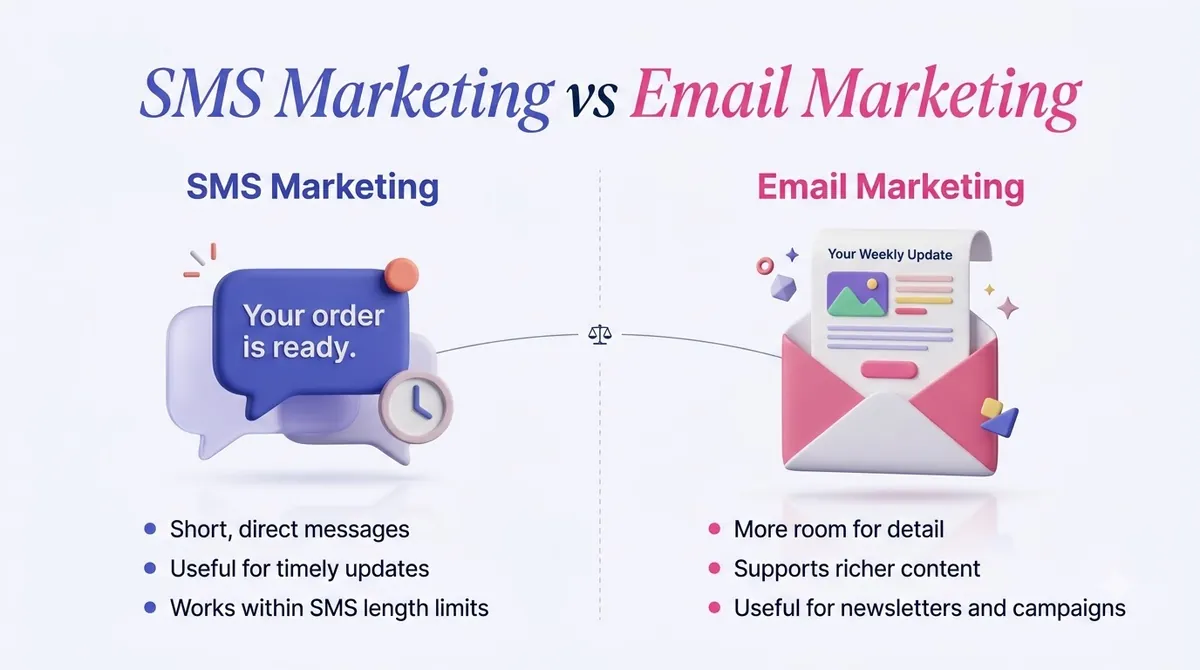
People often ask which is better. The honest answer is that they do different jobs.
Email suits long content, newsletters, receipts with detail and messages people read at a desk. SMS suits short, urgent, personal messages such as a reminder or a limited-time offer. Email also costs less per message at very large volume, while SMS usually reaches people faster. Many businesses use both and send the same offer by email first, then follow up by text for those who have not opened it.
Conclusion
What is SMS marketing, in the end? It is a simple idea: send useful, permission-based text messages to your customers, and measure what happens. Done well, it makes your business easier to hear and easier to do business with. Done poorly, it feels like spam.
The difference comes down to a few habits. Ask before you send. Say something worth a customer's time. Keep it short, make it easy to opt out, and learn from every campaign.
Start your free trial with SMSLocal and send your first campaign today.
Frequently Asked Questions
SMS marketing is sending promotional and customer-focused text messages to people who gave a business permission to contact them. It covers offers, reminders, order updates and two-way conversations.
Yes, when you follow the rules. In the US that means getting prior express written consent for marketing texts, identifying your business, offering a simple opt-out and honoring it promptly. This is general information, not legal advice.
Pricing is usually based on the number of messages you send, plus any carrier and registration fees. Check your provider's current pricing, since amounts change.
SMS suits short, urgent and personal messages and reaches people quickly. Email suits longer content and newsletters. Many businesses use both channels for different jobs.
Businesses typically send from a registered local 10-digit number, a toll-free number or a short code. Which one fits depends on your volume and how quickly you need to start.