 English
Wstęp
Właściciel siłowni postanawia wysłać wszystkim wiadomość SMS z ofertą wiosenną na starym arkuszu zapisów. Wysyłają wiadomość na kilka tysięcy numerów. Jednakże niektórzy klienci nie wyrazili zgody na kontakt poprzez SMS. Kilka tygodni później przychodzi list od prawnika.
Chociaż ten scenariusz nie jest prawdziwy, istnieje prawdziwy problem. W Stanach Zjednoczonych obowiązują przepisy federalne dotyczące kontaktowania się z klientami za pośrednictwem wiadomości tekstowych w celach marketingowych, a wiadomości tekstowe TCPA stanowią ich dużą część. Zgodność z protokołem TCPA gwarantuje, że jesteś po właściwej stronie.
W tym przewodniku wyjaśniono TCPA, w tym, jakie teksty podlegają tej ustawie, jakie kary i jak jej przestrzegać. Jest to przegląd ogólny i zalecamy skonsultowanie się z prawnikiem, aby dowiedzieć się, jak wpłynie to na Twoją firmę. Sprawdziliśmy poniższe zasady z tekstem 47 CFR 64.1200 i 47 U.S.C. 227 w listopadzie 2026 r.
Kluczowe dania na wynos
- TCPA to prawo federalne ograniczające połączenia marketingowe i SMS-y. Zasady są szczegółowo opisane przez FCC w 47 CFR 64.1200.
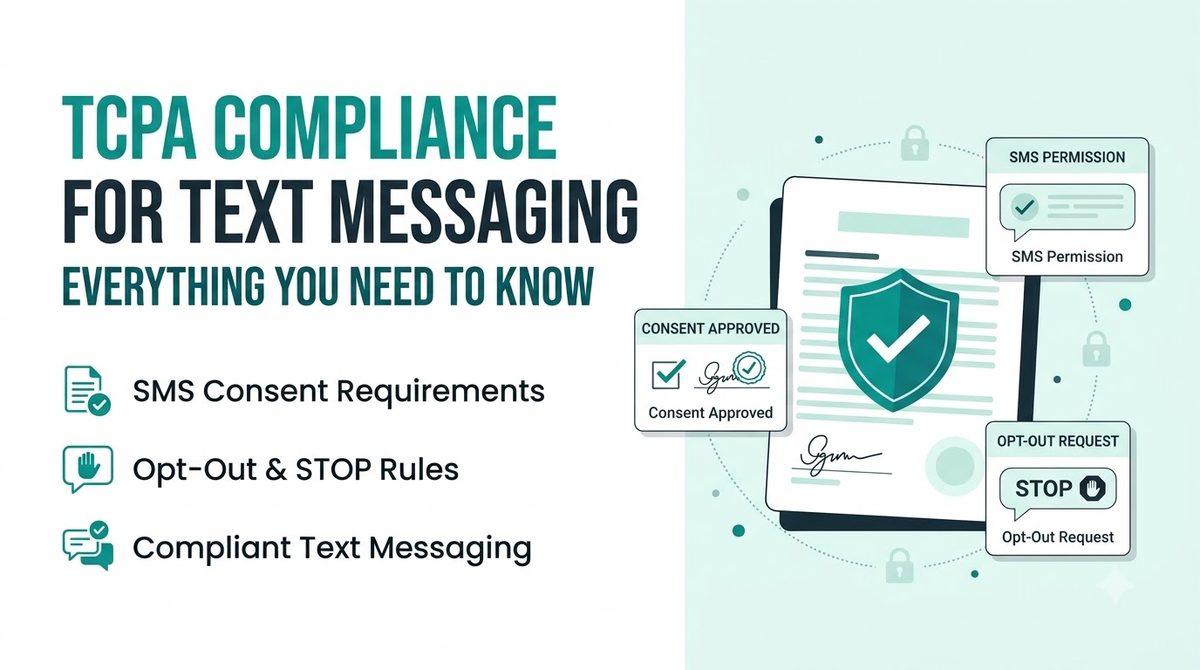
- Wszelkie SMS-y marketingowe przesyłane za pomocą autodialera wymagają uprzedniej wyraźnej pisemnej zgody.
- Klienci mogą wycofać swoją zgodę w dowolnym momencie, korzystając z dowolnej rozsądnej metody. Obejmuje to ZATRZYMAJ, WYJDŹ, ZAKOŃCZ, ODWOŁAJ, Zrezygnuj, ANULUJ i Zrezygnuj z subskrypcji.
- Zgodnie z prawem za każde naruszenie możesz być winien 500 dolarów. Jeśli jednak okaże się, że umyślnie lub świadomie dopuściłeś się naruszenia, kwota ta może wzrosnąć nawet trzykrotnie.
- Upewnij się, że masz dowód pozwolenia, szybko reaguj na wypłaty i wysyłaj SMS-y we właściwym czasie.
Co to jest zgodność z protokołem TCPA?
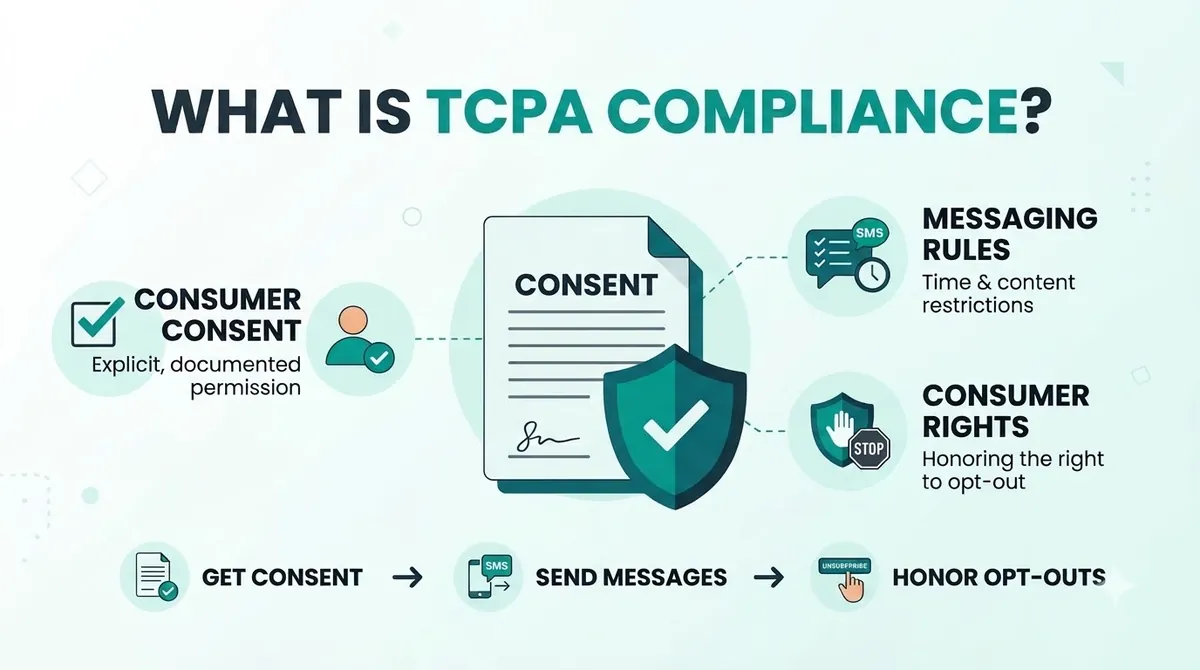
Ustawa o ochronie konsumentów telefonicznych (TCPA) to amerykańskie prawo federalne dotyczące połączeń i SMS-ów. Można go znaleźć w Kodeksie Stanów Zjednoczonych pod adresem 47 U.S.C. 227. FCC stworzyła szczegółowe zasady, które można znaleźć tutaj: 47 CFR 64.1200.
Zgodność z protokołem TCPA oznacza, że przestrzegasz tych zasad. Ogólnie rzecz biorąc, sprowadza się to do uzyskania pozwolenia, pozwolenia ludziom na wycofanie się, rozsądnego czasu i posiadania dowodów. Regulamin dotyczy SMS-ów i połączeń.
Zasada rezygnacji FCC mówi to bezpośrednio. Używa słów „połączenia lub wiadomości tekstowe”.
Zasady dotyczące wiadomości tekstowych TCPA w skrócie
| Reguła | O co cię prosi | Skąd to pochodzi |
|---|---|---|
| Zgoda | Uprzednia wyraźna pisemna zgoda na przesyłanie SMS-ów marketingowych za pomocą autodialera | 47 CFR 64.1200(a)(2) |
| Ujawnienia | Jasne sformułowanie, że dana osoba zgadza się na komunikaty marketingowe i nie musi wyrażać zgody na zakup czegokolwiek | Definicja reguły pisemnej zgody |
| Rezygnacja | Spełnij każdą uzasadnioną prośbę o zaprzestanie działania, najpóźniej w ciągu dziesięciu dni roboczych | 47 CFR 64.1200(a)(10) |
| Ciche godziny | Żadnych próśb telefonicznych przed godziną 8:00 i po 21:00. czas lokalny | 47 CFR 64.1200(c)(1) |
| Nie dzwoń | Żadnych próśb o numery w Krajowym Rejestrze Do Not Call | 47 CFR 64.1200(c)(2) |
| Polityka wewnętrzna | Pisemna polityka „nie dzwonić”, przeszkolony personel i zarejestrowane prośby | 47 CFR 64.1200(d) |
| Kary | 500 dolarów za każde naruszenie, do trzech razy więcej w przypadku umyślnego lub świadomego naruszenia | 47 USC 227(b)(3) |
Kary TCPA: dlaczego zgodność ma znaczenie
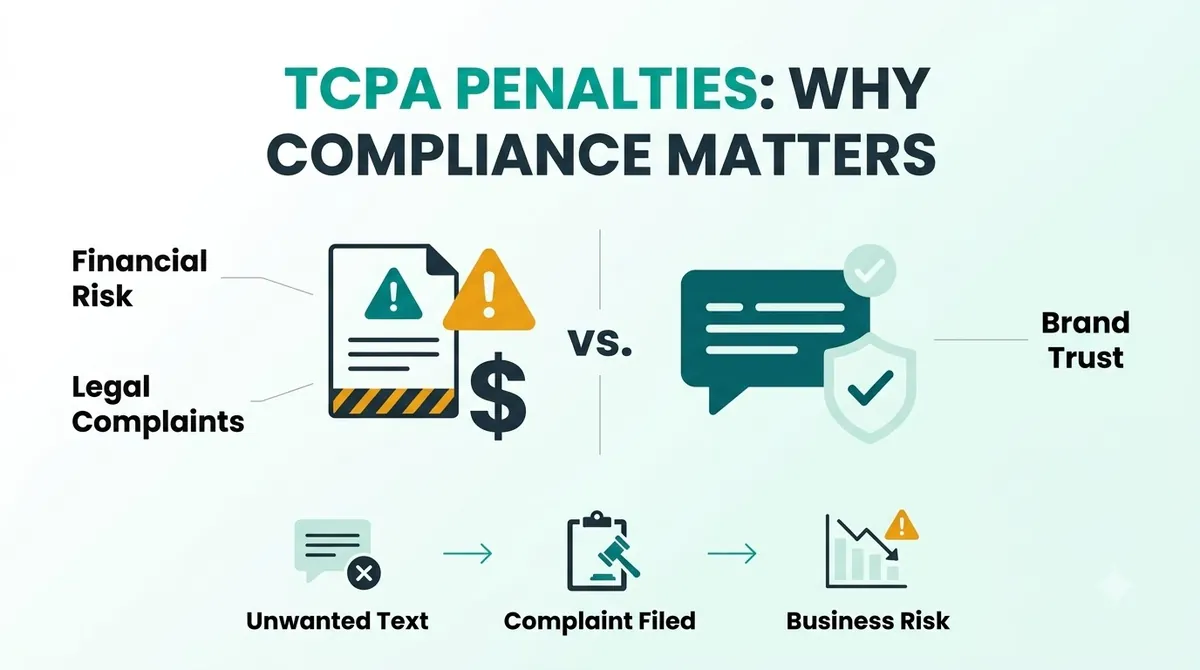
Dzięki TCPA ludzie mogą wnosić roszczenia do sądów stanowych, jeśli zezwala na to prawo stanowe. Pod statut każdy może ubiegać się o odszkodowanie za rzeczywistą stratę lub 500 dolarów za każde naruszenie. Jeżeli okaże się, że umyślnie lub świadomie dopuściłeś się naruszenia, sąd może przyznać aż trzykrotną kwotę.
Może to szybko wzrosnąć, jeśli kontaktujesz się z wieloma osobami. Komisja FCC może również ukarać Cię grzywną. Uzyskanie pozwolenia ma kluczowe znaczenie dla dobrej strategii wysyłania SMS-ów.
Which Texts Does the TCPA Apply To?
The most restrictive rules apply to telemarketing. The FCC rule defines telemarketing as a call or message that encourages the purchase or rental of property, goods or services.
This would include any promotions, coupons, flash sales or product announcements. If you're encouraging a sale then you're marketing.
Informational messages such as order updates or appointment reminders are treated differently. There are also exclusions for some health care messages. We explain the differences between transactional SMS and promotions in our transactional SMS guide.
If unsure, always go for the stricter option.
TCPA Compliance Checklist for Texting
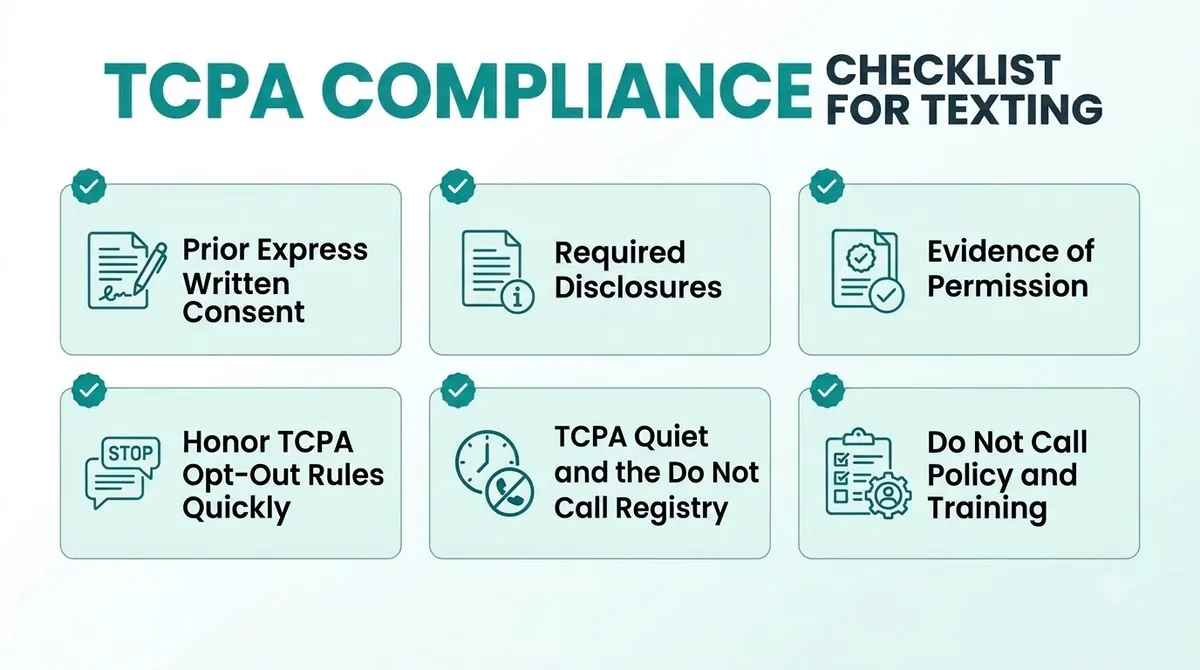
1. Prior Express Written Consent
If you're sending a marketing text using an automatic telephone dialing system, you need prior express written consent. This is defined by the FCC as getting permission through a signed written agreement. The agreement needs to give clear permission to send marketing messages. It also needs to include the phone number.
You can use electronic or digital signatures. This could be a checkbox on a website or a keyword reply. Good TCPA consent starts with your SMS opt in form, so it's worth getting that right.
2. Required Disclosures
The agreement must make clear to the customer that by signing they are authorizing you to send marketing messages using an autodialer or pre-recorded voice. It also needs to state they are not required to agree to this to purchase anything.
This should be displayed next to the sign-up button. Ask your lawyer to check. Here's wording a lot of businesses start from:
“By checking this box, I agree to receive marketing text messages from Your Business at the number I entered. Messages may be sent with an automatic dialing system. Consent is not a condition of any purchase. Message and data rates may apply. Reply STOP to cancel.”
3. Evidence of Permission
You'll need evidence if a customer claims they never gave you permission. The CTIA recommends noting down when they gave their permission, how they did so and what they saw. This can be found in their Messaging Principles and Best Practices.
This should be stored for every contact. At a minimum, this should be put into a spreadsheet. Ideally use a messaging platform that tracks this automatically.
4. Honor TCPA Opt-Out Rules Quickly
Customers can withdraw their permission to be contacted by any sensible method. Any reply with the words STOP, QUIT, END, REVOKE, OPT OUT, CANCEL or unsubscribe will count. If the customer uses other wording, it still counts if a reasonable person would understand it to be an opt-out.
You cannot specify any one method. You must honor requests within a sensible time frame (no longer than 10 business days). Ideally stop texting immediately.
You can send a single confirmation text after they've opted out. This shouldn't be marketing and should be sent within 5 minutes. Add simple SMS opt out language like "Reply STOP to opt out" to your messages. See our guide on two-way texting for more details.
5. TCPA Quiet Hours and the Do Not Call Registry
The FCC rule states you shouldn't make telephone solicitations to residential subscribers before 8am or after 9pm in their local time. The TCPA do not call rules also stop you contacting numbers on the National Do Not Call Registry.
Many businesses avoid trouble by texting between 8am and 9pm. They also clean their lists of numbers on the registry. This is an easy habit to get into.
There's one catch. A federal court in Delaware (King v. Bon Charge, decided April 30, 2026) threw out a quiet hours claim because the person had agreed to get the texts. The same court let a Do Not Call claim carry on, as there was no signed written agreement. That's one court, so it doesn't bind the others. A law firm's write-up says courts may well disagree. Stay inside the window and check the customer's time zone, not yours.
6. Do Not Call Policy and Training
Any business making telemarketing calls must have systems in place to manage a Do Not Call list. The FCC rule outlines the minimum standards you must follow. You'll need a written policy that can be provided on request. All staff involved in making telemarketing calls must be trained. You must also log any opt out requests.
This is often overlooked by small teams. Simply write a one-page policy and share it with your team. Update it when your tools change.
Common TCPA Compliance Mistakes
- Using old or purchased lists. Just because the customer is on the list doesn't mean they've given permission. The CTIA also recommends you don't use rented, sold or shared opt-in lists.
- Vague permission. An "I agree to the terms" checkbox may not satisfy written permission.
- No evidence. If you don't have evidence of when and how they opted in, you won't be able to defend your text.
- Ignoring "please stop". Customers may not always type STOP in uppercase.
- Texting late. Sending a promotion late at night is a risk, and 7pm in California is 10pm in New York.
- Opt-outs not applied across all lists. If a customer opts out on one tool, you must update all lists.
- Thinking permission carries over. The CTIA says an opt-in only applies to the program the customer agreed to.
TCPA Compliance for Small Business: Where to Start
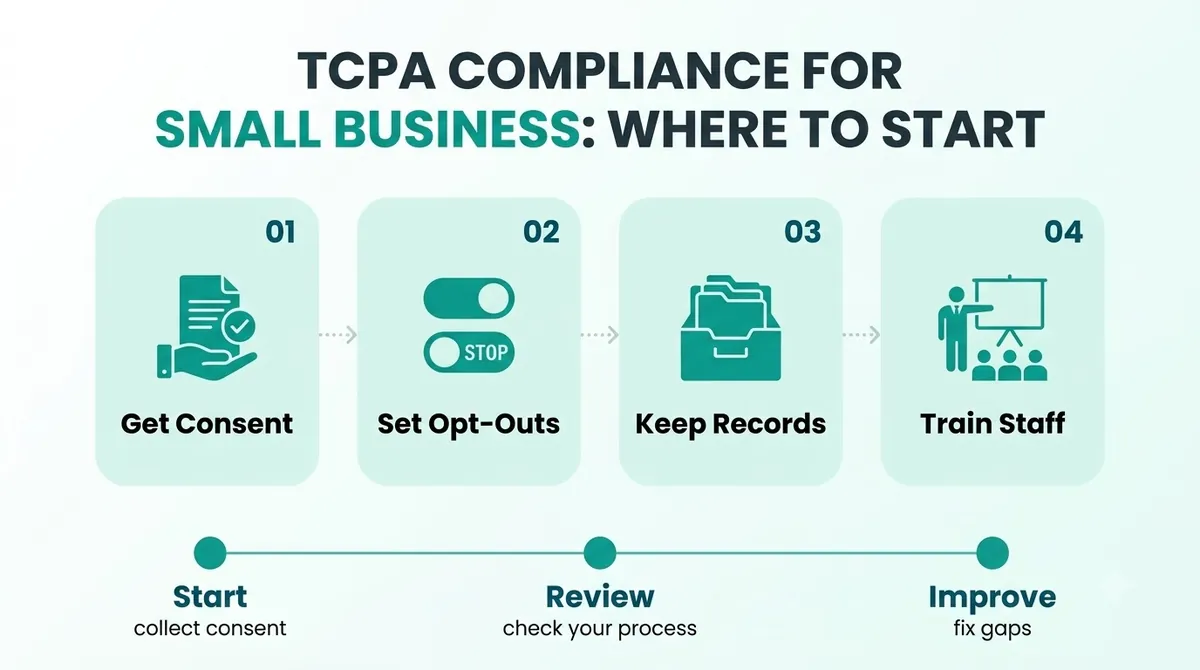
You don't need a legal team to get the basics right. Start with three things this week:
- Fix your sign-up form so it has clear written permission wording.
- Start a simple consent log. A spreadsheet is fine.
- Set a sending window of 8am to 9pm in your customer's time zone.
Then pay a lawyer for an hour to check the wording. It costs far less than a claim.
TCPA Compliance and 10DLC Registration
The TCPA is a law and 10DLC registration is a carrier requirement. You'll need to do both, as TCPA SMS compliance and carrier rules are two separate jobs.
Getting your brand and campaign registered will help your messages go through. It still doesn't replace the need for permission. Carriers also want evidence of how people are opting in. See our 10DLC registration guide for more details.
Are There Extra Rules in Your State?
Perhaps. Some states have their own texting laws. Check the rules for each state your customers are in. Ask a lawyer if you're planning to send a large campaign.
TCPA Compliance Using SMSLocal
Using a messaging platform will help you with delivery and tracking. However it is your responsibility to ensure you have permission, and SMS marketing compliance is down to the sender whichever tool you use. If you're using SMSLocal, you'll need to track this yourself. Set up how you'll handle opt outs before launching your campaign. Speak to the SMSLocal team to find out how replies and opt outs work for your account.
To learn more about texting overall, take a look at our simple guide to what SMS marketing is.
Make your messages stand out with reliable, fast and effective communication. Elevate your texting game today.
Wniosek
TCPA compliance is something you should get into the habit of. Make sure you have clear written permission and evidence, respond to opt outs quickly, text at the right times and have a Do Not Call policy in place for your team.
When it's done, you'll find it's easier to defend your texts and your customers will have more trust in them. If you're ever unsure, ask a lawyer.
Start your free trial with SMSLocal and send registered, reliable messages.
Często zadawane pytania
Oznacza to przestrzeganie zasad TCPA i FCC podczas wysyłania SMS-ów. Potrzebujesz odpowiedniego pozwolenia, łatwego sposobu rezygnacji, rozsądnego czasu wysyłania i dokumentacji potwierdzającej to wszystko.
Tak. Zasady FCC obejmują zarówno SMS-y, jak i połączenia. Zasada rezygnacji mówi nawet o „połączeniach lub SMS-ach”.
Podpisana, pisemna umowa, która wyraźnie pozwala firmie wysyłać komunikaty marketingowe pod określony numer. Musi zawierać wyraźne oświadczenie, a podpis może być elektroniczny.
Ktoś może domagać się faktycznej straty lub 500 dolarów za każde naruszenie, w zależności od tego, która kwota jest większa. Jeśli było to umyślne lub świadome, sąd może przyznać maksymalnie potrójną kwotę. Komisja FCC również może ukarać Cię grzywną.
Zgodnie z przepisami FCC nie przed godziną 8:00 ani po 21:00 czasu lokalnego klienta. Sądy wciąż spierają się, czy chroni to osoby, które się zdecydowały, więc większość firm po prostu pozostaje przy oknie.
W rozsądnym terminie i nie później niż dziesięć dni roboczych zgodnie z przepisami FCC. Realistycznie rzecz biorąc, przestań natychmiast.