 English
Introduzione
Un bar mette un cartello vicino alla cassa: "Scrivi COFFEE al 55555 per un drink gratis". Nel giro di una settimana si sono iscritte alcune centinaia di persone. Ognuno ha chiesto i testi, quindi ognuno è felice di riceverli. I tassi di apertura sono alti e quasi nessuno risponde STOP.
Questo è ciò che fa un buon SMS opt-in. Trasforma un estraneo in un abbonato che vuole avere tue notizie. Uno cattivo fa il contrario e può bloccare il tuo numero.
Questa guida spiega cos'è un opt-in, le principali modalità per raccoglierne uno e la dicitura da utilizzare. Copre anche cosa registrare e gli errori da evitare. Si tratta di informazioni generali, non di consulenza legale. La formulazione e i consigli sulla tenuta dei registri seguono i principi e le migliori pratiche di messaggistica CTIA (maggio 2023).
Punti chiave
- Un SMS opt-in è una persona che dice "sì, mandami un messaggio" prima di inviare qualsiasi cosa.
- I buoni opt-in sono chiari. Le persone dovrebbero sapere chi sei, cosa invierai e quanto spesso.
- Puoi ritirarli tramite web form, con una parola chiave, alla cassa, tramite QR code o al telefono.
- Invia un messaggio di conferma subito dopo la registrazione e includi come interrompere.
- Tieni un registro di quando e come ciascuna persona ha concordato. È la tua prova.
- Non utilizzare mai un elenco acquistato o noleggiato. Costruisci il tuo.
Che cos'è l'attivazione via SMS?
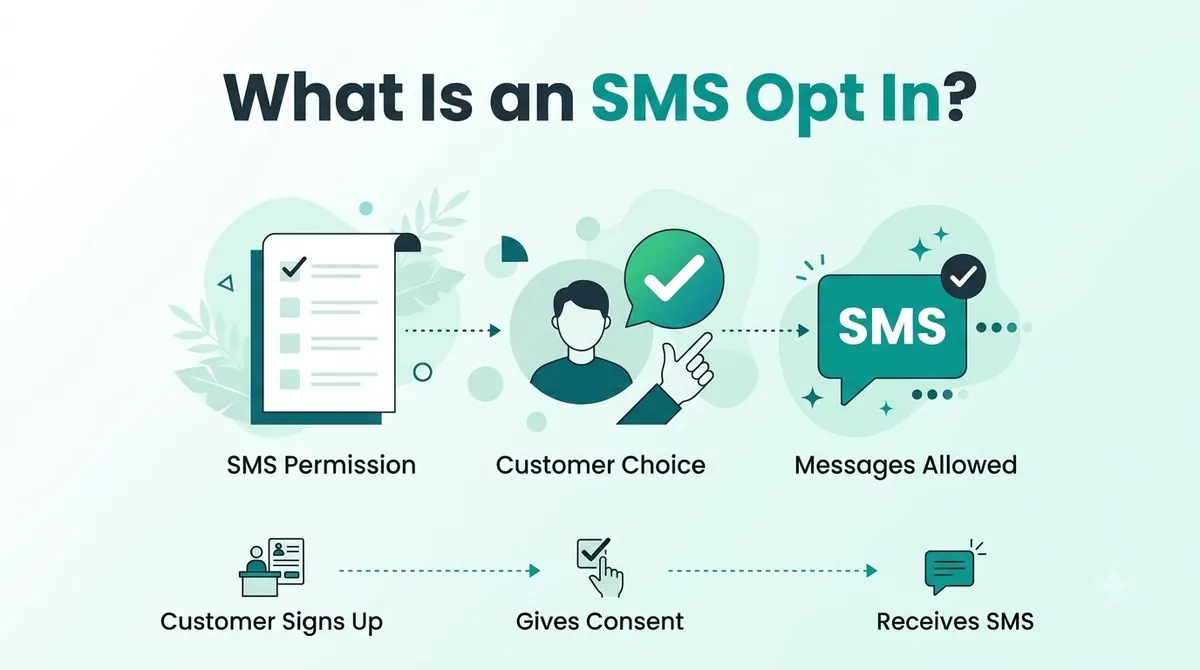
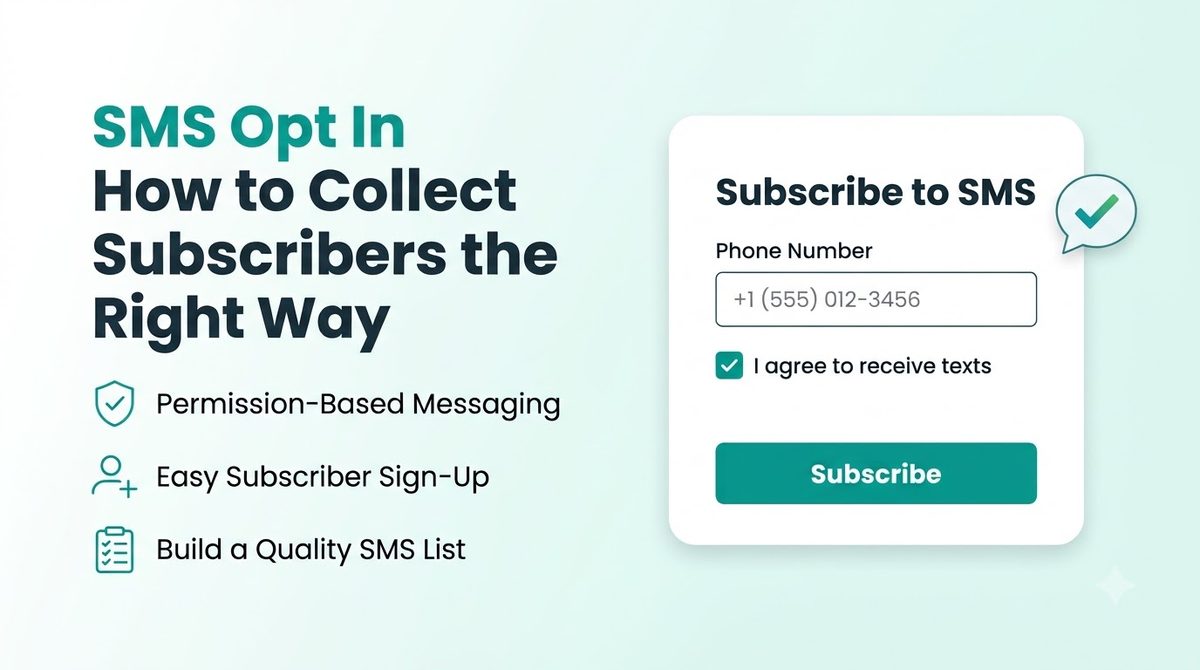
L'attivazione SMS è il momento in cui un cliente accetta di ricevere messaggi di testo dalla tua azienda. Potrebbe essere una casella spuntata su un modulo. Potrebbe essere un messaggio che ti mandano. Potrebbe essere un foglio di iscrizione nel tuo negozio.
Il CTIA è il gruppo commerciale degli operatori di telefonia mobile statunitensi. La sua guida afferma che i messaggi dovrebbero essere inviati solo dopo che la persona ha aderito. Dice anche che i dettagli dell'adesione dovrebbero essere chiari e non nascosti nei termini e nelle condizioni.
Questo post riguarda il lato pratico: come raccogliere gli opt-in che le persone capiscono e che puoi dimostrare.
Conformità con l'attivazione degli SMS: la versione breve
Per quanto riguarda i testi di marketing, la legge statunitense stabilisce un livello più elevato rispetto al semplice sì. È necessario il previo consenso scritto espresso, il che significa un accordo chiaro e firmato che può essere elettronico. La conformità al marketing via SMS ha più dettagli di quelli che rientrano in questa sezione e ne parleremo nel nostro Guida alla conformità TCPA.
Modi per raccogliere gli opt-in SMS
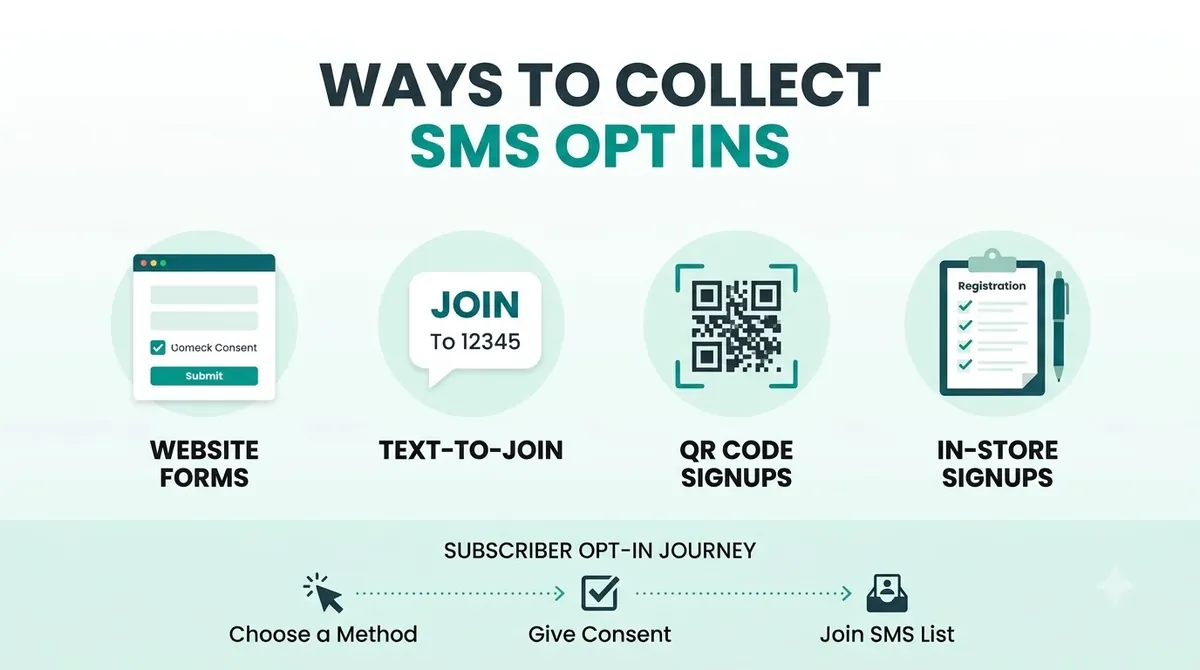
| Metodo | Come funziona | Meglio per |
|---|---|---|
| Modulo web | Il cliente digita il proprio numero e seleziona una casella di consenso | Siti web e pagine di destinazione |
| Casella di controllo al momento del pagamento | Una casella deselezionata accanto al campo del numero di telefono | Negozi on-line |
| Parola chiave | Il cliente invia una parola come ISCRIVITI al tuo numero | Segni, ricevute e post social |
| Codice QR | La scansione apre un testo precompilato o un modulo | Packaging, volantini, vetrine |
| In negozio | Foglio o tablet per la registrazione alla cassa | Negozi, saloni, ristoranti |
| Per telefono | Il cliente concorda durante una chiamata o su un menu registrato | Supportare team e cliniche |
Il CTIA elenca diversi modi in cui una persona può mostrare il consenso opt-in. Includono l'inserimento di un numero su un sito Web, il clic su un pulsante su una pagina mobile e l'invio di una parola chiave. Iscriversi presso un punto vendita e concordare anche il conteggio telefonico. Scegli quello più adatto ai tuoi clienti. Puoi usarne più di uno.
Lingua di attivazione SMS: cosa dire
Una formulazione chiara protegge te e i tuoi clienti. IL Principi e migliori pratiche di messaggistica CTIA diciamo che un invito all'azione dovrebbe coprire cinque cose. Le persone dovrebbero sapere cos'è il programma e da quale numero provengono i messaggi. Dovrebbero sapere chi sei, quali sono i termini di adesione e le eventuali commissioni e come annullare l'iscrizione.
In parole povere, la lingua di attivazione degli SMS dovrebbe coprire:
- Il nome della tua attività.
- Che tipo di messaggi riceveranno le persone, come offerte o aggiornamenti sugli ordini.
- How often you expect to text.
- That message and data rates may apply.
- How to stop, usually by replying STOP.
- A link to your privacy policy and terms.
SMS Opt In Examples You Can Copy
Your SMS opt in form is the most common place to start, so the first example is for that.
Web form or checkbox (leave the box unticked):
“Yes, text me offers and updates from Your Business at this number. Up to 4 messages a month. Message and data rates may apply. Reply STOP to cancel or HELP for help. Consent is not a condition of purchase. See our Privacy Policy and Terms.”
Keyword sign-up on a sign or receipt:
“Text JOIN to 55555 to get offers from Your Business. Up to 4 msgs/month. Msg and data rates may apply. Reply STOP to cancel, HELP for help. Terms and Privacy at yourbusiness.com/sms.”
In store, on paper or a tablet:
“I agree to receive marketing texts from Your Business at the number above. Frequency varies. Message and data rates may apply. I can reply STOP at any time. Consent is not required to buy anything.”
Swap in your own name, number and message frequency. Marketing consent has extra legal requirements, so ask a lawyer to check the final wording.
Double Opt In SMS and the Welcome Text Message
A double opt-in means two steps. The person signs up, then replies YES to an SMS opt in text message to confirm. It stops people from adding a number that is not theirs and it gives you cleaner proof. The CTIA does not require it. It is a choice, and many businesses use it for exactly those reasons.
Whether or not you use double opt-in, send a welcome text message. For recurring messages, the CTIA says to send a confirmation before any other message. It should include:
- The program name or what the person signed up for.
- How to reach customer care, such as HELP.
- How to opt out.
- That the messages are recurring and how often they will arrive.
- Any fees and how they are billed.
A simple welcome text looks like this:
“Welcome to Your Business texts! Up to 4 msgs/month. Msg and data rates may apply. Reply HELP for help, STOP to cancel.”
Make the first text useful too, such as the promised discount code. People who get what you promised stay subscribed.
How to Get SMS Opt Ins: Step by Step
1. Choose Where People Will Sign Up
Start with the place your customers already are. A checkout box suits an online shop. A till sign suits a cafe. You do not need every method on day one.
2. Write the Offer and the Wording
Tell people what they get. "Get a welcome discount and early access to sales" beats "Sign up for updates". Then add the disclosures from the section above.
3. Do Not Pre-Tick the Box
The customer should take the action. A pre-ticked box makes the consent harder to defend and it annoys people.
4. Send the Confirmation Text
Send it right after sign-up and keep it short. Include your name, how often you will text, how to get help and how to stop.
5. Record Every SMS Consent
The CTIA suggests keeping the time of consent, the method used, the wording the person saw, the campaign, the IP address, the phone number and the name or user ID. A spreadsheet works to start. A platform that logs this for you is better.
6. Honor Opt Outs Fast
Add simple SMS opt out language like "Reply STOP to opt out" to your first message and to regular messages. Handle the reply straight away. See our post on SMS bidirezionali for how replies are handled.
SMS Opt In Best Practices and Common Mistakes
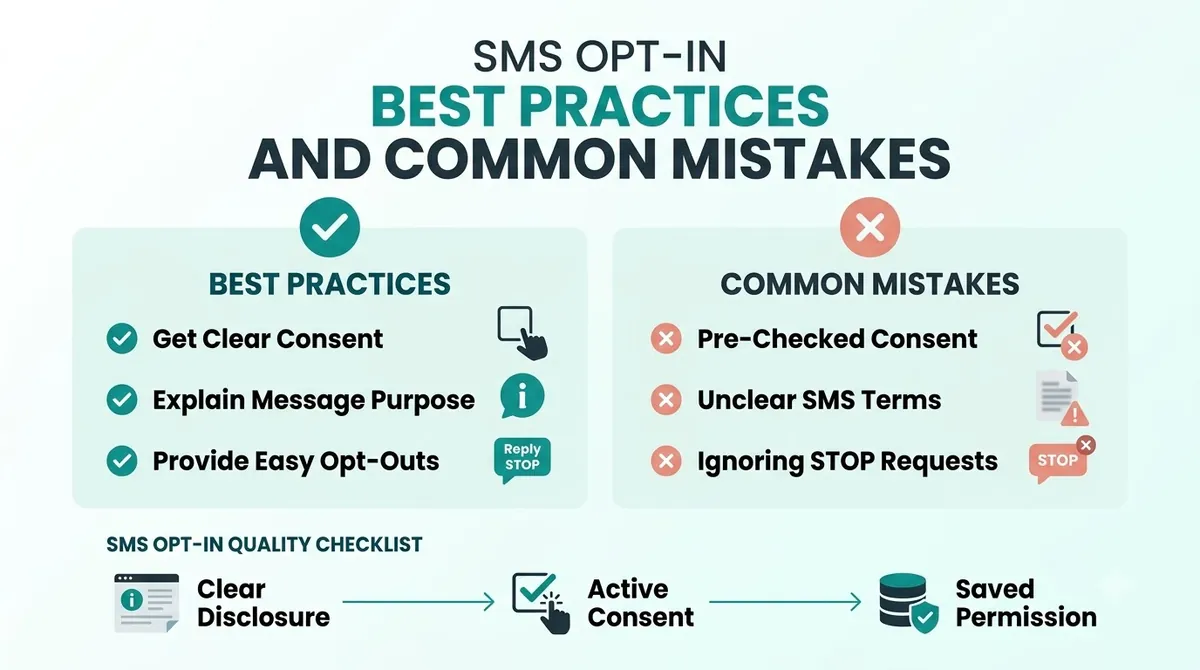
The best practices are the steps above. These are the mistakes that break them.
- Using a bought list. The CTIA says senders should not use opt-in lists that have been rented, sold or shared. Build your own SMS subscriber list, even if it grows slowly.
- Hiding consent in the terms. The opt-in details should be easy to see, not buried.
- Vague promises. If you say "occasional updates" and then send three offers a week, expect STOP replies.
- Reusing consent. An opt-in covers the program the person agreed to. A yes to order updates is not a yes to promotions.
- No proof. If someone says they never signed up and you cannot show when and how they did, you have a problem.
- Forgetting the confirmation text. It tells people it worked and how to leave.
- Sending more than you promised. Keep to the frequency you stated.
SMS Opt In for Small Business: Where to Start
You can set this up in an afternoon:
- Add an unticked consent box next to the phone number field on your form.
- Paste in the wording above and change the details.
- Write your welcome text and test it on your own phone.
- Start a consent log with a date, source and the wording used.
Then run your first campaign to a small group and see how people respond.
SMS Opt In and Carrier Registration
Collecting consent properly also helps with carrier registration. When you register a brand and campaign for 10DLC, you describe how people opt in and often show an example. Clear wording and proof of sign-ups make that easier. Read our 10DLC registration guide for the steps.
SMS Opt In Using SMSLocal
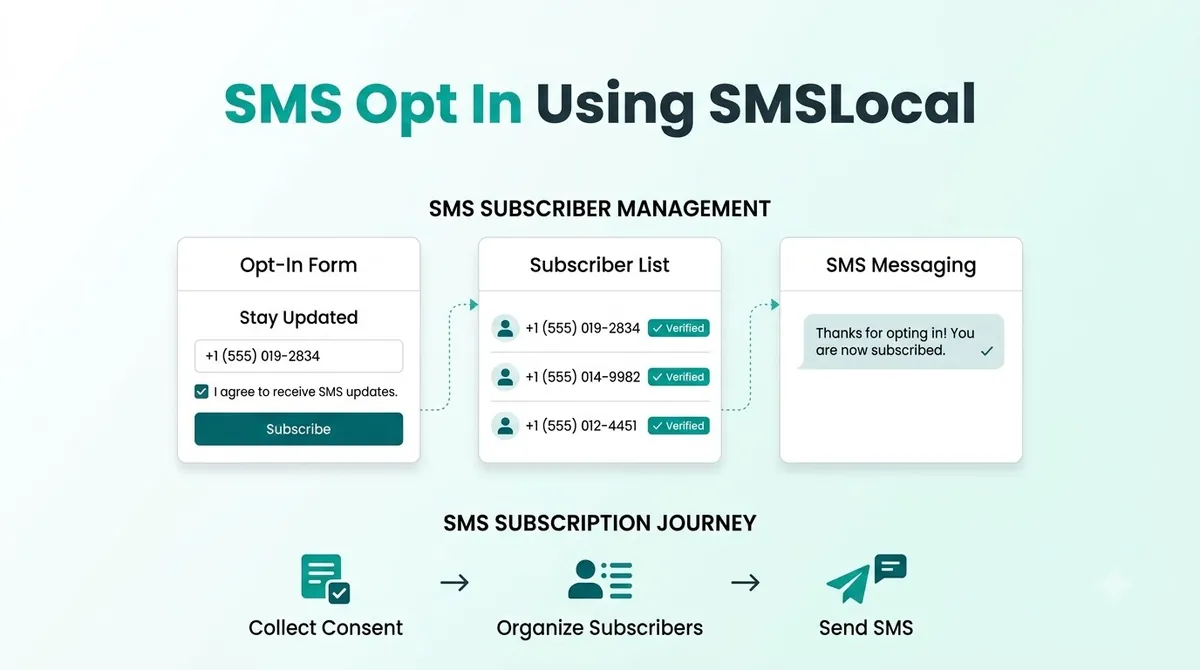
A platform helps you send, track and manage replies. It does not collect consent for you. You still need a clear form, honest wording and a record of every sign-up. Before you launch, work out how STOP replies and your consent log will be handled. The SMSLocal team can explain how opt-outs and replies work for your account.
If you are new to text marketing, our guide to what SMS marketing is is a good place to start.
Make your messages stand out with reliable, fast and effective communication. Elevate your texting game today.
Conclusione
A good SMS opt in is simple. Ask clearly, say what people will get, send a confirmation and keep a record. Do that and your list will be smaller than a bought one, but it will be full of people who want your texts.
Start with one sign-up point and one clear message, then build from there.
Start your free trial with SMSLocal and send registered, reliable messages.
Domande frequenti
È quando un cliente accetta di ricevere messaggi di testo dalla tua attività. Potrebbero spuntare una casella, inviare un messaggio con una parola chiave o registrarsi in negozio. Dovresti mandare loro un messaggio solo dopo che hanno accettato.
L'iscrizione avviene in due passaggi. La persona si unisce, quindi risponde SI a un messaggio di conferma. Non è richiesto dal CTIA, ma aiuta a confermare che il numero appartiene alla persona.
Dovrebbe dire chi sei, che tipo di messaggi riceveranno le persone, quanto spesso, quali tariffe potrebbero essere applicate e come smettere. Aggiungi collegamenti alla tua informativa sulla privacy e ai termini.
SÌ. Il CTIA elenca l'invio di una parola chiave da un dispositivo mobile come un modo in cui le persone possono mostrare il consenso. Inserisci l'informativa completa accanto alla parola chiave sul cartello o sulla ricevuta.
No. Lascialo deselezionato in modo che sia il cliente a scegliere. Rende il consenso più chiaro e più facile da difendere.
Almeno la data e l'ora, il modo in cui la persona si è registrata, la dicitura che ha visto e il suo numero di telefono. Il CTIA suggerisce anche la campagna, l'indirizzo IP e il nome della persona o l'ID utente laddove applicabili.