 English
Perkenalan
Sebuah salon mengirimkan pengingat: "Janji Anda besok jam 14.00. Balas C untuk konfirmasi." Seorang pelanggan menjawab, "Bisakah kita memindahkannya ke 4?" Pesan tersebut masuk ke nomor yang tidak diperiksa oleh siapa pun. Pelanggan menunggu, menyerah, dan memesan di tempat lain.
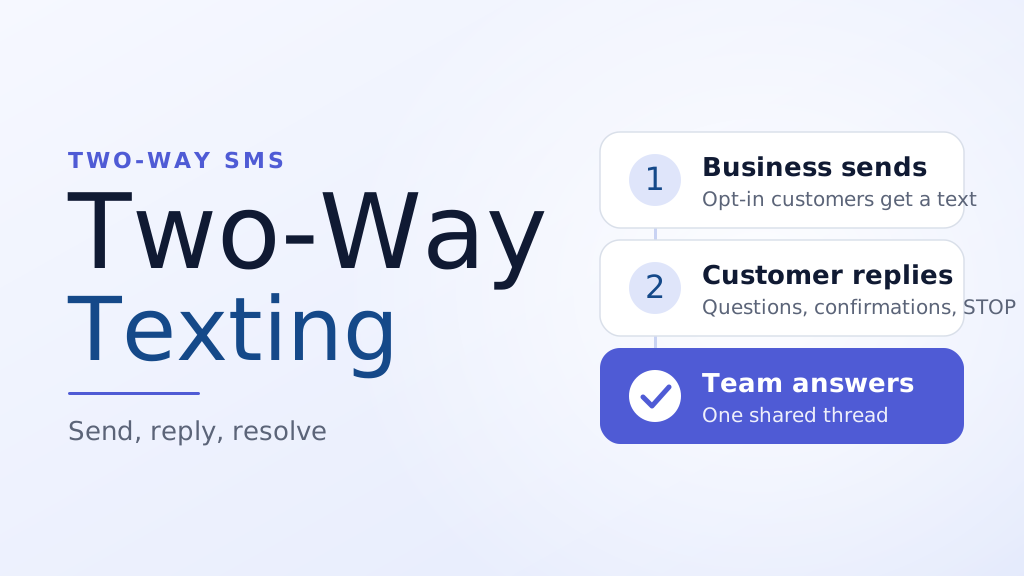
Kesenjangan tersebut adalah perbedaan antara SMS satu arah dan dua arah. Pesan satu arah berbicara kepada pelanggan. SMS dua arah memungkinkan mereka menjawab, dan memungkinkan tim Anda membalas di topik yang sama.
Panduan ini menjelaskan apa itu SMS dua arah, cara kerjanya di balik layar, manfaatnya, aturan yang harus Anda ikuti, dan cara mengaturnya langkah demi langkah.
Poin Penting
- SMS dua arah berarti pelanggan dapat membalas SMS bisnis Anda dan tim Anda dapat merespons dalam percakapan yang sama.
- Ini berfungsi ketika nomor Anda dapat menerima pesan dan balasannya mencapai kotak masuk bersama atau perangkat lunak Anda sendiri.
- Kegunaan yang kuat mencakup perubahan janji temu, pertanyaan pesanan, dukungan, umpan balik, dan tindak lanjut prospek.
- Balasan tidak ikut serta harus dihormati. Di AS, FCC mencantumkan STOP, QUIT, END, REVOKE, OPT OUT, CANCEL, dan UNSUBSCRIBE sebagai kata-kata pencabutan yang valid.
- Kotak masuk bersama yang berisi tugas dan catatan mencegah balasan hilang atau dijawab dua kali.
Apa itu SMS Dua Arah?
SMS dua arah, disebut juga SMS dua arah, adalah SMS bisnis yang percakapannya bisa dilakukan dua arah. Anda mengirim pesan ke pelanggan, pelanggan membalas dari teleponnya sendiri, dan balasannya sampai ke Anda.
Ini terlihat seperti rangkaian teks biasa di sisi pelanggan. Di pihak Anda, balasan biasanya muncul di kotak masuk bersama atau diteruskan ke perangkat lunak Anda, sehingga seseorang atau sistem dapat membacanya dan merespons.
SMS dua arah tidak sama dengan SMS massal. Anda dapat mengirim kampanye ke ribuan kontak yang ikut serta, namun saat salah satu dari mereka membalas, pertukaran menjadi percakapan satu lawan satu.
SMS Satu Arah vs Dua Arah
Keduanya punya tempat. Pilihan yang tepat tergantung pada apakah Anda memerlukan jawaban.
| SMS satu arah | SMS dua arah | |
|---|---|---|
| Arah | Bisnis ke pelanggan saja | Bisnis dan pelanggan, keduanya |
| Pesan-pesan yang khas | Peringatan, tanda terima, pengumuman | Pengingat dengan balasan, dukungan, penjadwalan, umpan balik |
| Balasan | Tidak dibaca, atau diblokir | Baca dan jawab |
| Perasaan pelanggan | Siaran | Percakapan |
| Upaya staf | Rendah setelah diatur | Membutuhkan seseorang mengawasi kotak masuk |
| Penanganan penyisihan | Masih diperlukan | Masih diperlukan, dan tiba sebagai balasan |
Jika pesan diakhiri dengan "Balas untuk mengonfirmasi" atau "Ada pertanyaan? Kirimkan pesan kepada kami", itu sudah merupakan pesan dua arah. Jawabannya perlu dituju.
Cara Kerja SMS Dua Arah
Di balik thread teks sederhana ada tiga bagian yang bergerak.
Nomor yang dapat menerima balasan. Nomor yang Anda kirimi SMS juga merupakan nomor balasan pelanggan. SMS bisnis biasanya menggunakan nomor 10 digit lokal, nomor bebas pulsa, atau kode pendek. Aturan pendaftaran berbeda menurut jenisnya, dan menurut kami Panduan pendaftaran 10DLC mencakup rute nomor lokal.
Sebuah cara agar balasan dapat sampai kepada Anda. Balasan adalah pesan masuk. Platform dapat menampilkannya di kotak masuk tim, atau memasukkannya ke sistem Anda sendiri melalui panggilan balik. SMSLocal API SMS halaman, misalnya, mengatakan balasan tiba pada panggilan balik yang sama dengan laporan pengiriman dan ditandai sebagai berasal dari seluler, sehingga pengembang dapat membedakan pesan keluar dan masuk.
Seseorang atau sesuatu untuk dijawab. Seseorang membaca balasan dan merespons, atau perangkat lunak menangani balasan sederhana secara otomatis, seperti "C" untuk mengonfirmasi janji. Segala sesuatu yang tidak biasa terjadi pada seseorang.
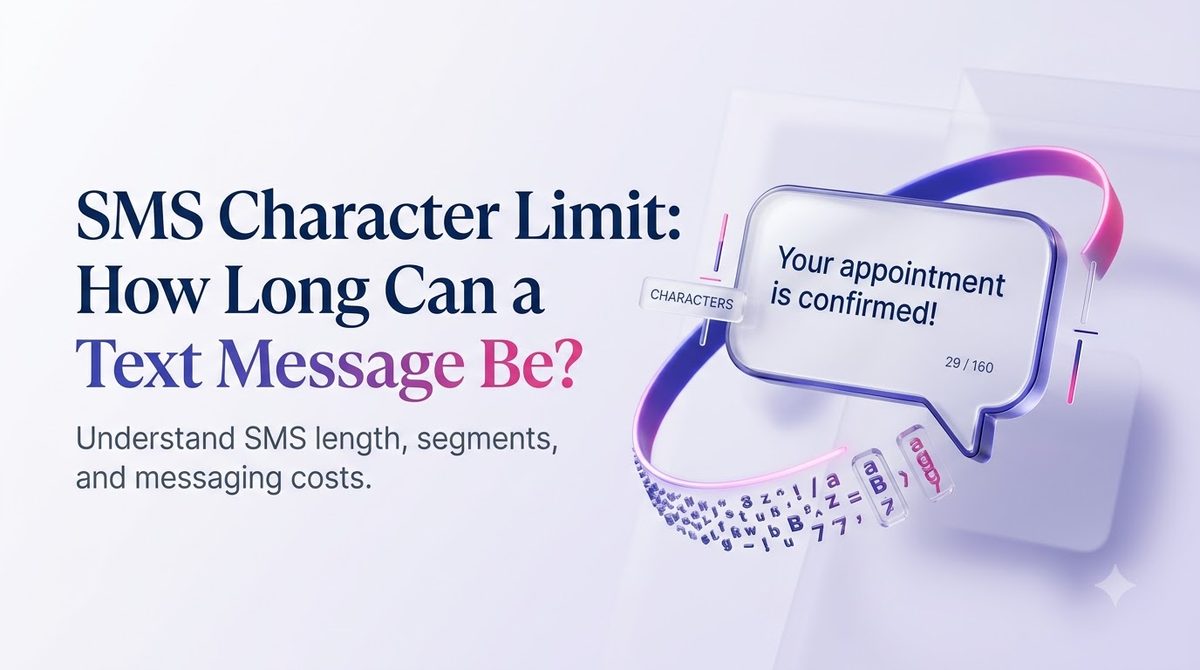
Each reply is still a normal text message, so long messages are split into segments and each segment is billed on its own.
Two-Way Texting Use Cases
Two-way texting earns its keep wherever a customer might answer.
- Appointment changes. Customers confirm, cancel or ask to move a slot by replying. Fewer phone calls, fewer empty chairs.
- Customer support. A shopper asks about a delivery or a return and gets an answer without a hold queue.
- Order and booking questions. A restaurant, repair shop or hotel can clear up details before they become complaints.
- Lead follow-up. A real estate agent or car dealer can reply to a web form inquiry by text while the interest is fresh.
- Feedback and reviews. A short "How was your visit? Reply 1 to 5" gets more honest answers than a long form.
- Campaign replies. A promotion that invites a reply, such as "Reply YES for the early slot," turns a broadcast into a conversation.
For purely informational texts such as shipping and security alerts, see our guide to SMS transaksional. Customers may still reply to those, so the inbox should be ready for it.
Make your messages stand out with reliable, fast and effective communication. Elevate your texting game today.
What to Look for in a Two-Way Texting Setup
Sending is the easy part. What matters is how well your team can handle the replies. Check for these features.
- A shared inbox. Everyone sees the same threads, so a customer is never answered twice or not at all.
- Assignment. A reply can be given to a named person or team.
- Internal notes. Teammates can leave private context that the customer never sees.
- Collision detection. Two people cannot answer the same customer at once.
- Saved replies. Canned answers for questions you get every day.
- Routing rules. Messages about billing go to one team and urgent ones escalate when no one responds.
- Multi-channel threads. If customers also reach you on WhatsApp or email, one place to read all of it saves time.
SMSLocal's omnichannel inbox page describes these features: a single team inbox for SMS, WhatsApp, email, voice and social channels, assignment and @mentions, private notes, collision detection and routing rules with timers. Teammates are added as seats.
Two-Way Texting Rules You Must Follow
Two-way texting makes opt-outs easier for customers, so compliance has to be part of the design. These are the key points for the United States. This is general information, not legal advice.
Get consent first. Text only people who agreed to hear from you, and keep a record of when and how they agreed. The CTIA Messaging Principles and Best Practices ask senders to document consent with details such as the time and the way it was collected.
Honor opt-outs in any reasonable form. Under the FCC's rule at 47 CFR 64.1200, a customer can revoke consent by any reasonable method. Replies with the words stop, quit, end, revoke, opt out, cancel or unsubscribe count as valid per se. If a customer words it differently, such as "please take me off your list," you must treat it as a revocation when a reasonable person would understand it that way.
Do not limit how people can opt out. The rule says senders may not designate an exclusive means to request revocation. A STOP reply must work, and other routes such as a phone call or a web form should too.
Act within the deadline. Revocation requests must be honored within a reasonable time that does not exceed ten business days. In practice, stop messaging right away.
Send at most one confirmation. After an opt-out, you may send a single text that confirms it, as long as it has no marketing content. Sent within five minutes, it is presumed to fall within the customer's earlier consent. Send nothing else afterward. CTIA's guidance matches this: one final confirmation per campaign, then no further messages.
Say how to opt out. CTIA advises stating in the message how and with which words a customer can opt out, using standard STOP wording. Its opt-in confirmation guidance also calls for customer care details, such as HELP instructions.
Register your sender. US carriers expect businesses to register their messaging programs. The brand and campaign steps are covered in the guide linked earlier in this article.
If a texting setup does not allow replies at all, the FCC rule requires a clear disclosure on each message that two-way texting is not available, plus other ways to opt out. That is one more reason to choose a setup where replies work.
How to Set Up Two-Way Texting: Step by Step
Step 1: Pick the use case
Start with one job, such as appointment confirmations or order questions. A narrow start is easier to staff and measure.
Step 2: Choose a number and register it
Decide which number customers will text. If it is a local number, complete registration before you send so your messages are not filtered.
Step 3: Collect clear consent
Add a sign-up form, checkbox or keyword that names your business, says what kinds of messages to expect and explains how to opt out.
Step 4: Decide who answers
Name the people or team who handle replies and set the hours they are available. A reply that sits for two days is worse than no option to reply.
Step 5: Write your reply templates
Draft short answers for the ten questions you hear most. Keep them friendly and specific, and leave room to personalize.
Step 6: Set up opt-out handling
Make sure STOP and the other keywords are read and acted on, and that your contact list is updated right away. Ask your provider how this works on its platform before launch.
Step 7: Test and start small
Send test messages to your own team, reply from different phones and try an opt-out. Then launch to a small group and look at response times.
Two-Way Texting Best Practices
- Answer fast. Replies are expected to feel like a conversation. If you cannot reply quickly, say when you will.
- Use an auto-reply outside business hours. A line such as "We received your message and will reply tomorrow morning" sets expectations. Our guide to automated text messages shows when automation helps and when it irritates.
- Sound like a person. Use the customer's name, avoid jargon and keep each reply to one idea.
- Keep sensitive details out of texts. Do not ask customers to text card numbers, passwords or government IDs.
- Hand off cleanly. When a chat needs a call or an email, say so and note it in the thread.
- Review the inbox weekly. Look for repeated questions that should become a saved reply or a line in your FAQ.
Common Two-Way Texting Mistakes
- Sending "Reply to confirm" with no one reading replies.
- Ignoring opt-out wording. Customers do not always type STOP in capitals.
- Using a number that cannot receive replies.
- Letting two people answer the same customer.
- Pitching before answering. If a customer asks a question, answer it first.
- Not recording consent.
Two-Way Texting With SMSLocal
SMSLocal combines the sending side and the reply side. Developers can receive replies on the same callback as delivery reports, and teams can read and answer them in a shared inbox. If you want to see how it would fit your business, talk to the SMSLocal team about your use case, volume and compliance needs.
Kesimpulan
Two-way texting turns a text from an announcement into a conversation. It cuts phone tag, rescues appointments and gives customers a simple way to reach you.
Start with one use case, make sure someone owns the inbox and build your opt-out handling in from the first day. Do that and two-way texting becomes one of the most useful channels you have.
Start your free trial with SMSLocal and manage replies in one shared inbox.
Pertanyaan yang Sering Diajukan
SMS dua arah adalah SMS bisnis di mana pelanggan dapat membalas dan tim Anda dapat menjawab di topik yang sama. Ini berfungsi seperti percakapan teks biasa, tetapi balasan biasanya dikirim ke kotak masuk atau perangkat lunak bersama, bukan ke telepon satu orang.
Ya. SMS dua arah dan SMS dua arah memiliki arti yang sama: pesan bisnis yang mendukung balasan. SMS adalah teknologi pesan teks yang mendasarinya.
Ya. Anda sebaiknya hanya mengirimkan SMS kepada orang-orang yang setuju untuk menerima pesan dari bisnis Anda, dan Anda harus mencatat bagaimana dan kapan mereka menyetujuinya. Persetujuan juga hanya mencakup program yang disetujui pelanggan, sehingga pelanggan yang mengirimi Anda pertanyaan melalui SMS belum menyetujui promosi.
Perlakukan STOP, QUIT, END, REVOKE, OPT OUT, CANCEL dan UNSUBSCRIBE sebagai opt-out, ditambah permintaan yang jelas untuk berhenti. Perbarui daftar Anda segera, dan kirimkan paling banyak satu teks konfirmasi tanpa pemasaran di dalamnya.
Kadang-kadang, tapi itu tergantung pada jenis nomor dan penyedia Anda. Telepon rumah dan beberapa nomor khusus suara mungkin tidak dapat menerima pesan teks. Tanyakan kepada penyedia Anda apakah nomor Anda dapat diaktifkan dan apakah perlu registrasi.
Harga tergantung pada penyedia dan paket Anda. Pesan biasanya ditagih per segmen, dan beberapa platform juga mengenakan biaya untuk kursi kotak masuk. Periksa harga penyedia Anda saat ini sebelum Anda berkomitmen.