 English
вступ
Салон надсилає нагадування: "Ваш прийом завтра о 14:00. Для підтвердження надішліть відповідь C". Клієнт відповідає: "Чи можемо ми перенести це на 4?" Повідомлення потрапляє на номер, який ніхто не перевіряє. Клієнт чекає, відмовляється і бронює в іншому місці.
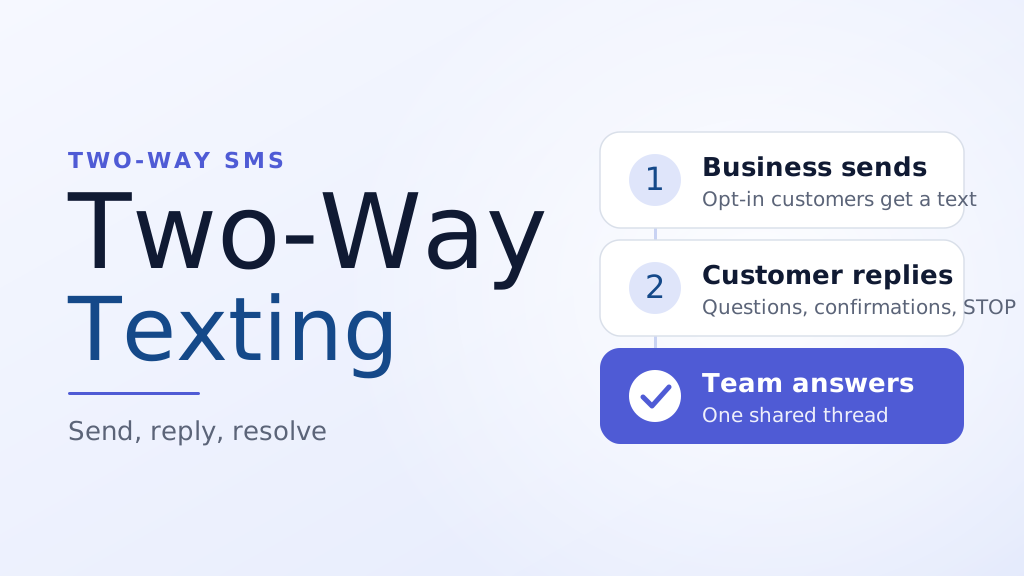
Цей проміжок є різницею між одностороннім і двостороннім текстовими повідомленнями. Односторонні повідомлення розмовляють з клієнтами. Двостороннє надсилання текстових повідомлень дозволяє їм відповідати, а вашій команді – у тій же темі.
У цьому посібнику пояснюється, що таке двосторонні текстові повідомлення, як це працює за лаштунками, де це окупається, правил, яких ви повинні дотримуватися, і як це налаштувати крок за кроком.
Ключові висновки
- Двостороннє надсилання повідомлень означає, що клієнти можуть відповідати на ваші ділові повідомлення, а ваша команда може відповідати в одній розмові.
- Це працює, коли ваш номер може отримувати повідомлення, а відповіді потрапляють у спільну скриньку вхідних або ваше власне програмне забезпечення.
- Сильні способи використання включають зміни призначень, запитання щодо замовлення, підтримку, зворотний зв’язок і супроводження потенційних клієнтів.
- Необхідно враховувати відповіді на відмову. У США Федеральна комісія зв’язків США вказує на дійсні слова відкликання STOP, QUIT, END, REVOKE, OPT OUT, CANCEL і UNSUBSCRIBE.
- Спільна папка "Вхідні" із завданнями та нотатками запобігає втраті відповідей або повторній відповіді.
Що таке двосторонні текстові повідомлення?
Двосторонні текстові повідомлення, які також називають двосторонніми SMS, — це ділові текстові повідомлення, у яких розмова може йти в обох напрямках. Ви надсилаєте повідомлення клієнту, клієнт відповідає зі свого телефону, і відповідь надходить до вас.
Це виглядає як звичайний текстовий потік на стороні клієнта. З вашого боку відповіді зазвичай з’являються в спільній папці «Вхідні» або передаються до вашого програмного забезпечення, щоб людина чи система могли прочитати їх і відповісти.
Двосторонні текстові повідомлення – це не те саме, що масові текстові повідомлення. Ви можете надіслати кампанію тисячам зареєстрованих контактів, але щойно один із них відповість, обмін стане розмовою один на один.
Одностороннє проти двостороннього SMS
Обидва мають місце. Правильний вибір залежить від того, чи потрібна вам відповідь.
| Одностороннє текстове повідомлення | Двосторонні текстові повідомлення | |
|---|---|---|
| Напрямок | Бізнес лише для клієнта | Бізнес і клієнт в обох напрямках |
| Типові повідомлення | Оповіщення, квитанції, оголошення | Нагадування з відповідями, підтримкою, плануванням, відгуками |
| Відповіді | Не прочитаний або заблокований | Прочитав і відповів |
| Відчуття клієнта | Трансляція | Розмова |
| Зусилля персоналу | Низький після налаштування | Потрібен хтось, хто стежить за папкою "Вхідні". |
| Обробка відмови | Все ще потрібно | Все ще потрібно та надходить у відповідь |
Якщо повідомлення закінчується словами «Відповісти, щоб підтвердити» або «Є запитання? Надішліть нам повідомлення», це вже двостороннє повідомлення. Відповідь має кудись йти.
Як працює двостороннє текстове повідомлення
За простою текстовою ниткою є три рухомі частини.
Номер, який може отримувати відповіді. Номер, з якого ви надсилаєте повідомлення, також є номером, на який клієнти відповідають. У ділових текстових повідомленнях зазвичай використовується місцевий 10-значний номер, безкоштовний номер або короткий код. Правила реєстрації відрізняються за типом і нашим Посібник з реєстрації 10DLC охоплює маршрут місцевого номера.
Спосіб отримання відповідей. Відповідь – це вхідне повідомлення. Платформа може показати його у папці "Вхідні" команди або передати його у вашу власну систему через зворотний виклик. SMSLocal SMS API сторінка, наприклад, повідомляє, що відповіді надходять на той самий зворотній виклик, що й звіти про доставку, і позначаються як вихідні з мобільного, тому розробники можуть відрізнити вихідні та вхідні повідомлення.
Хтось або щось відповісти. A person reads the reply and responds, or software handles a simple one automatically, such as a "C" to confirm an appointment. Anything unusual goes to a person.
Each reply is still a normal text message, so long messages are split into segments and each segment is billed on its own.
Two-Way Texting Use Cases
Two-way texting earns its keep wherever a customer might answer.
- Appointment changes. Customers confirm, cancel or ask to move a slot by replying. Fewer phone calls, fewer empty chairs.
- Customer support. A shopper asks about a delivery or a return and gets an answer without a hold queue.
- Order and booking questions. A restaurant, repair shop or hotel can clear up details before they become complaints.
- Lead follow-up. A real estate agent or car dealer can reply to a web form inquiry by text while the interest is fresh.
- Feedback and reviews. A short "How was your visit? Reply 1 to 5" gets more honest answers than a long form.
- Campaign replies. A promotion that invites a reply, such as "Reply YES for the early slot," turns a broadcast into a conversation.
For purely informational texts such as shipping and security alerts, see our guide to транзакційні SMS. Customers may still reply to those, so the inbox should be ready for it.
Make your messages stand out with reliable, fast and effective communication. Elevate your texting game today.
What to Look for in a Two-Way Texting Setup
Sending is the easy part. What matters is how well your team can handle the replies. Check for these features.
- A shared inbox. Everyone sees the same threads, so a customer is never answered twice or not at all.
- Assignment. A reply can be given to a named person or team.
- Internal notes. Teammates can leave private context that the customer never sees.
- Collision detection. Two people cannot answer the same customer at once.
- Saved replies. Canned answers for questions you get every day.
- Routing rules. Messages about billing go to one team and urgent ones escalate when no one responds.
- Multi-channel threads. If customers also reach you on WhatsApp or email, one place to read all of it saves time.
SMSLocal's omnichannel inbox page describes these features: a single team inbox for SMS, WhatsApp, email, voice and social channels, assignment and @mentions, private notes, collision detection and routing rules with timers. Teammates are added as seats.
Two-Way Texting Rules You Must Follow
Two-way texting makes opt-outs easier for customers, so compliance has to be part of the design. These are the key points for the United States. This is general information, not legal advice.
Get consent first. Text only people who agreed to hear from you, and keep a record of when and how they agreed. The CTIA Messaging Principles and Best Practices ask senders to document consent with details such as the time and the way it was collected.
Honor opt-outs in any reasonable form. Under the FCC's rule at 47 CFR 64.1200, a customer can revoke consent by any reasonable method. Replies with the words stop, quit, end, revoke, opt out, cancel or unsubscribe count as valid per se. If a customer words it differently, such as "please take me off your list," you must treat it as a revocation when a reasonable person would understand it that way.
Do not limit how people can opt out. The rule says senders may not designate an exclusive means to request revocation. A STOP reply must work, and other routes such as a phone call or a web form should too.
Act within the deadline. Revocation requests must be honored within a reasonable time that does not exceed ten business days. In practice, stop messaging right away.
Send at most one confirmation. After an opt-out, you may send a single text that confirms it, as long as it has no marketing content. Sent within five minutes, it is presumed to fall within the customer's earlier consent. Send nothing else afterward. CTIA's guidance matches this: one final confirmation per campaign, then no further messages.
Say how to opt out. CTIA advises stating in the message how and with which words a customer can opt out, using standard STOP wording. Its opt-in confirmation guidance also calls for customer care details, such as HELP instructions.
Register your sender. US carriers expect businesses to register their messaging programs. The brand and campaign steps are covered in the guide linked earlier in this article.
If a texting setup does not allow replies at all, the FCC rule requires a clear disclosure on each message that two-way texting is not available, plus other ways to opt out. That is one more reason to choose a setup where replies work.
How to Set Up Two-Way Texting: Step by Step
Step 1: Pick the use case
Start with one job, such as appointment confirmations or order questions. A narrow start is easier to staff and measure.
Step 2: Choose a number and register it
Decide which number customers will text. If it is a local number, complete registration before you send so your messages are not filtered.
Step 3: Collect clear consent
Add a sign-up form, checkbox or keyword that names your business, says what kinds of messages to expect and explains how to opt out.
Step 4: Decide who answers
Name the people or team who handle replies and set the hours they are available. A reply that sits for two days is worse than no option to reply.
Step 5: Write your reply templates
Draft short answers for the ten questions you hear most. Keep them friendly and specific, and leave room to personalize.
Step 6: Set up opt-out handling
Make sure STOP and the other keywords are read and acted on, and that your contact list is updated right away. Ask your provider how this works on its platform before launch.
Step 7: Test and start small
Send test messages to your own team, reply from different phones and try an opt-out. Then launch to a small group and look at response times.
Two-Way Texting Best Practices
- Answer fast. Replies are expected to feel like a conversation. If you cannot reply quickly, say when you will.
- Use an auto-reply outside business hours. A line such as "We received your message and will reply tomorrow morning" sets expectations. Our guide to automated text messages shows when automation helps and when it irritates.
- Sound like a person. Use the customer's name, avoid jargon and keep each reply to one idea.
- Keep sensitive details out of texts. Do not ask customers to text card numbers, passwords or government IDs.
- Hand off cleanly. When a chat needs a call or an email, say so and note it in the thread.
- Review the inbox weekly. Look for repeated questions that should become a saved reply or a line in your FAQ.
Common Two-Way Texting Mistakes
- Sending "Reply to confirm" with no one reading replies.
- Ignoring opt-out wording. Customers do not always type STOP in capitals.
- Using a number that cannot receive replies.
- Letting two people answer the same customer.
- Pitching before answering. If a customer asks a question, answer it first.
- Not recording consent.
Two-Way Texting With SMSLocal
SMSLocal combines the sending side and the reply side. Developers can receive replies on the same callback as delivery reports, and teams can read and answer them in a shared inbox. If you want to see how it would fit your business, talk to the SMSLocal team about your use case, volume and compliance needs.
Висновок
Two-way texting turns a text from an announcement into a conversation. It cuts phone tag, rescues appointments and gives customers a simple way to reach you.
Start with one use case, make sure someone owns the inbox and build your opt-out handling in from the first day. Do that and two-way texting becomes one of the most useful channels you have.
Start your free trial with SMSLocal and manage replies in one shared inbox.
Часті запитання
Двосторонні текстові повідомлення – це ділові текстові повідомлення, де клієнти можуть відповідати, а ваша команда може відповідати в одній темі. Це працює як звичайна текстова розмова, але відповіді зазвичай потрапляють у спільну папку "Вхідні" чи програмне забезпечення, а не на телефон однієї людини.
так Двосторонні SMS і двосторонні текстові повідомлення означають те саме: ділові повідомлення, які підтримують відповіді. SMS – це основна технологія текстових повідомлень.
так Ви повинні надсилати повідомлення лише тим людям, які погодилися отримувати повідомлення від вашої компанії, і ви повинні вести облік того, як і коли вони погодилися. Згода також поширюється лише на програму, на яку погодився клієнт, тому клієнт, який надсилає вам запитання, не погоджується на рекламні акції.
Вважайте STOP, QUIT, END, REVOKE, OPT OUT, CANCEL і UNSCRIBE як відмову, а також будь-який чіткий запит припинити. Негайно оновіть свій список і надішліть не більше одного тексту підтвердження без жодного маркетингу.
Іноді, але це залежить від типу номера та вашого оператора. Стаціонарні телефони та деякі телефонні номери можуть не отримувати текстові повідомлення. Запитайте у свого провайдера, чи можна активувати ваш номер і чи потрібна йому реєстрація.
Ціна залежить від вашого постачальника та плану. Плата за повідомлення зазвичай виставляється за сегмент, а деякі платформи також стягують плату за місця в папці "Вхідні". Перевірте поточні ціни вашого постачальника, перш ніж взяти на себе зобов’язання.