 English
Introduction
Un propriétaire de salle de sport décide d'envoyer par SMS une offre de printemps à tout le monde sur une ancienne feuille d'inscription. Ils envoient le message à quelques milliers de numéros. Cependant, certains clients n'ont pas autorisé à être contactés par SMS. Quelques semaines plus tard, une lettre d'un avocat arrive.
Bien que ce scénario ne soit pas réel, il existe un véritable problème. Aux États-Unis, il existe des réglementations fédérales pour contacter les clients par SMS à des fins de marketing, et les SMS TCPA en jouent une grande partie. La conformité TCPA garantit que vous êtes du bon côté.
Ce guide explique la TCPA, y compris les textes qui en relèvent, les sanctions et comment s'y conformer. Il s'agit d'un aperçu général et nous vous recommandons de consulter un avocat pour découvrir comment cela affecte votre entreprise. Nous avons comparé les règles ci-dessous au texte de 47 CFR 64.1200 et 47 U.S.C. 227 en novembre 2026.
Points clés à retenir
- La TCPA est une loi fédérale restreignant les appels et les SMS marketing. Les règles sont détaillées par la FCC dans 47 CFR 64.1200.
- Tout texte marketing envoyé à l'aide d'un numéroteur automatique nécessite un consentement écrit préalable et exprès.
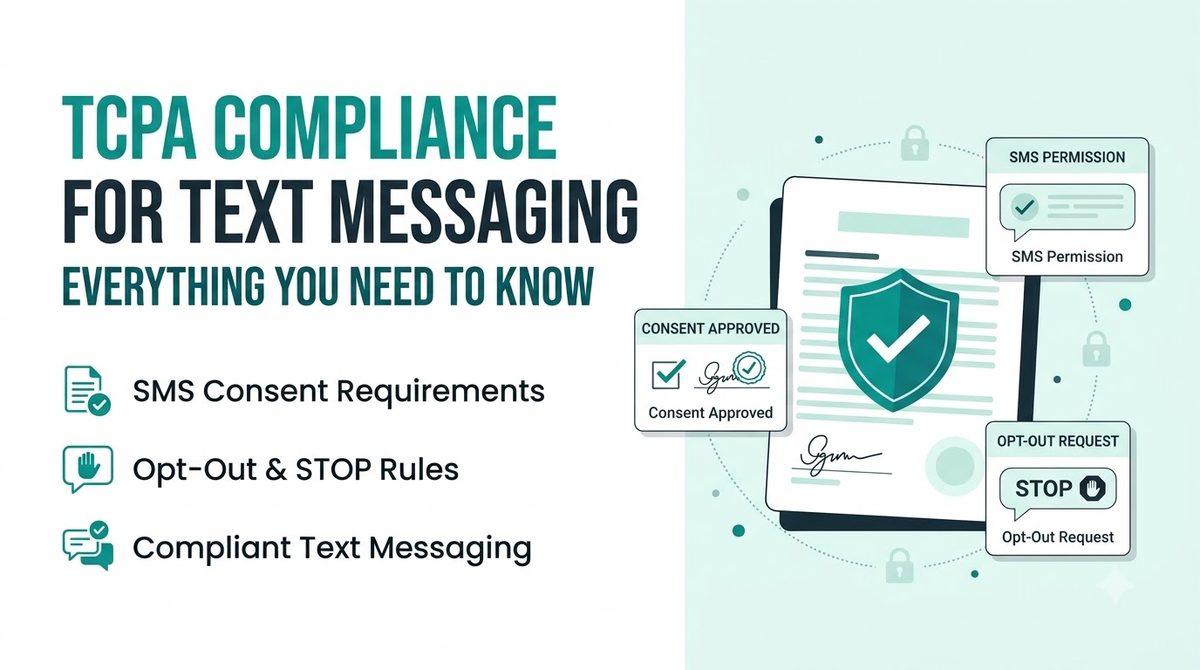
- Les clients peuvent retirer leur autorisation à tout moment en utilisant toute méthode raisonnable. Cela inclut STOP, QUITTER, END, REVOKE, OPT OUT, CANCEL et UNSUBSCRIBE.
- Selon la loi, vous pouvez devoir 500 $ par infraction. Cependant, s’il s’avère que vous avez volontairement ou sciemment enfreint la loi, le montant peut atteindre le triple.
- Assurez-vous d'avoir une preuve d'autorisation, répondez rapidement aux retraits et envoyez des SMS aux heures correctes.
Qu’est-ce que la conformité TCPA ?
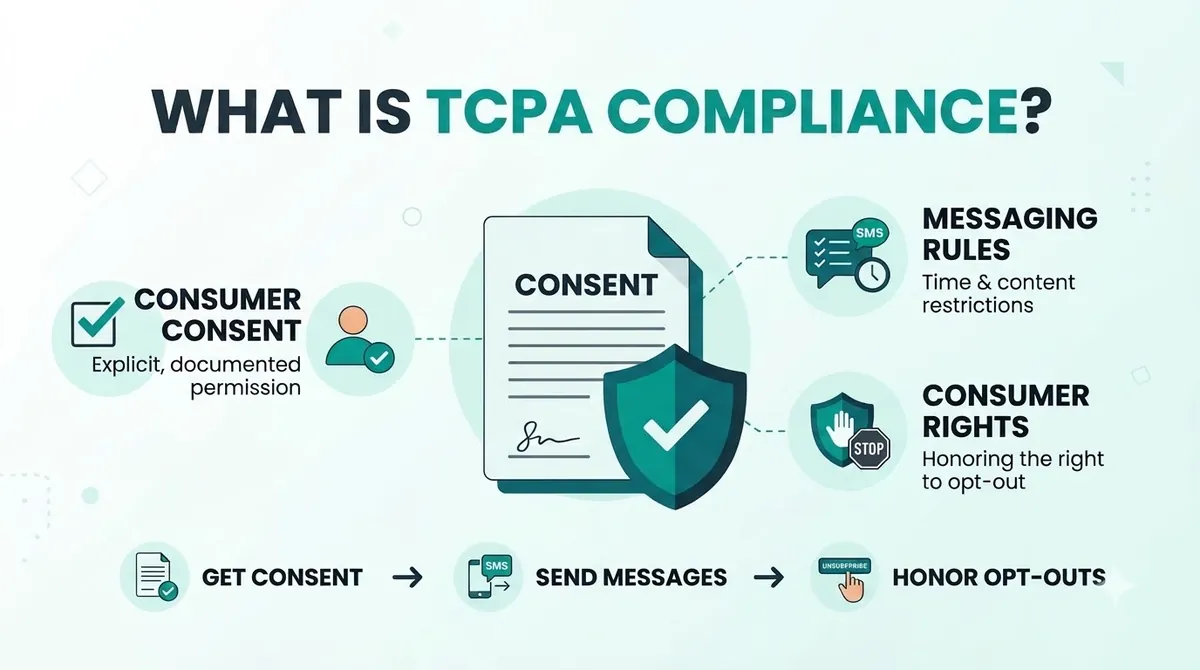
Le Telephone Consumer Protection Act (TCPA) est une loi fédérale américaine relative aux appels et aux SMS. On le trouve dans le Code américain à l'adresse 47 U.S.C. 227. La FCC a créé des règles détaillées à cet effet, qui peuvent être consultées ici : 47 CFR 64.1200.
La conformité TCPA consiste à garantir que vous suivez ces règles. Dans l’ensemble, il s’agit d’obtenir la permission, de permettre aux gens de se retirer, de respecter des délais raisonnables et d’avoir des preuves. Les règles s’appliquent aux SMS et aux appels.
La règle de non-participation de la FCC le dit directement. Il utilise les mots « appels ou SMS ».
Aperçu des règles de messagerie texte TCPA
| Règle | Ce qu'il te demande | D'où ça vient |
|---|---|---|
| Consentement | Consentement écrit préalable exprès pour les textes marketing envoyés avec un composeur automatique | 47 CFR 64.1200(a)(2) |
| Divulgations | Une formulation claire indiquant que la personne accepte les messages marketing et n'est pas obligée d'accepter d'acheter quoi que ce soit | La définition du consentement écrit dans la règle |
| Désinscriptions | Honorer toute demande raisonnable d’arrêt, dans un délai maximum de dix jours ouvrés | 47 CFR 64.1200(a)(10) |
| Heures calmes | Aucune sollicitation téléphonique avant 8h ou après 21h. heure locale | 47 CFR 64.1200(c)(1) |
| Ne pas appeler | Aucune sollicitation de numéros figurant sur le registre national de numéros de télécommunication exclus | 47 CFR 64.1200(c)(2) |
| Politique interne | Une politique écrite de ne pas appeler, un personnel formé et des demandes enregistrées | 47 CFR 64.1200(d) |
| Pénalités | 500 $ par infraction, jusqu'à trois fois ce montant si elle est volontaire ou consciente | 47 U.S.C. 227(b)(3) |
Pénalités TCPA : pourquoi la conformité est importante
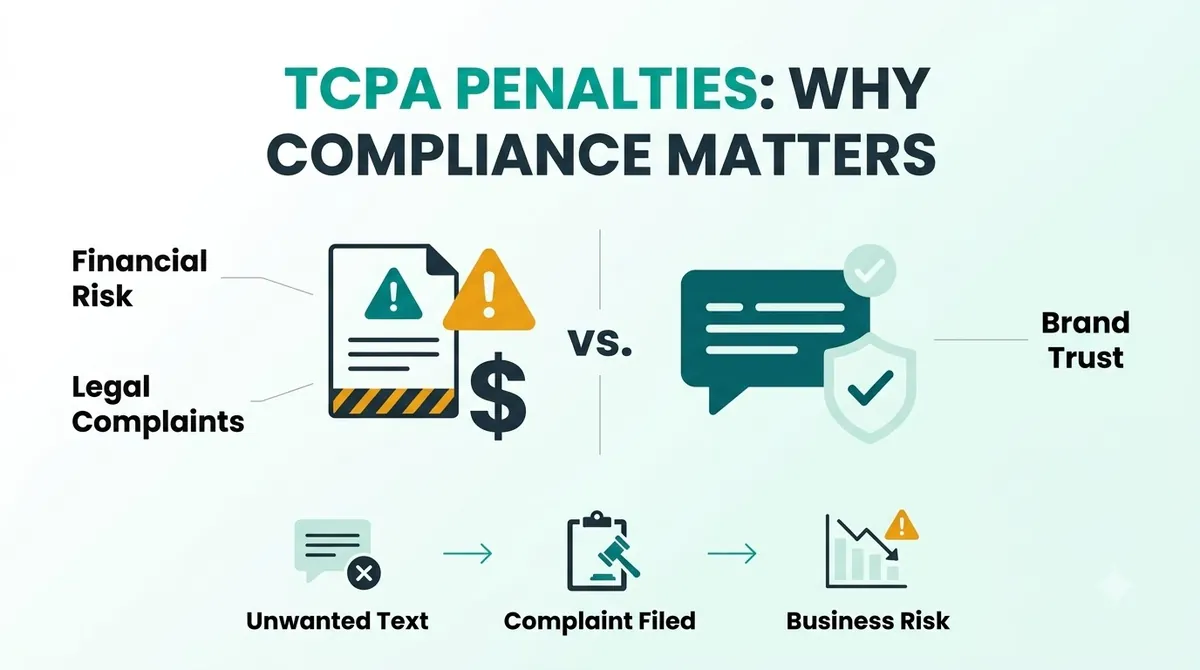
Avec la TCPA, les gens peuvent intenter une action devant les tribunaux de l'État si la loi de l'État le permet. Sous le statut n'importe qui peut réclamer une indemnisation pour sa perte réelle ou 500 $ par violation. S'il s'avère que vous avez commis une infraction volontaire ou consciente, un tribunal peut accorder jusqu'à trois fois le montant.
Cela peut s'accumuler rapidement lorsque vous contactez un grand nombre de personnes. La FCC peut également vous imposer une amende. Obtenir la permission est au cœur d’une bonne stratégie d’envoi de SMS.
Which Texts Does the TCPA Apply To?
The most restrictive rules apply to telemarketing. The FCC rule defines telemarketing as a call or message that encourages the purchase or rental of property, goods or services.
This would include any promotions, coupons, flash sales or product announcements. If you're encouraging a sale then you're marketing.
Informational messages such as order updates or appointment reminders are treated differently. There are also exclusions for some health care messages. We explain the differences between transactional SMS and promotions in our transactional SMS guide.
If unsure, always go for the stricter option.
TCPA Compliance Checklist for Texting
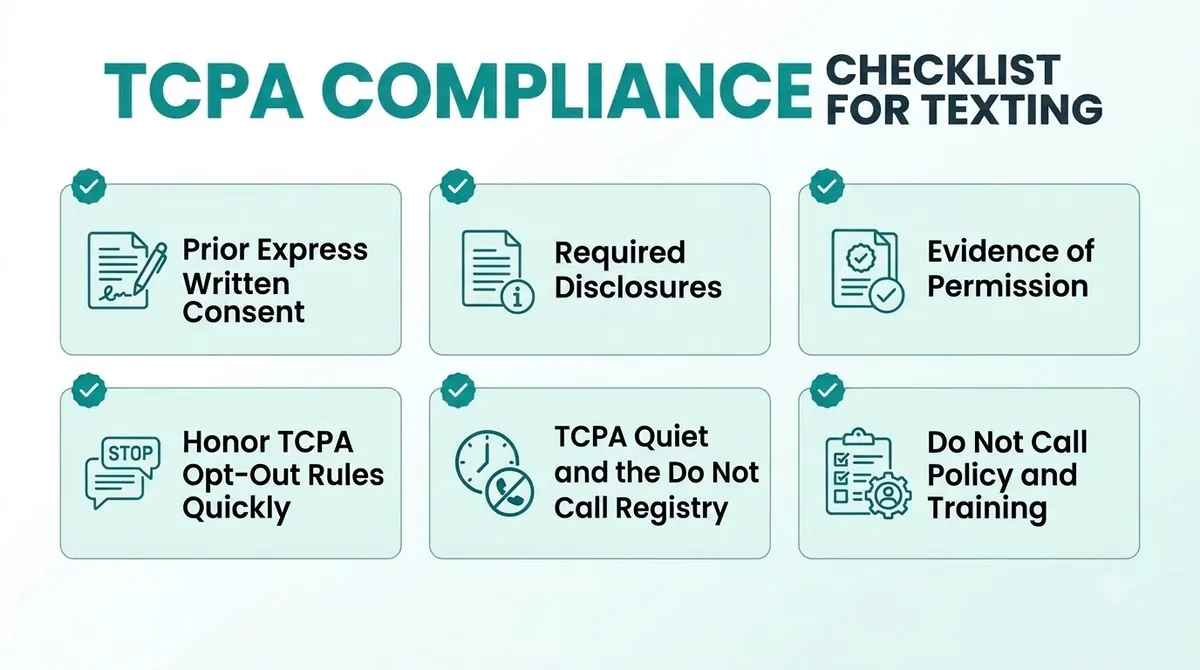
1. Prior Express Written Consent
If you're sending a marketing text using an automatic telephone dialing system, you need prior express written consent. This is defined by the FCC as getting permission through a signed written agreement. The agreement needs to give clear permission to send marketing messages. It also needs to include the phone number.
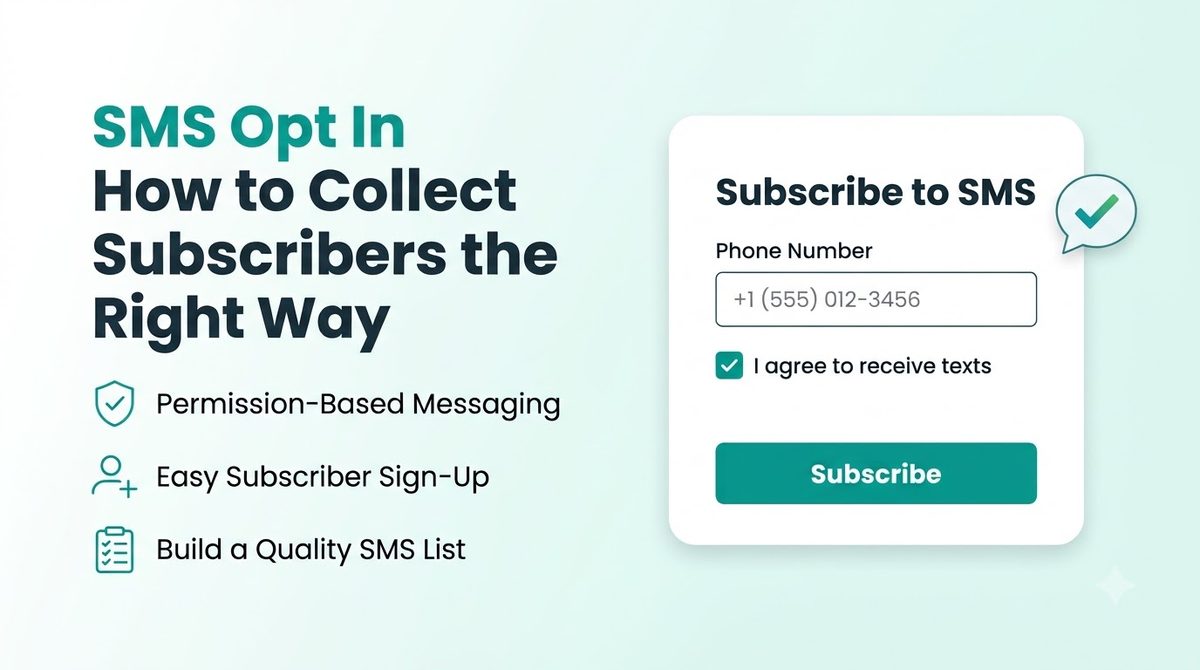
You can use electronic or digital signatures. This could be a checkbox on a website or a keyword reply. Good TCPA consent starts with your SMS opt in form, so it's worth getting that right.
2. Required Disclosures
The agreement must make clear to the customer that by signing they are authorizing you to send marketing messages using an autodialer or pre-recorded voice. It also needs to state they are not required to agree to this to purchase anything.
This should be displayed next to the sign-up button. Ask your lawyer to check. Here's wording a lot of businesses start from:
“By checking this box, I agree to receive marketing text messages from Your Business at the number I entered. Messages may be sent with an automatic dialing system. Consent is not a condition of any purchase. Message and data rates may apply. Reply STOP to cancel.”
3. Evidence of Permission
You'll need evidence if a customer claims they never gave you permission. The CTIA recommends noting down when they gave their permission, how they did so and what they saw. This can be found in their Messaging Principles and Best Practices.
This should be stored for every contact. At a minimum, this should be put into a spreadsheet. Ideally use a messaging platform that tracks this automatically.
4. Honor TCPA Opt-Out Rules Quickly
Customers can withdraw their permission to be contacted by any sensible method. Any reply with the words STOP, QUIT, END, REVOKE, OPT OUT, CANCEL or unsubscribe will count. If the customer uses other wording, it still counts if a reasonable person would understand it to be an opt-out.
You cannot specify any one method. You must honor requests within a sensible time frame (no longer than 10 business days). Ideally stop texting immediately.
You can send a single confirmation text after they've opted out. This shouldn't be marketing and should be sent within 5 minutes. Add simple SMS opt out language like "Reply STOP to opt out" to your messages. See our guide on two-way texting for more details.
5. TCPA Quiet Hours and the Do Not Call Registry
The FCC rule states you shouldn't make telephone solicitations to residential subscribers before 8am or after 9pm in their local time. The TCPA do not call rules also stop you contacting numbers on the National Do Not Call Registry.
Many businesses avoid trouble by texting between 8am and 9pm. They also clean their lists of numbers on the registry. This is an easy habit to get into.
There's one catch. A federal court in Delaware (King v. Bon Charge, decided April 30, 2026) threw out a quiet hours claim because the person had agreed to get the texts. The same court let a Do Not Call claim carry on, as there was no signed written agreement. That's one court, so it doesn't bind the others. A law firm's write-up says courts may well disagree. Stay inside the window and check the customer's time zone, not yours.
6. Do Not Call Policy and Training
Any business making telemarketing calls must have systems in place to manage a Do Not Call list. The FCC rule outlines the minimum standards you must follow. You'll need a written policy that can be provided on request. All staff involved in making telemarketing calls must be trained. You must also log any opt out requests.
This is often overlooked by small teams. Simply write a one-page policy and share it with your team. Update it when your tools change.
Common TCPA Compliance Mistakes
- Using old or purchased lists. Just because the customer is on the list doesn't mean they've given permission. The CTIA also recommends you don't use rented, sold or shared opt-in lists.
- Vague permission. An "I agree to the terms" checkbox may not satisfy written permission.
- No evidence. If you don't have evidence of when and how they opted in, you won't be able to defend your text.
- Ignoring "please stop". Customers may not always type STOP in uppercase.
- Texting late. Sending a promotion late at night is a risk, and 7pm in California is 10pm in New York.
- Opt-outs not applied across all lists. If a customer opts out on one tool, you must update all lists.
- Thinking permission carries over. The CTIA says an opt-in only applies to the program the customer agreed to.
TCPA Compliance for Small Business: Where to Start
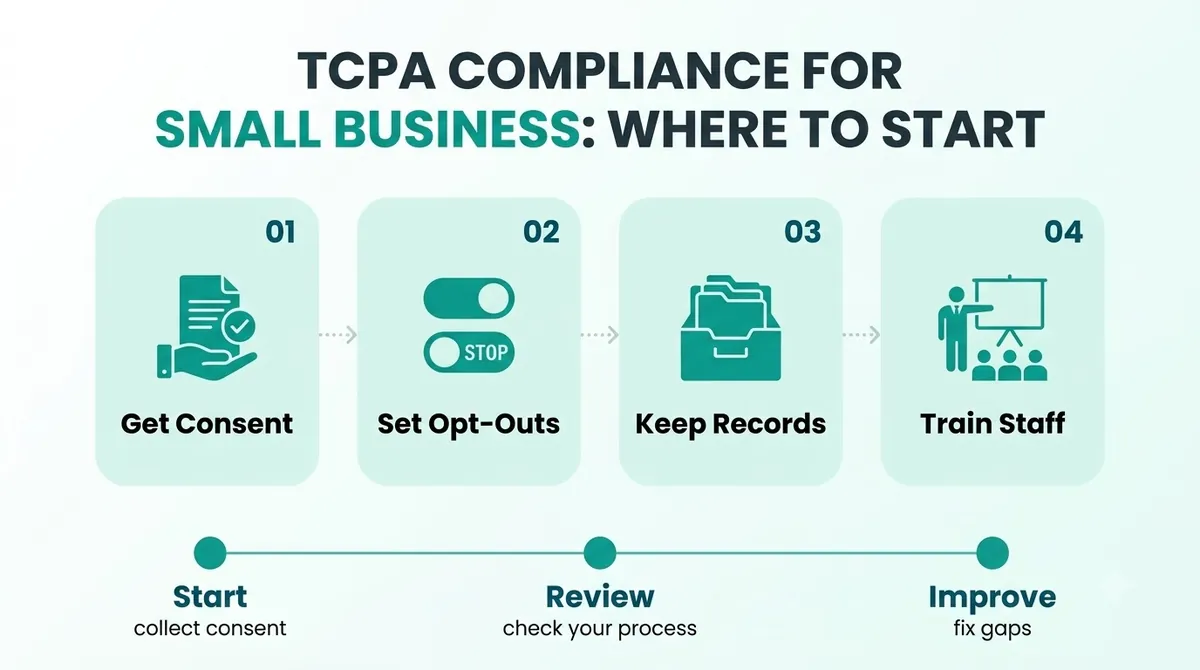
You don't need a legal team to get the basics right. Start with three things this week:
- Fix your sign-up form so it has clear written permission wording.
- Start a simple consent log. A spreadsheet is fine.
- Set a sending window of 8am to 9pm in your customer's time zone.
Then pay a lawyer for an hour to check the wording. It costs far less than a claim.
TCPA Compliance and 10DLC Registration
The TCPA is a law and 10DLC registration is a carrier requirement. You'll need to do both, as TCPA SMS compliance and carrier rules are two separate jobs.
Getting your brand and campaign registered will help your messages go through. It still doesn't replace the need for permission. Carriers also want evidence of how people are opting in. See our 10DLC registration guide for more details.
Are There Extra Rules in Your State?
Perhaps. Some states have their own texting laws. Check the rules for each state your customers are in. Ask a lawyer if you're planning to send a large campaign.
TCPA Compliance Using SMSLocal
Using a messaging platform will help you with delivery and tracking. However it is your responsibility to ensure you have permission, and SMS marketing compliance is down to the sender whichever tool you use. If you're using SMSLocal, you'll need to track this yourself. Set up how you'll handle opt outs before launching your campaign. Speak to the SMSLocal team to find out how replies and opt outs work for your account.
To learn more about texting overall, take a look at our simple guide to what SMS marketing is.
Make your messages stand out with reliable, fast and effective communication. Elevate your texting game today.
Conclusion
TCPA compliance is something you should get into the habit of. Make sure you have clear written permission and evidence, respond to opt outs quickly, text at the right times and have a Do Not Call policy in place for your team.
When it's done, you'll find it's easier to defend your texts and your customers will have more trust in them. If you're ever unsure, ask a lawyer.
Start your free trial with SMSLocal and send registered, reliable messages.
Foire aux questions
Cela signifie suivre les règles du TCPA et de la FCC lorsque vous envoyez des SMS à des personnes. Vous avez besoin de la bonne autorisation, d'un moyen simple de vous désinscrire, de délais d'envoi raisonnables et d'enregistrements pour sauvegarder le tout.
Oui. Les règles de la FCC couvrent les SMS ainsi que les appels. La règle de désinscription indique même « appels ou SMS ».
Un accord écrit et signé qui permet clairement à une entreprise d'envoyer des messages marketing à un numéro particulier. Il doit inclure une information claire et la signature peut être électronique.
Quelqu'un peut réclamer sa perte réelle ou 500 $ par violation, selon le montant le plus élevé. Si c'était volontaire ou conscient, un tribunal peut accorder jusqu'au triple. La FCC peut également vous imposer une amende.
Pas avant 8h ou après 21h, heure locale du client, selon la règle FCC. Les tribunaux se demandent encore si cela protège les personnes qui ont adhéré, de sorte que la plupart des entreprises restent simplement à l'écart.
Dans un délai raisonnable, et jamais supérieur à dix jours ouvrés selon la règle FCC. En réalité, arrêtez tout de suite.