 English
Introducción
Una cafetería pone un cartel junto a la caja: "Envíe COFFEE al 55555 para obtener una bebida gratis". En una semana, se inscribieron unos cientos de personas. Cada uno pidió los textos, por lo que cada uno está feliz de recibirlos. Las tasas de apertura son altas y casi nadie responde STOP.
Eso es lo que hace una buena suscripción por SMS. Convierte a un extraño en un suscriptor que quiere saber de ti. Uno malo hace lo contrario y puede bloquear tu número.
Esta guía explica qué es una suscripción voluntaria, las principales formas de obtenerla y la redacción a utilizar. También cubre qué registrar y los errores que se deben evitar. Es información general, no asesoramiento legal. Las recomendaciones de redacción y mantenimiento de registros siguen los Principios y mejores prácticas de mensajería de CTIA (mayo de 2023).
Conclusiones clave
- Una suscripción voluntaria por SMS es una persona que dice "sí, envíame un mensaje de texto" antes de enviar algo.
- Las buenas suscripciones son claras. La gente debe saber quién es usted, qué enviará y con qué frecuencia.
- Puedes recogerlos a través de un formulario web, con una palabra clave, en caja, mediante código QR o por teléfono.
- Envíe un mensaje de texto de confirmación inmediatamente después de registrarse e incluya cómo detenerse.
- Mantenga un registro de cuándo y cómo estuvo de acuerdo cada persona. Es tu prueba.
- Nunca utilice una lista comprada o alquilada. Construye el tuyo propio.
¿Qué es una suscripción por SMS?
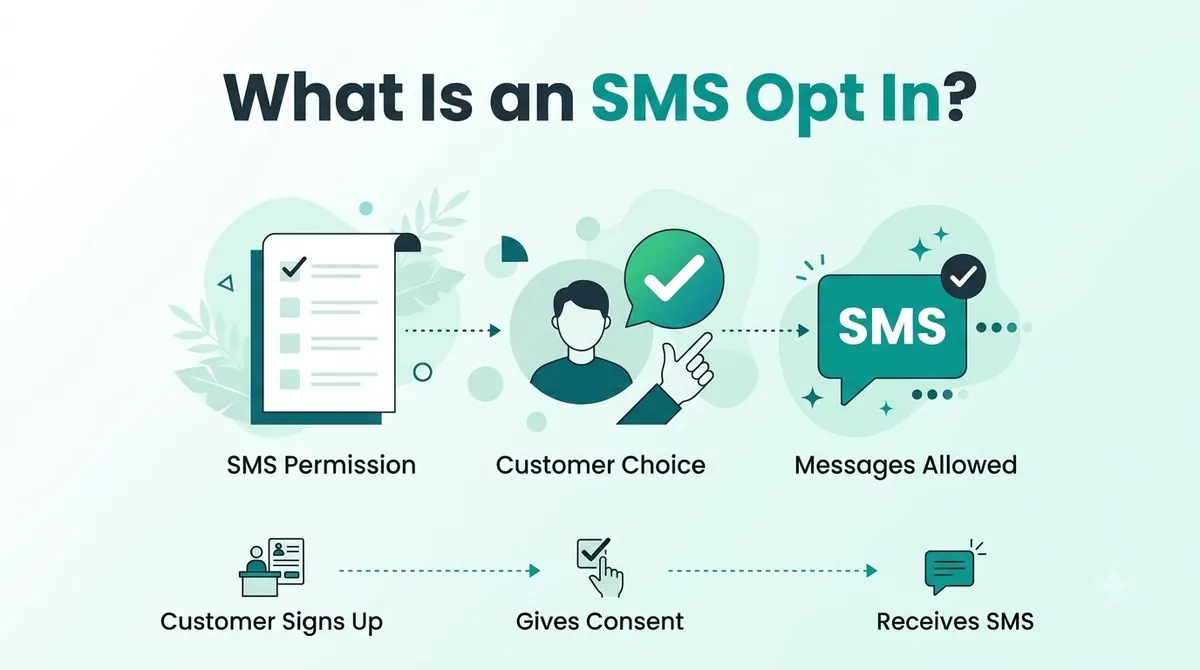
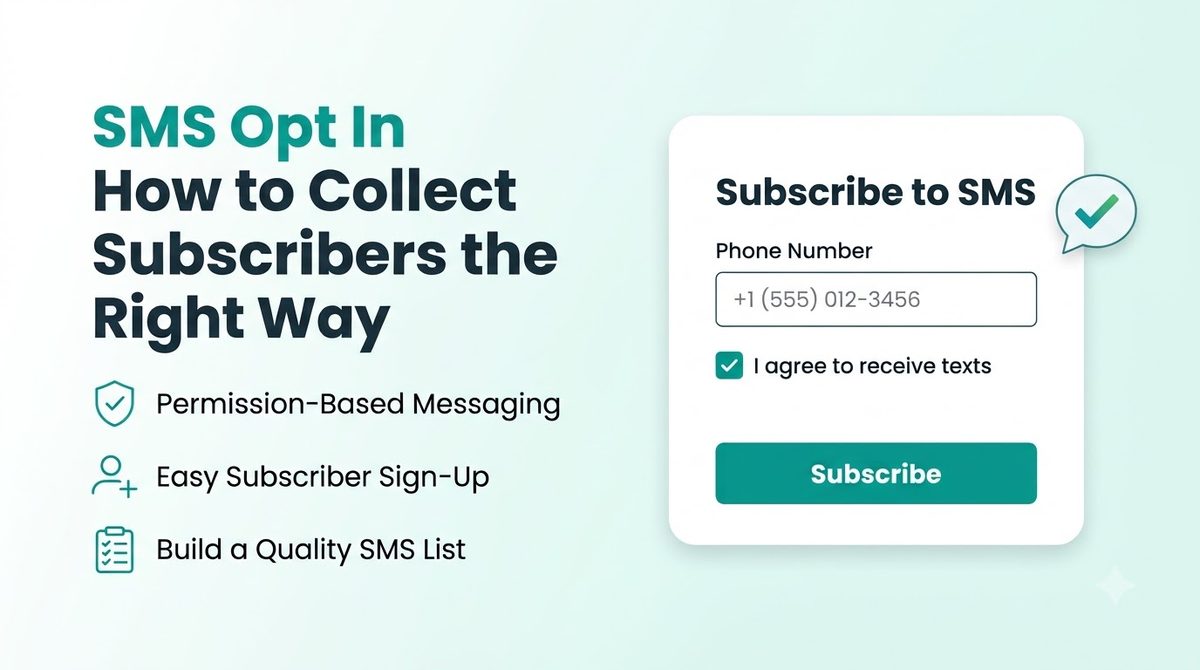
Una suscripción por SMS es el momento en que un cliente acepta recibir mensajes de texto de su empresa. Podría ser una casilla marcada en un formulario. Puede ser un mensaje de texto que te envían. Podría ser una hoja de registro en su tienda.
La CTIA es el grupo comercial de los operadores de telefonía móvil de EE. UU. Su guía dice que los mensajes deben enviarse solo después de que la persona haya aceptado. También dice que los detalles de suscripción deben ser claros y no estar ocultos en los términos y condiciones.
Esta publicación trata sobre el lado práctico: cómo recopilar suscripciones que la gente entiende y que tú puedes demostrar.
Cumplimiento de suscripción voluntaria por SMS: la versión corta
Para los textos de marketing, la ley estadounidense establece un listón más alto que un simple sí. Necesita consentimiento previo expreso por escrito, lo que significa un acuerdo claro y firmado que puede ser electrónico. El cumplimiento del marketing por SMS tiene más detalles de los que caben aquí, y lo cubrimos en nuestra Guía de cumplimiento de TCPA.
Formas de recopilar suscripciones de SMS
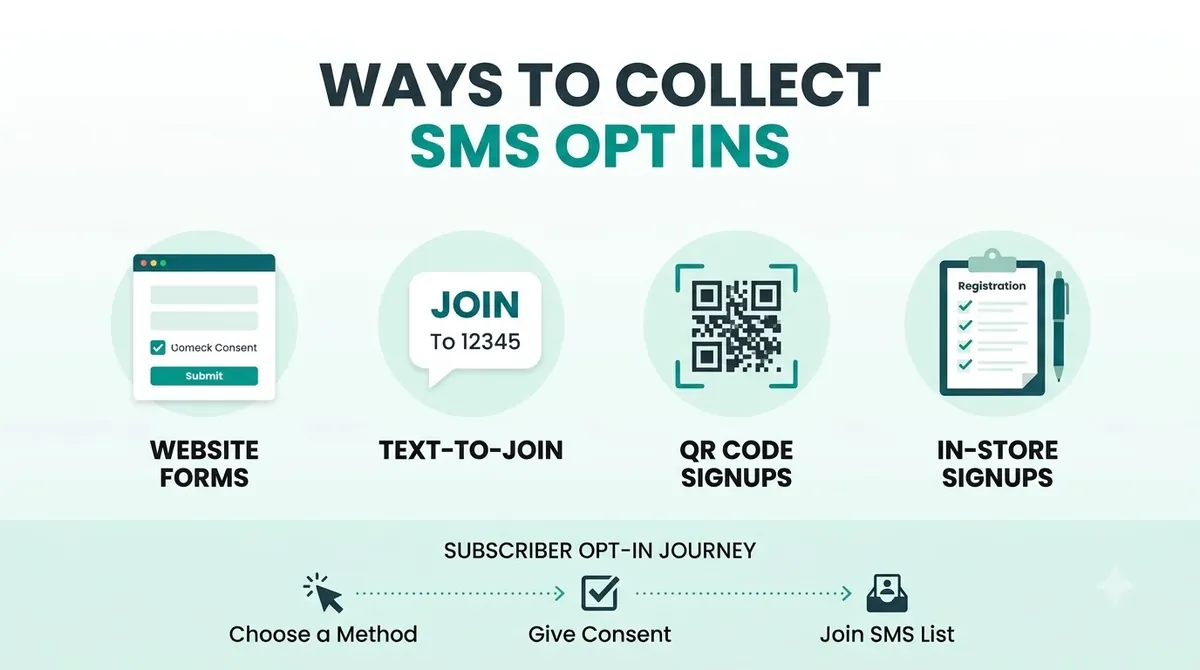
| Método | como funciona | Lo mejor para |
|---|---|---|
| formulario web | El cliente escribe su número y marca una casilla de consentimiento | Sitios web y páginas de destino |
| Casilla de verificación al finalizar la compra | Una casilla sin marcar junto al campo del número de teléfono | Tiendas online |
| Palabra clave | El cliente envía un mensaje de texto con una palabra como ÚNETE a tu número | Letreros, recibos y publicaciones sociales. |
| código qr | Scan abre un texto precargado o un formulario | Embalajes, folletos, escaparates. |
| en la tienda | Hoja de registro o tablet en caja | Tiendas, salones, restaurantes. |
| Por telefono | El cliente acepta durante una llamada o en un menú grabado | Equipos de apoyo y clínicas. |
La CTIA enumera varias formas en que una persona puede mostrar su consentimiento. Incluyen ingresar un número en un sitio web, hacer clic en un botón en una página móvil y enviar una palabra clave. Regístrate en un punto de venta y acuerda el conteo telefónico también. Elija el que se adapte a sus clientes. Puedes usar más de uno.
Idioma de suscripción de SMS: qué decir
Una redacción clara lo protege a usted y a sus clientes. El Principios y mejores prácticas de mensajería de CTIA Dicen que un llamado a la acción debe cubrir cinco cosas. La gente debe saber cuál es el programa y de qué número provienen los mensajes. Deben saber quién es usted, cuáles son los términos de participación y las tarifas, y cómo darse de baja.
En términos sencillos, el idioma de suscripción de SMS debe cubrir:
- El nombre de tu empresa.
- Qué tipo de mensajes de texto recibirán las personas, como ofertas o actualizaciones de pedidos.
- Con qué frecuencia esperas enviar mensajes de texto.
- Es posible que se apliquen tarifas de mensajes y datos.
- How to stop, usually by replying STOP.
- A link to your privacy policy and terms.
SMS Opt In Examples You Can Copy
Your SMS opt in form is the most common place to start, so the first example is for that.
Web form or checkbox (leave the box unticked):
“Yes, text me offers and updates from Your Business at this number. Up to 4 messages a month. Message and data rates may apply. Reply STOP to cancel or HELP for help. Consent is not a condition of purchase. See our Privacy Policy and Terms.”
Keyword sign-up on a sign or receipt:
“Text JOIN to 55555 to get offers from Your Business. Up to 4 msgs/month. Msg and data rates may apply. Reply STOP to cancel, HELP for help. Terms and Privacy at yourbusiness.com/sms.”
In store, on paper or a tablet:
“I agree to receive marketing texts from Your Business at the number above. Frequency varies. Message and data rates may apply. I can reply STOP at any time. Consent is not required to buy anything.”
Swap in your own name, number and message frequency. Marketing consent has extra legal requirements, so ask a lawyer to check the final wording.
Double Opt In SMS and the Welcome Text Message
A double opt-in means two steps. The person signs up, then replies YES to an SMS opt in text message to confirm. It stops people from adding a number that is not theirs and it gives you cleaner proof. The CTIA does not require it. It is a choice, and many businesses use it for exactly those reasons.
Whether or not you use double opt-in, send a welcome text message. For recurring messages, the CTIA says to send a confirmation before any other message. It should include:
- The program name or what the person signed up for.
- How to reach customer care, such as HELP.
- How to opt out.
- That the messages are recurring and how often they will arrive.
- Any fees and how they are billed.
A simple welcome text looks like this:
“Welcome to Your Business texts! Up to 4 msgs/month. Msg and data rates may apply. Reply HELP for help, STOP to cancel.”
Make the first text useful too, such as the promised discount code. People who get what you promised stay subscribed.
How to Get SMS Opt Ins: Step by Step
1. Choose Where People Will Sign Up
Start with the place your customers already are. A checkout box suits an online shop. A till sign suits a cafe. You do not need every method on day one.
2. Write the Offer and the Wording
Tell people what they get. "Get a welcome discount and early access to sales" beats "Sign up for updates". Then add the disclosures from the section above.
3. Do Not Pre-Tick the Box
The customer should take the action. A pre-ticked box makes the consent harder to defend and it annoys people.
4. Send the Confirmation Text
Send it right after sign-up and keep it short. Include your name, how often you will text, how to get help and how to stop.
5. Record Every SMS Consent
The CTIA suggests keeping the time of consent, the method used, the wording the person saw, the campaign, the IP address, the phone number and the name or user ID. A spreadsheet works to start. A platform that logs this for you is better.
6. Honor Opt Outs Fast
Add simple SMS opt out language like "Reply STOP to opt out" to your first message and to regular messages. Handle the reply straight away. See our post on mensajes de texto bidireccionales for how replies are handled.
SMS Opt In Best Practices and Common Mistakes
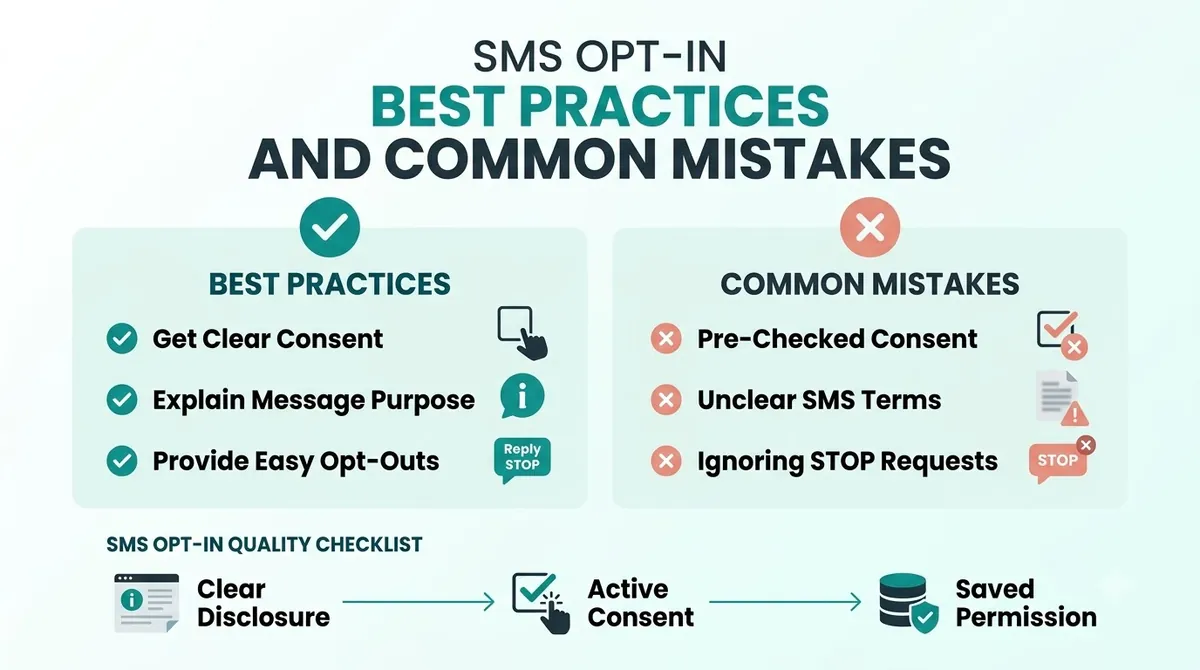
The best practices are the steps above. These are the mistakes that break them.
- Using a bought list. The CTIA says senders should not use opt-in lists that have been rented, sold or shared. Build your own SMS subscriber list, even if it grows slowly.
- Hiding consent in the terms. The opt-in details should be easy to see, not buried.
- Vague promises. If you say "occasional updates" and then send three offers a week, expect STOP replies.
- Reusing consent. An opt-in covers the program the person agreed to. A yes to order updates is not a yes to promotions.
- No proof. If someone says they never signed up and you cannot show when and how they did, you have a problem.
- Forgetting the confirmation text. It tells people it worked and how to leave.
- Sending more than you promised. Keep to the frequency you stated.
SMS Opt In for Small Business: Where to Start
You can set this up in an afternoon:
- Add an unticked consent box next to the phone number field on your form.
- Paste in the wording above and change the details.
- Write your welcome text and test it on your own phone.
- Start a consent log with a date, source and the wording used.
Then run your first campaign to a small group and see how people respond.
SMS Opt In and Carrier Registration
Collecting consent properly also helps with carrier registration. When you register a brand and campaign for 10DLC, you describe how people opt in and often show an example. Clear wording and proof of sign-ups make that easier. Read our Guía de registro 10DLC for the steps.
SMS Opt In Using SMSLocal
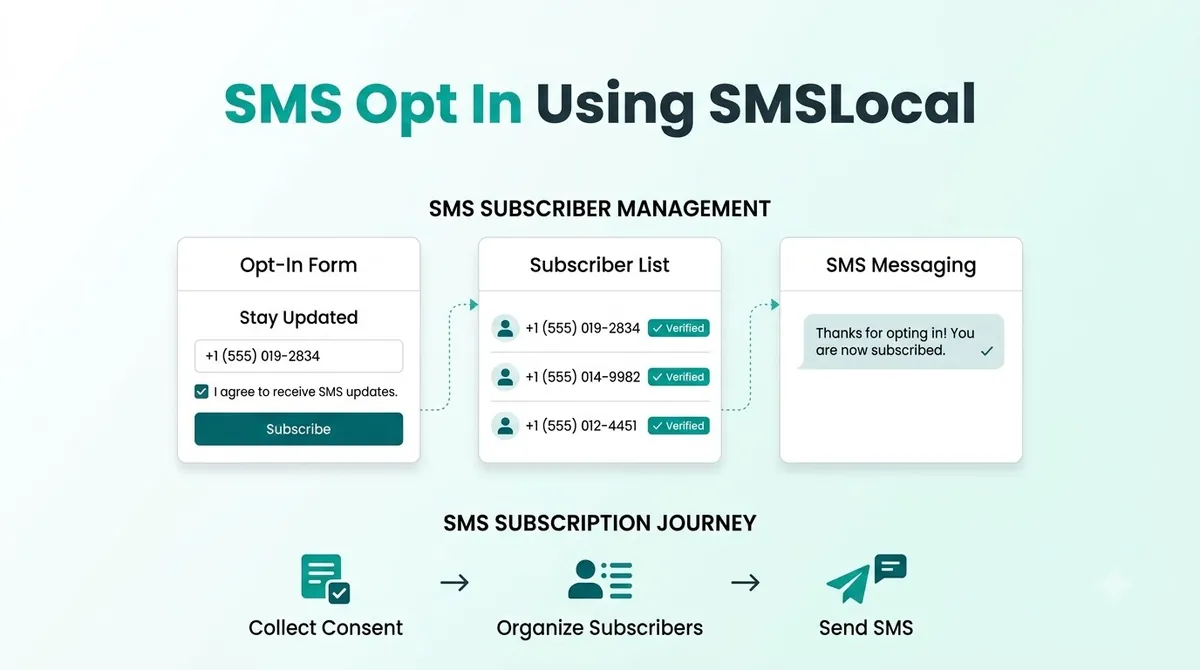
A platform helps you send, track and manage replies. It does not collect consent for you. You still need a clear form, honest wording and a record of every sign-up. Before you launch, work out how STOP replies and your consent log will be handled. The Equipo SMSLocal can explain how opt-outs and replies work for your account.
If you are new to text marketing, our guide to qué es el marketing por SMS is a good place to start.
Haga que sus mensajes se destaquen con una comunicación confiable, rápida y efectiva. Mejora tu juego de mensajes de texto hoy.
Conclusión
A good SMS opt in is simple. Ask clearly, say what people will get, send a confirmation and keep a record. Do that and your list will be smaller than a bought one, but it will be full of people who want your texts.
Start with one sign-up point and one clear message, then build from there.
Inicie su prueba gratuita con SMSLocal y envíe mensajes registrados y confiables.
Preguntas frecuentes
Es cuando un cliente acepta recibir mensajes de texto de tu negocio. Podrían marcar una casilla, enviar un mensaje de texto con una palabra clave o registrarse en la tienda. Solo debes enviarles un mensaje de texto después de que hayan aceptado.
Es un registro de dos pasos. La persona se une y luego responde SÍ a un mensaje de texto para confirmar. La CTIA no lo exige, pero ayuda a confirmar que el número pertenece a la persona.
Debe decir quién es usted, qué tipo de mensajes de texto recibirá la gente, con qué frecuencia, qué tarifas se pueden aplicar y cómo dejar de hacerlo. Agregue enlaces a su política y términos de privacidad.
Sí. La CTIA enumera el envío de una palabra clave desde un dispositivo móvil como una forma en que las personas pueden mostrar su consentimiento. Coloque las declaraciones completas junto a la palabra clave en su cartel o recibo.
No. Déjalo sin marcar para que el cliente elija. Hace que el consentimiento sea más claro y fácil de defender.
Al menos la fecha y hora, cómo se registró la persona, el texto que vio y su número de teléfono. La CTIA también sugiere la campaña, la dirección IP y el nombre de la persona o ID de usuario donde aplican.