
 English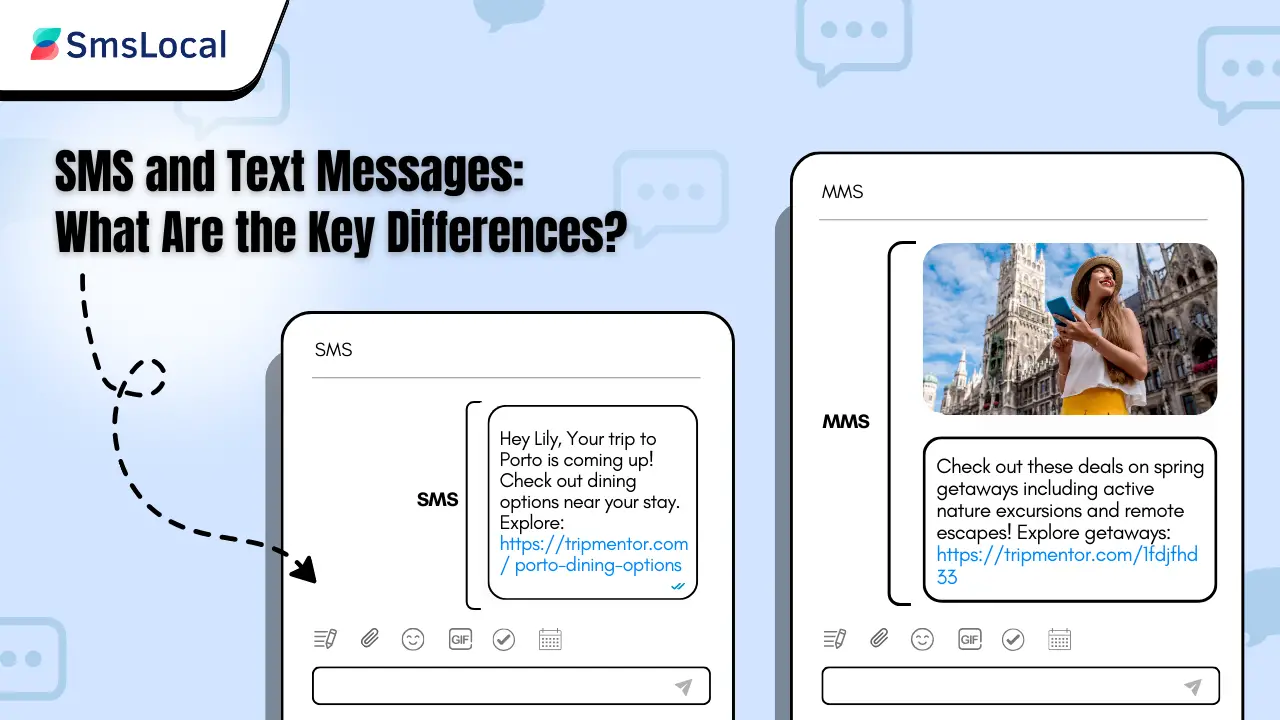
導入
あなたのビジネスは SMS メッセージとテキスト メッセージングを正しく使用していますか?
アメリカ人の 97% が携帯電話を所有し、85% がスマートフォンを所有しているため、モバイル メッセージングは視聴者にリーチする最も効果的な方法の 1 つとなっています。しかし、SMS テキストメッセージとは何ですか?そしてそれはあなたのコミュニケーション戦略にどのように適合するのでしょうか? SMS と他の形式の SMS との違いについて理解する テキストメッセージング ビジネスが適切なツールを使用して顧客とつながるためには、これが非常に重要です。
SMS テキストメッセージは 1990 年代以来デジタル コミュニケーションの定番となっており、マーケティングにおけるその役割は増大し続けています。 SMSLocal では、顧客を惹きつける SMS の力を認識しており、その可能性を最大限に引き出すお手伝いをいたします。主な違いと、SMS の意味が現代のマーケティング戦略において依然として重要である理由を探ってみましょう。
迅速な情報交換が重視されるデジタル世界では、これらのメッセージング オプションを理解することが不可欠です。その間 SMS は短いテキスト メッセージの送信に重点を置いています, MMS は画像やビデオなどのマルチメディア コンテンツに対応します。これらのサービスを区別することで、ユーザーは、簡潔なテキスト更新によるものであれ、よりリッチなメディア体験によるものであれ、他のユーザーと関わるための最適な方法を決定することができます。メッセージング テクノロジの進歩を熟知しているため、その利点を適応して活用することができます。
重要なポイント
- SMS は、テキストベースの迅速なコミュニケーションに広く使用されています。
- MMS を使用すると、画像やビデオなどのマルチメディア コンテンツを送信できます。
- メッセージング サービスは、個人的なコミュニケーションやマーケティング コミュニケーションに不可欠です。
SMS メッセージングとは何ですか?
SMS(ショートメッセージサービス)とは、 テキストメッセージング 通常は最大 160 文字の短いテキスト メッセージ SMS の交換を可能にするサービス。さまざまなモバイル ネットワークで動作し、個人やグループに簡潔なメッセージを送信するための高速かつ便利な方法です。
SMS は個人的な会話や簡単なやりとりによく使用されますが、社内および社外のメッセージングの両方において、企業にとって重要なコミュニケーション ツールにもなっています。時間が経つにつれて、SMS テキストメッセージはモバイル通信の重要な部分に進化し、私たちの多くが毎日依存するものになりました。
SMS と MMS の意味
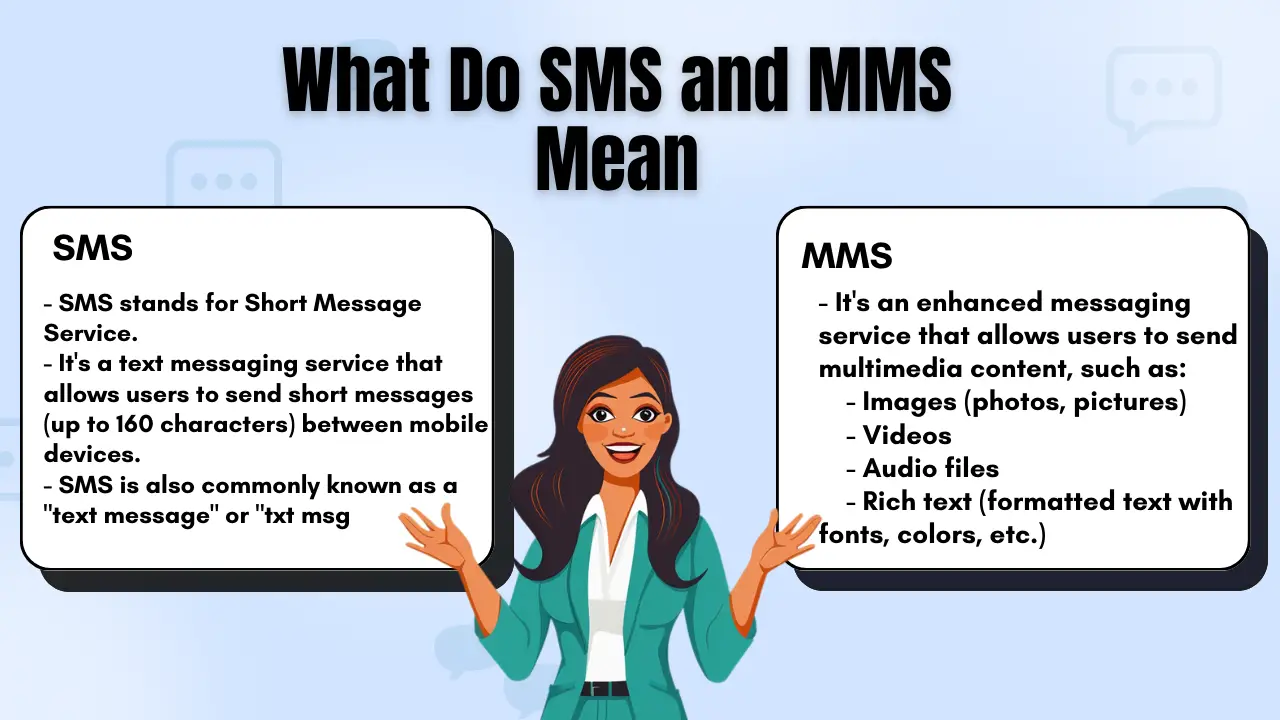
SMS (ショート メッセージ サービス) は、テキスト メッセージを送信するための標準です。各メッセージの長さはスペースを含めて最大 160 文字です。この方法は簡単で迅速なため、広く使用されています。
MMS は Multimedia Messaging Service の略で、単なるテキスト以上のものを送信できます。通常の携帯電話ネットワークを使用して、画像、ビデオ、またはオーディオ クリップを共有できます。スマートフォンやアプリが登場する前は、友人や家族に写真を送信するのに MMS が主流でした。これらのサービスは、私たちが毎日のつながりを維持する方法の一部です。
簡単な比較は次のとおりです。
| 特徴 | SMS | MMS |
|---|---|---|
| コンテンツタイプ | テキストのみ | マルチメディア (画像、ビデオ、オーディオ) |
| 文字数制限 | 160文字 | コンテンツのサイズに厳密な制限はありません |
| 使用法 | クイックメッセージ | メディアの共有 |
メッセージは何文字まで送信できますか?
SMS とも呼ばれるテキスト メッセージは純粋にテキストベースであり、多くの場合、メッセージあたり 160 文字に制限されます。この制限を超えると、メッセージがいくつかの部分に分割される場合があります。テキスト メッセージのSMS は最大 6 つの部分に分割でき、合計で 918 文字になります。
一部のサービスでは、MMS と呼ばれる長いテキストを画像メッセージに変換する場合があり、通信事業者によっては料金が高くなる場合があることに注意してください。ただし、smslocal などの特定のプラットフォームでは、長いテキストであっても MMS に切り替わりません。
SMS とテキスト メッセージングの違い
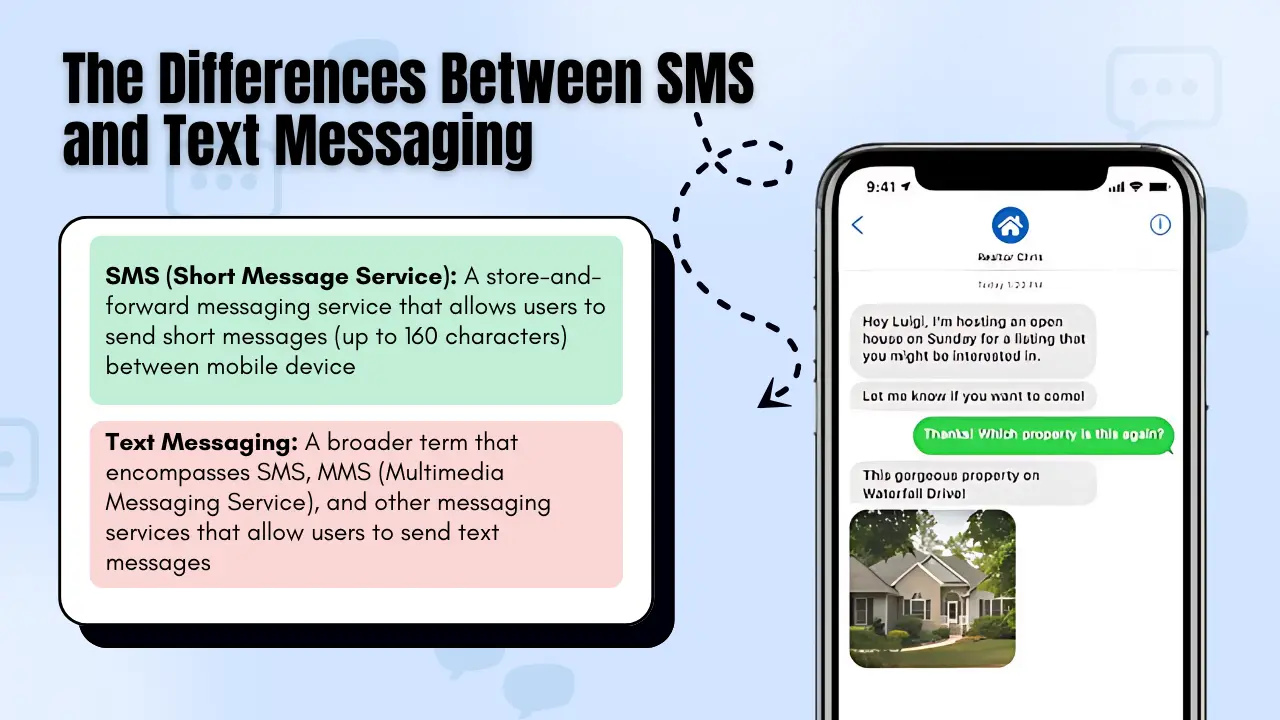
電話を介してメッセージを送信することについて話すとき、私たちはよく「SMS」と「テキスト メッセージ」という用語を同じ意味で使用します。 SMS (ショート メッセージ サービス) は、160 文字に制限され、マルチメディア コンテンツを含まない特定の種類のテキスト メッセージを指します。携帯電話の初期には、「SMS」という用語が広く使用されており、誰かに「SMS を送っている」とも言われていました。
今日では、これらのメッセージに対して「テキスト」という用語が一般的に使用されています。テキストには、SMS メッセージと、ユーザーが写真、ビデオ、音声を送信できる MMS (マルチメディア メッセージング サービス) などのより高度な形式の両方を含めることができます。命名規則は異なりますが、日常用語では、SMS と テキストメッセージは多くの場合、次のような意味であると理解されます。 同じことです。
ヨーロッパ大陸の一部の地域では、依然としてこれらのメッセージを「SMS」の送信と呼ぶ場合があります。一方、米国のような英語圏では、SMS テキストメッセージが元々何を意味していたかを説明するには「テキスト メッセージ」で十分です。この言語の進化は、今日のモバイル メッセージングの使用方法における広範な変化を反映しています。
SMS メッセージの例
SMS メッセージは、重要な情報を迅速かつ効率的に配信するための強力なツールです。企業、組織、個人を問わず、SMS はリマインダーや最新情報からマーケティングや緊急警報まで、さまざまな目的に役立ちます。 SMS メッセージを効果的に使用できる実用的な方法をいくつか紹介します。
- 予約のリマインダーSMS リマインダーは、顧客が予定された約束を忘れないようにするための優れた方法です。綿密に作成されたメッセージには、約束の日付、時間、場所、追加の指示や持ち物が含まれている必要があります。
- カスタマーサポートの最新情報When customers reach out to your support team, they expect timely responses. SMS messages can be used to acknowledge receipt of their request and keep them informed about the status of their inquiry or issue. These messages can provide peace of mind and help manage expectations.
- Marketing PromotionsSMS messages is an excellent channel for reaching potential customers with special offers or promotional campaigns. These messages should contain a clear call-to-action, highlight the key details of the offer, and outline any important terms or conditions. By sending relevant, timely messages, you can drive engagement and sales.
- Emergency NotificationsIn emergency situations, SMS meaning is an effective way to send urgent alerts to the community. These messages should provide clear, concise instructions on how to stay safe, what actions to take, and where to find additional resources if needed.
Key Differences Between MMS and SMS
SMS, or Short Message Service, is a type of messaging that focuses on sending brief text messages. This type of message is usually no longer than 160 characters. When it first came out, SMS was widely recognized, both as a noun and a verb. We remember when people would say they were “SMSing” a contact. Although initially intended to distinguish it from other electronic messaging types like email, today people generally refer to these messages as simply “texts.”
MMS, or Multimedia Messaging Service, allows us to send messages that include images, videos, and other media. Unlike SMS, MMS can handle larger amounts of data, giving us more room to convey richer content beyond basic text.
| 特徴 | SMS | MMS |
|---|---|---|
| 文字数制限 | Up to 160 characters | No strict limit (depends on carrier) |
| Media Support | テキストのみ | Supports images, videos, audio |
In everyday language, SMS has become synonymous with text messages in many English-speaking places, even though technically, MMS extends the possibilities with multimedia content. While we may use “text” informally, knowing the difference is useful for understanding how different messages are transmitted and received.
以下のこともご存知かもしれません:
SMS vs MMS text messages: Meaning & Differences
信頼性が高く、迅速かつ効果的なコミュニケーションにより、メッセージを目立たせることができます。今すぐあなたのテキストメッセージングゲームをレベルアップしましょう!
More People Than Ever Use This Technology
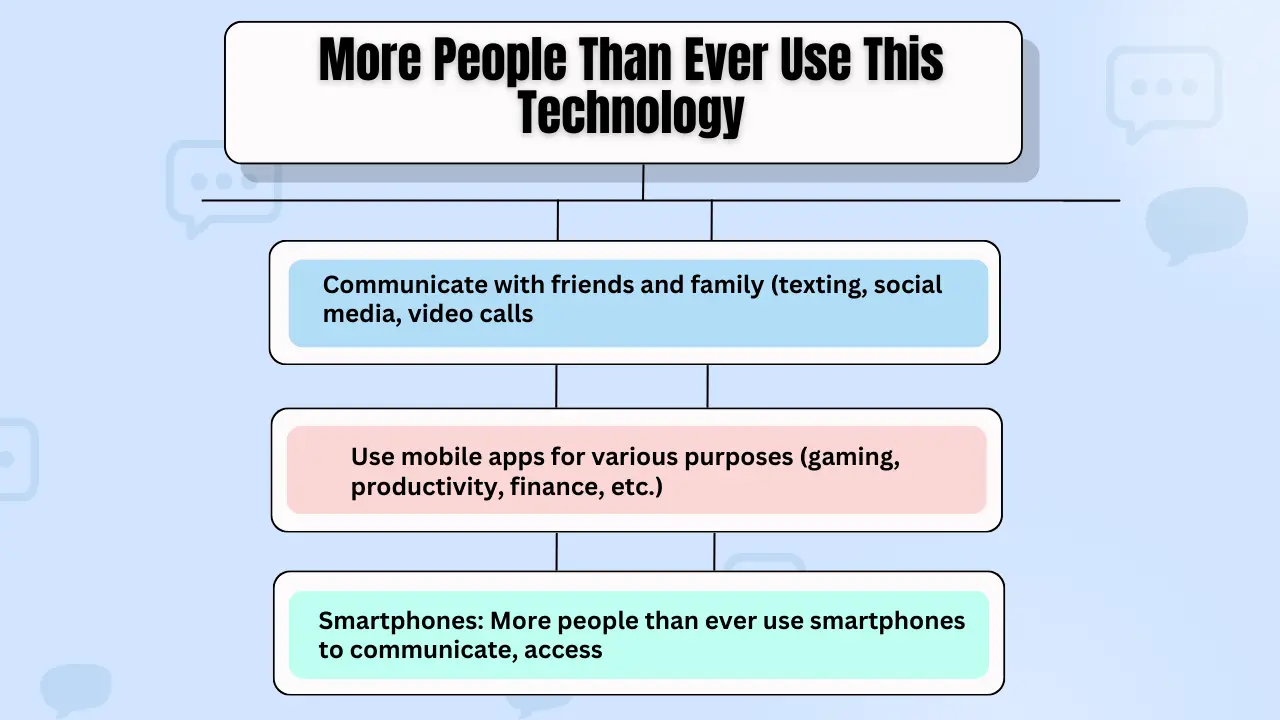
With the rise of smartphones, texting has become an indispensable part of everyday life. Even as social media and messaging apps gain popularity, SMS messages remains a leading form of communication, offering convenience, reliability, and wide accessibility. This trend is not just a passing phase—text messaging continues to dominate due to its ease of use and high engagement rates.
High Cell Phone Ownership: 83% of American adults own a cell phone, showcasing the widespread adoption of mobile technology.
Daily Texting Usage: Nearly 75% of cell phone users text daily, highlighting how integral SMS communication has become.
Average Text Volume: On average, users send and receive about 41.5 text messages per day, illustrating the frequency of texting.
Text Messaging Dominance: Despite the rise of ソーシャルメディア and messaging apps, texting remains one of the most popular and reliable forms of communication.
Support from Cellular Networks: Cellular networks continue to efficiently handle the high volume of text messages, ensuring consistent communication.
Enduring Importance of Texting: Text messaging remains a key way to stay connected, much like it did with earlier mobile phones, making it essential for businesses and personal communication alike.
Leading Approach for Marketing with Customers
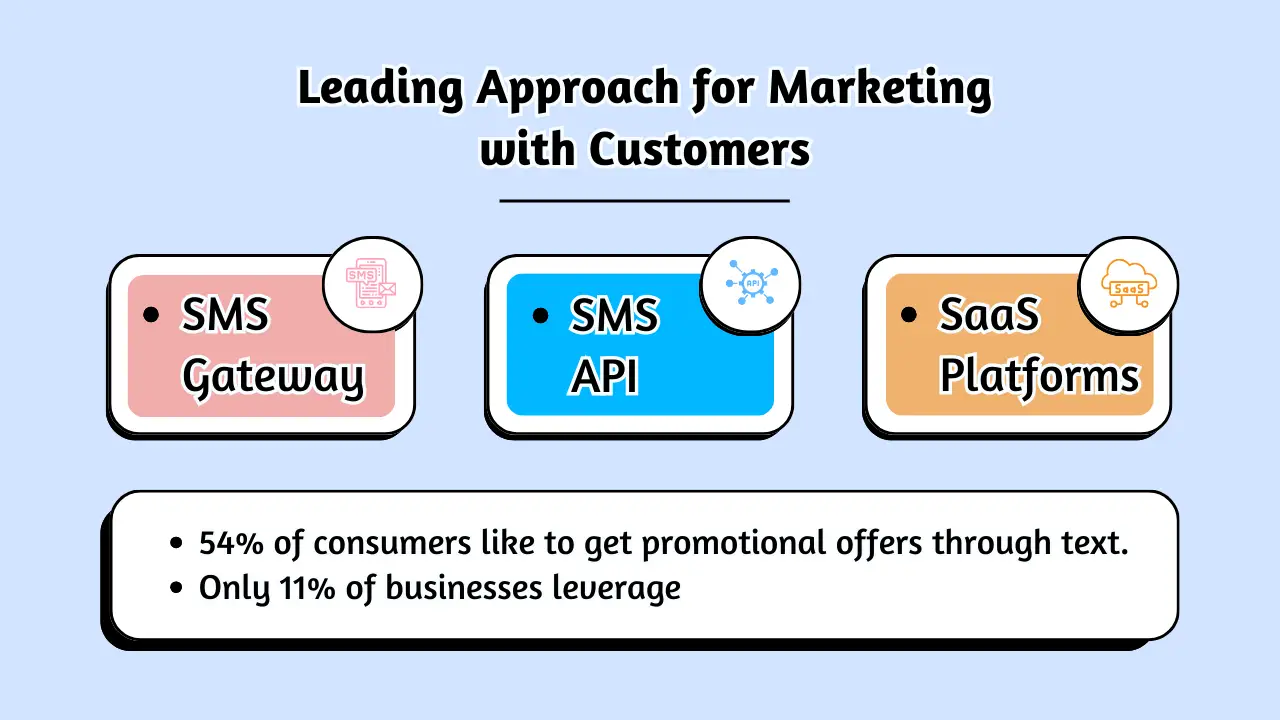
Text messaging has emerged as a leading method for reaching out to customers. The brevity of SMS messages plays a crucial role in their popularity. Customers prefer brief and direct communication, making SMS an ideal channel.
Trust in text messaging is remarkably high. Many customers view SMS as a secure communication method due to its low spam incidence. While emails have a spam rate of 53%, SMS messages exhibit a significantly lower rate of 2.8%. This helps foster confidence among consumers when they receive messages via text.
Preference for SMS
- 54% of consumers like to get promotional offers through text.
- Only 11% of businesses leverage this powerful tool.
| Statistic | Insight |
|---|---|
| 84% of consumers | Have received an SMS from a business, showing just how widely adopted SMS communication has become. |
| 82% of people | Open every text message they receive, significantly higher than the average email open rate of 22.71%. |
| Consumers aged 60+ | Check their phones at least 3 times per hour, proving that texting isn’t just for younger audiences. |
| 70% of consumers | Prefer SMS marketing as a way for businesses to grab their attention. |
| 83% of consumers | Want to receive appointment reminders via text. |
| 66% of consumers | Want to receive service reminders via text. |
| 54% of consumers | Prefer receiving promotions through SMS messages. |
| 60% of consumers | Want to be able to respond to business SMS messages, making text interactions more dynamic. |
The historical effectiveness of text messaging contributes to its popularity. Messages are not just quick but also feel personal and intimate. Texts reach us on our phones and don’t require opening an app or email client. Still, email remains indispensable in professional settings, supported by DMARC rules.
Many of us keep our phones close, increasing the likelihood of immediate interaction. SMS marketing continues to provide an excellent way for businesses to connect with their audience promptly. By tapping into the personal nature of text messaging, companies can create impactful engagements with their customers.
Texting Tools for Your Business
To set up SMS messages, you have several options:
- SMS Gateway: Services like Twilio, Clickatell, and Nexmo provide two-way communication, allowing you to send bulk messages and receive replies. These platforms are ideal for businesses looking to reach large audiences quickly and manage responses effectively.
- SMS API: APIs such as MessageBird, Plivo, and Sinch enable seamless integration of text messaging capabilities directly into your existing software applications. This option offers flexibility and control, allowing you to automate messages and streamline customer interactions within your current system.
- SaaS Platforms: Platforms like Textlocal, Trumpia, and Zang offer user-friendly interfaces with a variety of tools to design campaigns, manage contacts, and analyze results. These solutions are perfect for businesses seeking a comprehensive, easy-to-use platform to handle their text message marketing needs.
People Prefer Texts Over Phone Calls
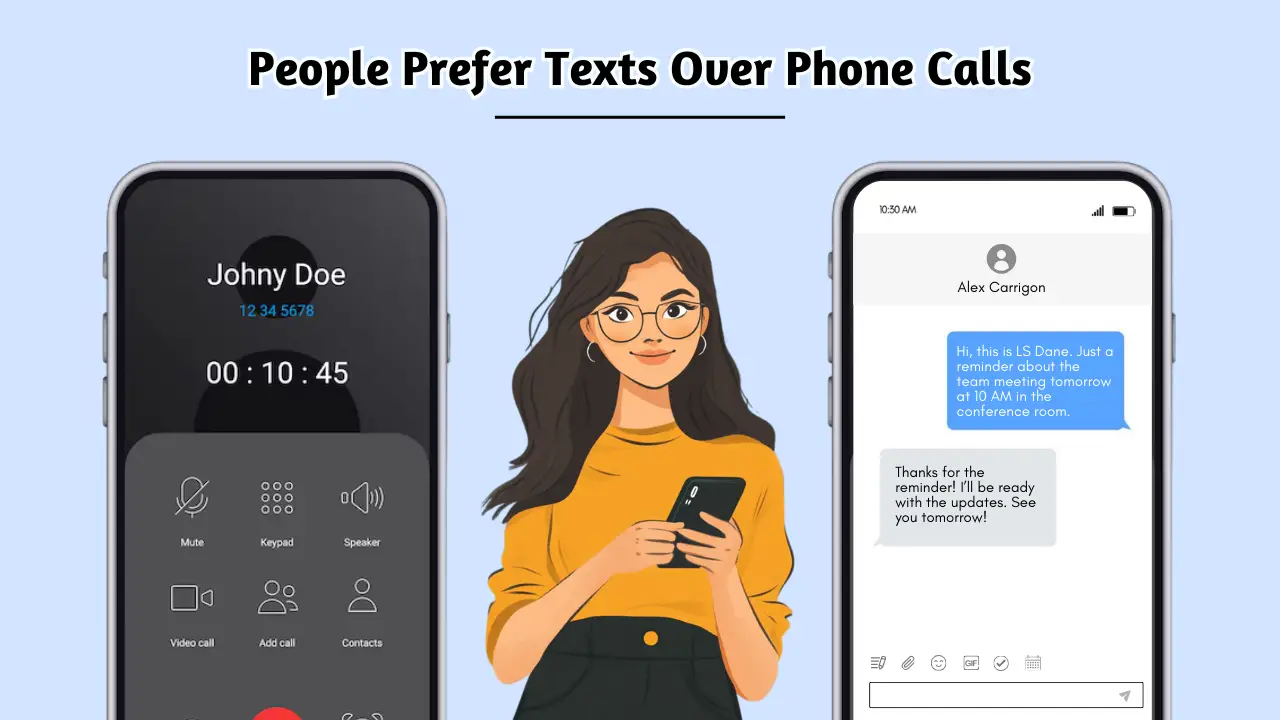
In our observations, texting has become the go-to means of communication, especially among younger generations. A significant percentage of millennials use ss extensively each day. This is likely tied to the fact that many of us grew up with this technology, making texting feel effortless and convenient.Texting offers:
- Quick and Efficient: Texting allows for fast exchanges without long conversations, making it ideal for brief updates or simple queries.
- Less Interruptive: Unlike phone calls, texts don’t demand immediate attention, allowing people to respond when it’s convenient for them.
- Flexible Response Time: Texting offers the freedom to reply at one’s own pace, making it less stressful than phone calls.
- Generational Shift: Millennials and Gen Z, who grew up with texting, find it effortless and convenient. Even those who didn’t have texting early on have adopted it.
- Global Trend: Texting has become a global communication preference, with early adoption seen in countries like Japan.
- Evolving Communication Habits: The shift from phone calls to texting highlights how technology has reshaped communication, making texting a more efficient and preferred option.
Even those who didn’t have texting in their youth have embraced it. We’ve noticed a shift towards messaging in various parts of the world, with early cases seen in places like Japan. As a result, texting is not just a trend but a clear preference over phone conversations. This change is clear evidence of how communication habits have evolved with technological advancements.
The Future of Text Messaging
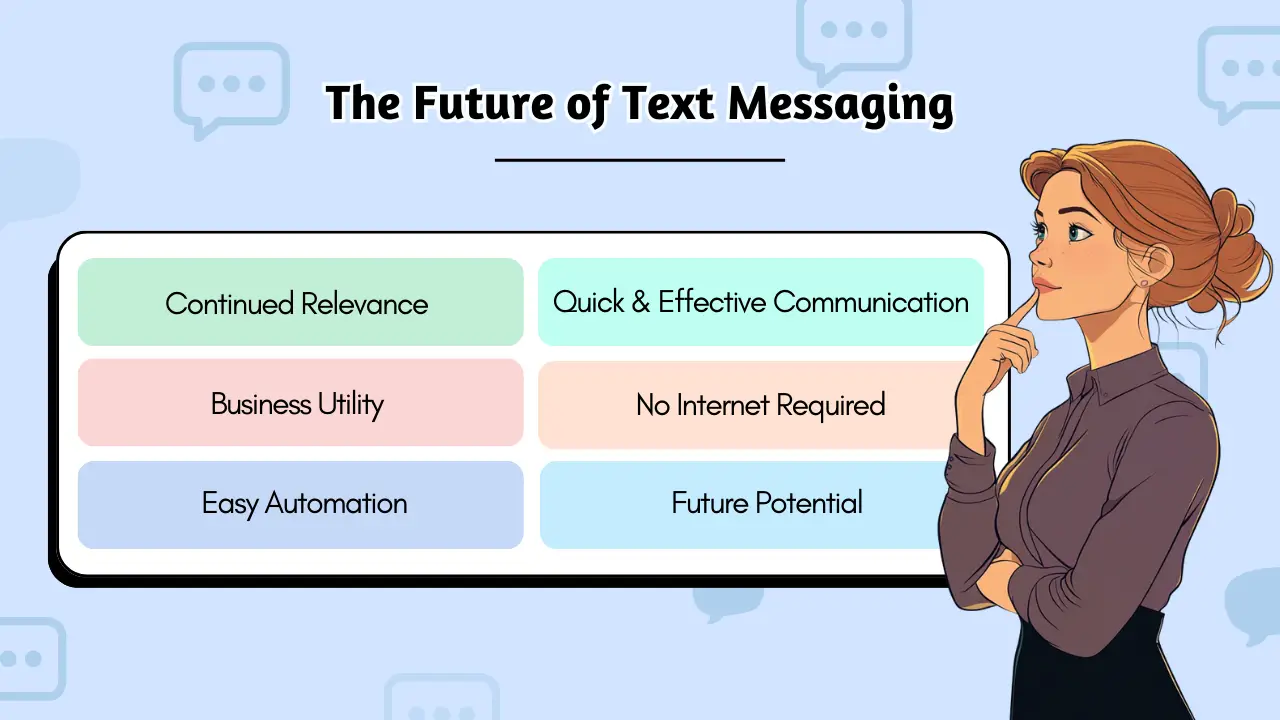
Text messaging has stayed relevant and continues to grow, even with the rise of fast Internet technologies like 4G and 5G. While these technologies make transferring large files easier, many people still value the simple, straightforward way text messages send quick bits of information. This makes texting a great tool that suits both personal and professional needs.
In business, text messaging has become a vital part of marketing strategies. Companies use it to keep customers updated on the products and services they care about. They send out reminders for meetings and share important work details directly through automated systems. The beauty of texting lies in its simplicity and adaptability. Messages can be sent without needing an Internet connection, making them accessible anywhere and anytime.
Text messages are easy to integrate into automated systems, allowing businesses to communicate effectively without much hassle. As long as people need swift and uncomplicated communication, text messaging will remain essential. So, let’s embrace its potential and consider starting our own text message marketing journey today!
結論
When we explore SMS and text messaging, it is important to understand the differences and functions they hold in today’s world. SMS, which stands for Short Message Service, is a protocol used for exchanging short, simple messages over cellular networks. It’s a reliable means of communication due to its straightforward approach and availability across most mobile devices globally.
In contrast, the term “text messaging” is more general. It includes SMS but also refers to messages sent using internet-based messaging services. These services might support rich multimedia like images and videos, unlike SMS text message which is limited to text.
SMS vs. Text Messaging: Key Points
- Technology: SMS uses cellular networks, while text messaging can include internet-based apps.
- Content: SMS supports only text up to 160 characters; text messaging can handle multimedia.
- Cost: Traditional SMS may incur per-message charges, but many modern text messaging services use data or Wi-Fi, which might be more economical, depending on the user’s data plan.
Understanding these distinctions can help users choose the best communication method for their needs. For more in-depth comparisons of SMS and text messaging, explore the analysis offered by SMSLocal. Let’s make sure we’re using the right tools to communicate effectively!
At SMSLocal, we provide reliable and easy-to-use SMS solutions to help you connect with your audience. Start your text message marketing journey with us today
よくある質問
Yes, SMS (Short Message Service) and text messaging are often used interchangeably. SMS is the technical term for sending short text messages over a cellular network, while “text message” is a more general term that can refer to any type of written message sent between devices, including SMS and messages sent via internet-based apps.
SMS stands for Short Message Service, which is the protocol used for sending text messages between mobile phones over cellular networks. The term “text message” is often used to describe SMS, but it can also encompass other forms of messaging, including messages sent via apps like iMessage or WhatsApp, which don’t use the SMS protocol.
SMS (Short Message Service) is a system for sending short text messages, typically limited to 160 characters, over a cellular network. It is widely used for personal and business communication and works on almost all mobile phones.
The terms “text message” and “SMS message” are often used interchangeably, but “text message” is a broader term that can refer to any text-based communication. SMS specifically refers to messages sent over the cellular network with a 160-character limit, while text messages may also include those sent through internet-based services like iMessage or WhatsApp.
An SMS message refers to a short message sent using the Short Message Service protocol over a cellular network. It is a basic, text-only communication method used for personal, business, and marketing purposes.
When you see “SMS” on a text message, it typically indicates that the message was sent using the Short Message Service protocol. This is the traditional method of sending text messages between mobile phones, as opposed to messages sent through internet-based platforms like iMessage or WhatsApp.
On Android, SMS refers specifically to the traditional text messages sent via the cellular network, while other forms of messaging like WhatsApp or Facebook Messenger use internet data instead of cellular networks. SMS is a more basic, text-only form of communication, while messaging apps on Android can include multimedia features like images and videos.