
 English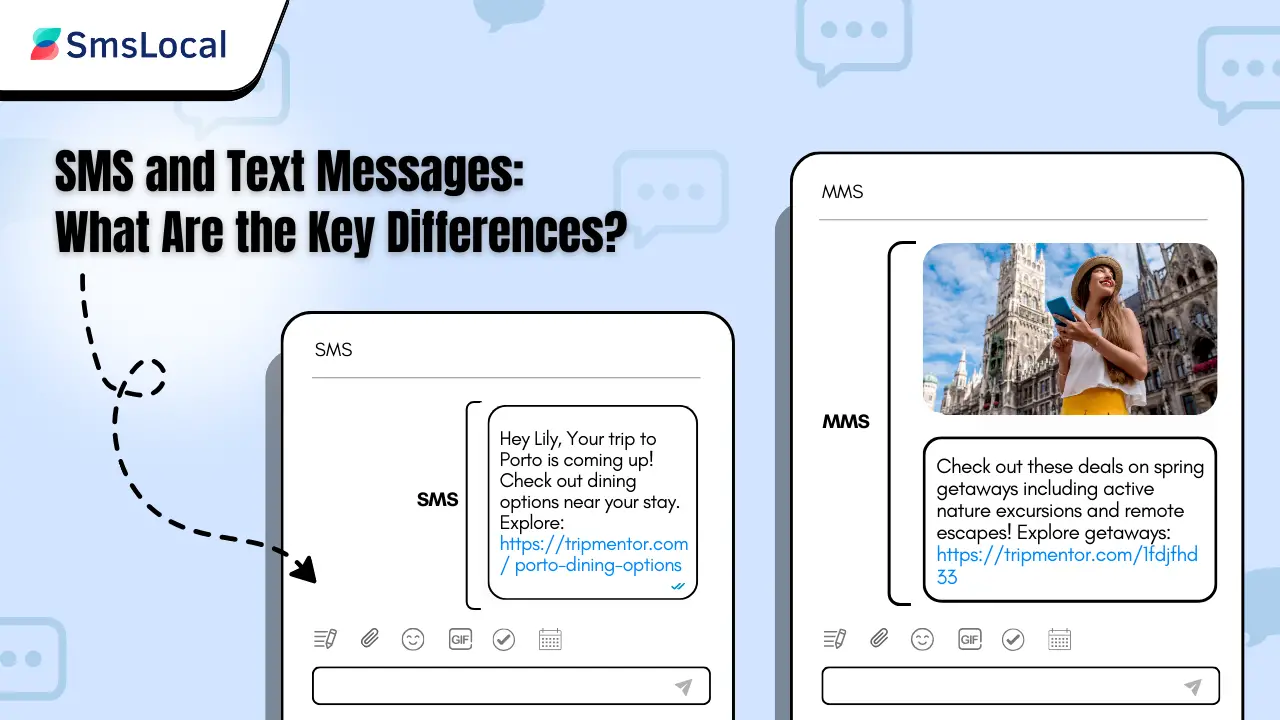
Introducción
¿Su empresa utiliza correctamente los mensajes SMS y la mensajería de texto?
Dado que el 97% de los estadounidenses posee un teléfono celular y el 85% posee un teléfono inteligente, la mensajería móvil se ha convertido en una de las formas más efectivas de llegar a su audiencia. Pero, ¿qué son los mensajes de texto SMS y cómo encajan en su estrategia de comunicación? Comprender los SMS y sus diferencias con otras formas de mensajes de texto es crucial para garantizar que su empresa esté utilizando la herramienta adecuada para conectarse con los clientes.
Los mensajes de texto SMS han sido un elemento básico en la comunicación digital desde la década de 1990 y su papel en el marketing sigue creciendo. En SMSLocal, conocemos el poder de los SMS para atraer clientes y estamos aquí para ayudarlo a maximizar su potencial. Exploremos las diferencias clave y por qué el significado de los SMS sigue siendo vital en las estrategias de marketing modernas.
Comprender estas opciones de mensajería es esencial en un mundo digital donde se valora el rápido intercambio de información. Mientras Los SMS se centran en el envío de mensajes de texto cortos, MMS admite contenido multimedia como imágenes y vídeos. Diferenciar entre estos servicios ayuda a los usuarios a decidir la mejor manera de interactuar con los demás, ya sea a través de actualizaciones de texto concisas o experiencias multimedia más ricas. Nuestra familiaridad con los avances en la tecnología de mensajería nos posiciona bien para adaptarnos y capitalizar sus beneficios.
Conclusiones clave
- Los SMS se utilizan ampliamente para comunicaciones rápidas basadas en texto.
- MMS permite enviar contenido multimedia como imágenes y vídeos.
- Los servicios de mensajería son cruciales para la comunicación personal y de marketing.
¿Qué es la mensajería SMS?
SMS (Servicio de Mensajes Cortos) es un mensajes de texto Servicio que permite el intercambio de mensajes de texto breves, normalmente de hasta 160 caracteres. Funciona en varias redes móviles, lo que lo convierte en una forma rápida y cómoda de enviar mensajes concisos a individuos o grupos.
Si bien los SMS se utilizan habitualmente para conversaciones personales o intercambios rápidos, también se han convertido en una herramienta de comunicación clave para las empresas, tanto para mensajería interna como externa. Con el tiempo, los mensajes de texto SMS se han convertido en una parte esencial de la comunicación móvil, convirtiéndose en algo en lo que muchos de nosotros confiamos a diario.
¿Qué significan SMS y MMS?
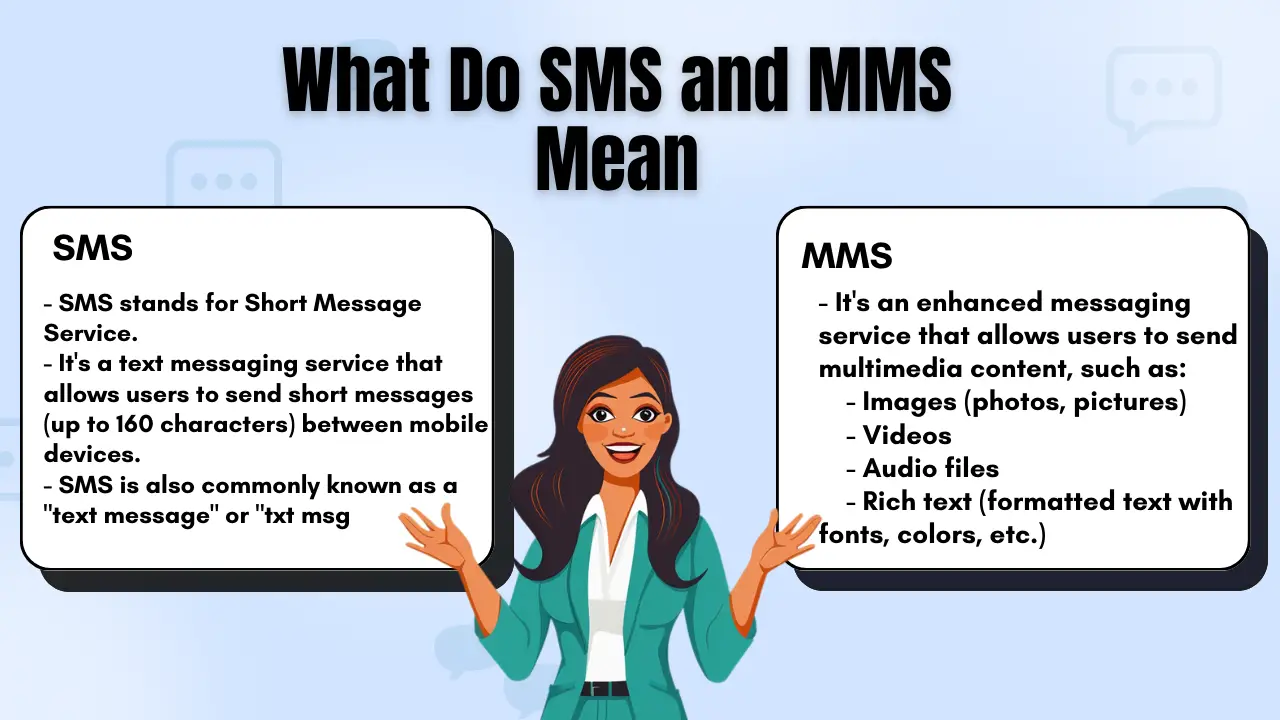
SMS, o servicio de mensajes cortos, es el estándar para enviar mensajes de texto sms. Cada mensaje tiene hasta 160 caracteres, incluidos los espacios. Este método es muy utilizado porque es sencillo y rápido.
MMS, que significa Servicio de Mensajería Multimedia, nos permite enviar algo más que texto. Podemos compartir imágenes, vídeos o clips de audio utilizando nuestra red celular habitual. Antes de los teléfonos inteligentes y las aplicaciones, MMS era la forma preferida de enviar imágenes a amigos y familiares. Estos servicios son parte de cómo nos mantenemos conectados todos los días.
Aquí hay una comparación rápida:
| Característica | SMS | MMS |
|---|---|---|
| Tipo de contenido | Sólo texto | Multimedia (imágenes, vídeos, audio) |
| Límite de caracteres | 160 caracteres | No hay límite estricto para el tamaño del contenido |
| Uso | Mensajes rápidos | Compartir medios |
¿Cuántos caracteres pueden enviar los mensajes?
Los mensajes de texto, también conocidos como SMS, se basan exclusivamente en texto y, a menudo, están limitados a 160 caracteres por mensaje. Cuando superemos este límite, el mensaje podrá dividirse en varias partes. Es posible dividir los mensajes de texto SMS en hasta 6 partes, con un total combinado de 918 caracteres.
Es importante tener en cuenta que algunos servicios pueden convertir textos más largos en mensajes con imágenes, llamados MMS, que pueden ser más costosos según el operador. Sin embargo, algunas plataformas, como smslocal, no cambian a MMS, ni siquiera para mensajes de texto largos.
Las diferencias entre SMS y mensajes de texto
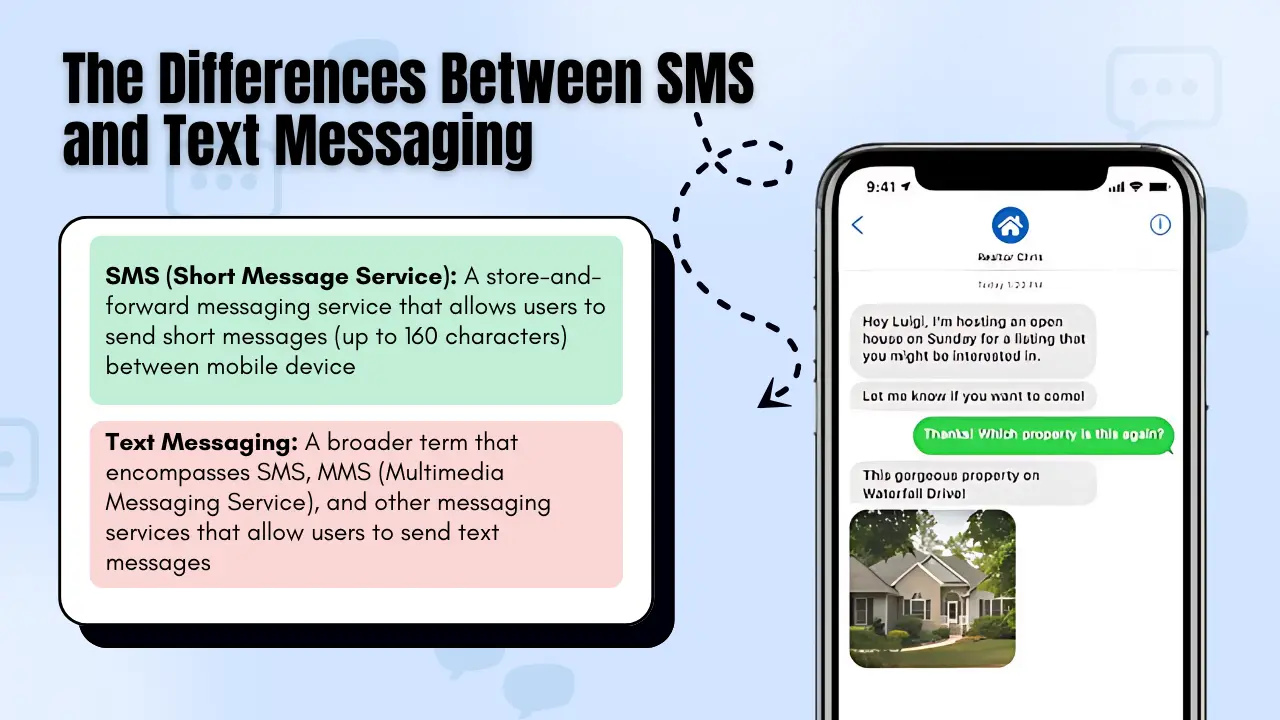
Cuando hablamos de enviar mensajes a través de nuestros teléfonos, solemos utilizar los términos "SMS" y "mensaje de texto" indistintamente. SMS, o Servicio de Mensajes Cortos, se refiere a un tipo específico de mensaje de texto que está limitado a 160 caracteres y no incluye ningún contenido multimedia. En los primeros días de los teléfonos móviles, "SMS" era un término muy utilizado, y la gente incluso decía que estaba "enviando SMS" a alguien.
Hoy en día, utilizamos comúnmente el término "texto" para estos mensajes. Los textos pueden incluir tanto mensajes SMS como formas más avanzadas como MMS (Servicio de mensajería multimedia), que permite a los usuarios enviar imágenes, vídeos y sonidos. A pesar de las diferentes convenciones de nomenclatura, en el lenguaje cotidiano, SMS y A menudo se entiende que los mensajes de texto significan la misma cosa.
En algunas partes de Europa continental, es posible que la gente todavía se refiera a estos mensajes como enviar un "SMS". Mientras tanto, en regiones de habla inglesa como Estados Unidos, “mensaje de texto” es suficiente para describir lo que originalmente significaban los mensajes de texto SMS. La evolución de este lenguaje refleja cambios más amplios en la forma en que utilizamos la mensajería móvil hoy en día.
Ejemplos de mensajes SMS
Los mensajes SMS son una herramienta poderosa para entregar información importante de manera rápida y eficiente. Ya sea que sea una empresa, una organización o un individuo, los SMS pueden servir para una variedad de propósitos, desde recordatorios y actualizaciones hasta alertas de emergencia y marketing. A continuación se muestran algunas formas prácticas en las que se pueden utilizar los mensajes SMS de forma eficaz:
- Recordatorios de citasLos recordatorios por SMS son una excelente manera de garantizar que los clientes no olviden sus citas programadas. Un mensaje bien redactado debe incluir la fecha, la hora y el lugar de la cita, junto con cualquier instrucción o elemento adicional que deba llevar.
- Actualizaciones de atención al clienteCuando los clientes se comunican con su equipo de soporte, esperan respuestas oportunas. Los mensajes SMS se pueden utilizar para acusar recibo de su solicitud y mantenerlos informados sobre el estado de su consulta o problema. Estos mensajes pueden brindar tranquilidad y ayudar a gestionar las expectativas.
- Marketing PromotionsSMS messages is an excellent channel for reaching potential customers with special offers or promotional campaigns. These messages should contain a clear call-to-action, highlight the key details of the offer, and outline any important terms or conditions. By sending relevant, timely messages, you can drive engagement and sales.
- Emergency NotificationsIn emergency situations, SMS meaning is an effective way to send urgent alerts to the community. These messages should provide clear, concise instructions on how to stay safe, what actions to take, and where to find additional resources if needed.
Key Differences Between MMS and SMS
SMS, or Short Message Service, is a type of messaging that focuses on sending brief text messages. This type of message is usually no longer than 160 characters. When it first came out, SMS was widely recognized, both as a noun and a verb. We remember when people would say they were “SMSing” a contact. Although initially intended to distinguish it from other electronic messaging types like email, today people generally refer to these messages as simply “texts.”
MMS, or Multimedia Messaging Service, allows us to send messages that include images, videos, and other media. Unlike SMS, MMS can handle larger amounts of data, giving us more room to convey richer content beyond basic text.
| Característica | SMS | MMS |
|---|---|---|
| Límite de caracteres | Up to 160 characters | No strict limit (depends on carrier) |
| Media Support | Sólo texto | Supports images, videos, audio |
In everyday language, SMS has become synonymous with text messages in many English-speaking places, even though technically, MMS extends the possibilities with multimedia content. While we may use “text” informally, knowing the difference is useful for understanding how different messages are transmitted and received.
Quizás también sepas:
SMS vs MMS text messages: Meaning & Differences
Haga que sus mensajes se destaquen con una comunicación confiable, rápida y efectiva. ¡Mejora tu juego de mensajes de texto hoy!
More People Than Ever Use This Technology
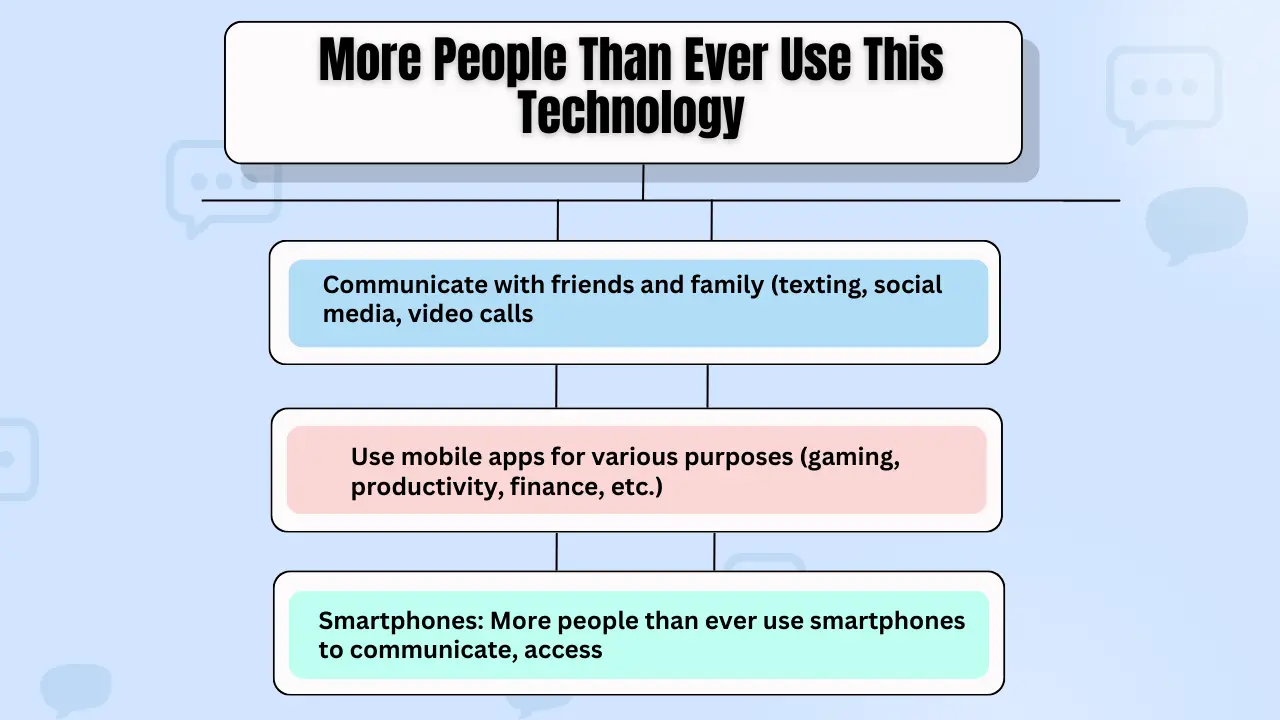
With the rise of smartphones, texting has become an indispensable part of everyday life. Even as social media and messaging apps gain popularity, SMS messages remains a leading form of communication, offering convenience, reliability, and wide accessibility. This trend is not just a passing phase—text messaging continues to dominate due to its ease of use and high engagement rates.
High Cell Phone Ownership: 83% of American adults own a cell phone, showcasing the widespread adoption of mobile technology.
Daily Texting Usage: Nearly 75% of cell phone users text daily, highlighting how integral SMS communication has become.
Average Text Volume: On average, users send and receive about 41.5 text messages per day, illustrating the frequency of texting.
Text Messaging Dominance: Despite the rise of redes sociales and messaging apps, texting remains one of the most popular and reliable forms of communication.
Support from Cellular Networks: Cellular networks continue to efficiently handle the high volume of text messages, ensuring consistent communication.
Enduring Importance of Texting: Text messaging remains a key way to stay connected, much like it did with earlier mobile phones, making it essential for businesses and personal communication alike.
Leading Approach for Marketing with Customers
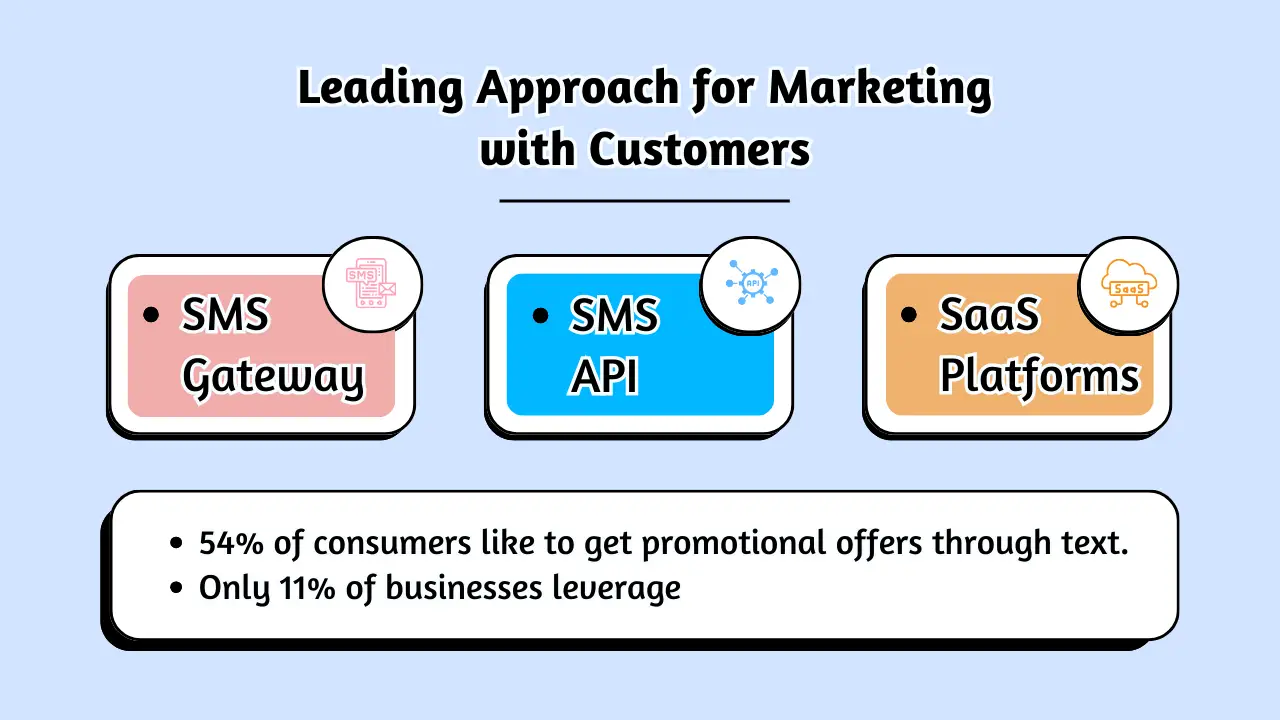
Text messaging has emerged as a leading method for reaching out to customers. The brevity of SMS messages plays a crucial role in their popularity. Customers prefer brief and direct communication, making SMS an ideal channel.
Trust in text messaging is remarkably high. Many customers view SMS as a secure communication method due to its low spam incidence. While emails have a spam rate of 53%, SMS messages exhibit a significantly lower rate of 2.8%. This helps foster confidence among consumers when they receive messages via text.
Preference for SMS
- 54% of consumers like to get promotional offers through text.
- Only 11% of businesses leverage this powerful tool.
| Statistic | Insight |
|---|---|
| 84% of consumers | Have received an SMS from a business, showing just how widely adopted SMS communication has become. |
| 82% of people | Open every text message they receive, significantly higher than the average email open rate of 22.71%. |
| Consumers aged 60+ | Check their phones at least 3 times per hour, proving that texting isn’t just for younger audiences. |
| 70% of consumers | Prefer SMS marketing as a way for businesses to grab their attention. |
| 83% of consumers | Want to receive appointment reminders via text. |
| 66% of consumers | Want to receive service reminders via text. |
| 54% of consumers | Prefer receiving promotions through SMS messages. |
| 60% of consumers | Want to be able to respond to business SMS messages, making text interactions more dynamic. |
The historical effectiveness of text messaging contributes to its popularity. Messages are not just quick but also feel personal and intimate. Texts reach us on our phones and don’t require opening an app or email client. Still, email remains indispensable in professional settings, supported by DMARC rules.
Many of us keep our phones close, increasing the likelihood of immediate interaction. SMS marketing continues to provide an excellent way for businesses to connect with their audience promptly. By tapping into the personal nature of text messaging, companies can create impactful engagements with their customers.
Texting Tools for Your Business
To set up SMS messages, you have several options:
- SMS Gateway: Services like Twilio, Clickatell, and Nexmo provide two-way communication, allowing you to send bulk messages and receive replies. These platforms are ideal for businesses looking to reach large audiences quickly and manage responses effectively.
- SMS API: APIs such as MessageBird, Plivo, and Sinch enable seamless integration of text messaging capabilities directly into your existing software applications. This option offers flexibility and control, allowing you to automate messages and streamline customer interactions within your current system.
- SaaS Platforms: Platforms like Textlocal, Trumpia, and Zang offer user-friendly interfaces with a variety of tools to design campaigns, manage contacts, and analyze results. These solutions are perfect for businesses seeking a comprehensive, easy-to-use platform to handle their text message marketing needs.
People Prefer Texts Over Phone Calls
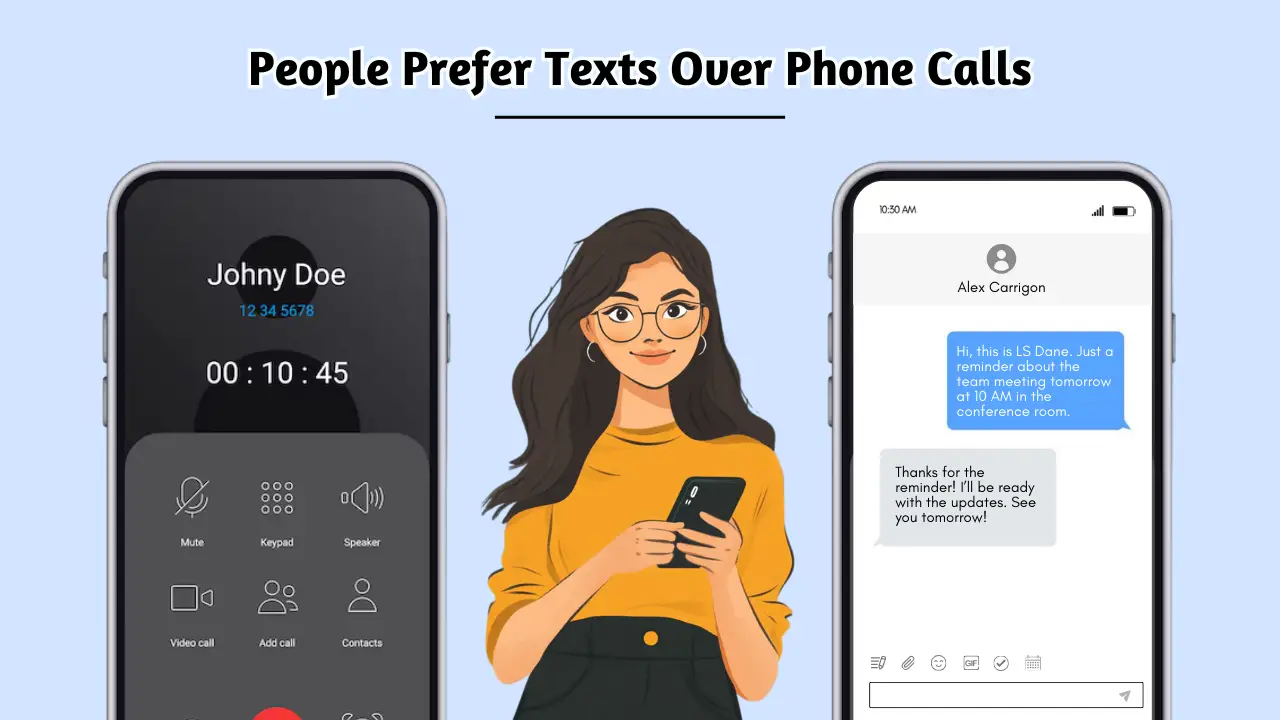
In our observations, texting has become the go-to means of communication, especially among younger generations. A significant percentage of millennials use ss extensively each day. This is likely tied to the fact that many of us grew up with this technology, making texting feel effortless and convenient.Texting offers:
- Quick and Efficient: Texting allows for fast exchanges without long conversations, making it ideal for brief updates or simple queries.
- Less Interruptive: Unlike phone calls, texts don’t demand immediate attention, allowing people to respond when it’s convenient for them.
- Flexible Response Time: Texting offers the freedom to reply at one’s own pace, making it less stressful than phone calls.
- Generational Shift: Millennials and Gen Z, who grew up with texting, find it effortless and convenient. Even those who didn’t have texting early on have adopted it.
- Global Trend: Texting has become a global communication preference, with early adoption seen in countries like Japan.
- Evolving Communication Habits: The shift from phone calls to texting highlights how technology has reshaped communication, making texting a more efficient and preferred option.
Even those who didn’t have texting in their youth have embraced it. We’ve noticed a shift towards messaging in various parts of the world, with early cases seen in places like Japan. As a result, texting is not just a trend but a clear preference over phone conversations. This change is clear evidence of how communication habits have evolved with technological advancements.
The Future of Text Messaging
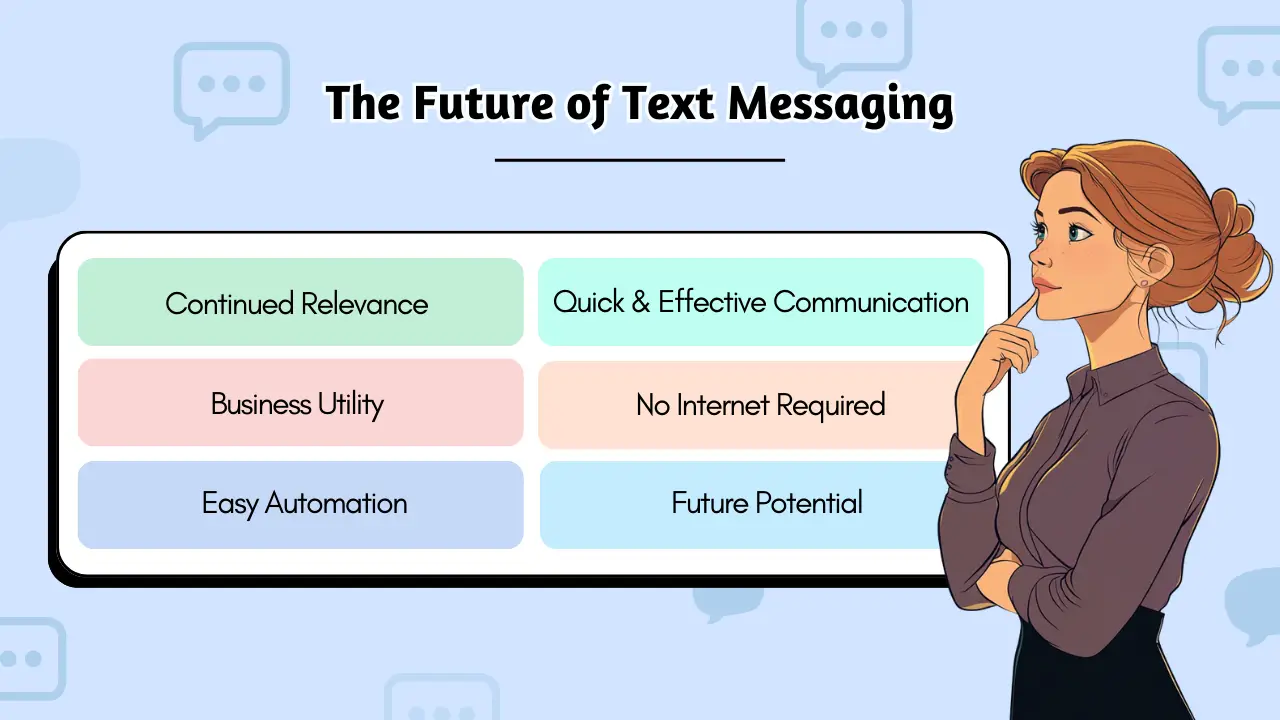
Text messaging has stayed relevant and continues to grow, even with the rise of fast Internet technologies like 4G and 5G. While these technologies make transferring large files easier, many people still value the simple, straightforward way text messages send quick bits of information. This makes texting a great tool that suits both personal and professional needs.
In business, text messaging has become a vital part of marketing strategies. Companies use it to keep customers updated on the products and services they care about. They send out reminders for meetings and share important work details directly through automated systems. The beauty of texting lies in its simplicity and adaptability. Messages can be sent without needing an Internet connection, making them accessible anywhere and anytime.
Text messages are easy to integrate into automated systems, allowing businesses to communicate effectively without much hassle. As long as people need swift and uncomplicated communication, text messaging will remain essential. So, let’s embrace its potential and consider starting our own text message marketing journey today!
Conclusión
When we explore SMS and text messaging, it is important to understand the differences and functions they hold in today’s world. SMS, which stands for Short Message Service, is a protocol used for exchanging short, simple messages over cellular networks. It’s a reliable means of communication due to its straightforward approach and availability across most mobile devices globally.
In contrast, the term “text messaging” is more general. It includes SMS but also refers to messages sent using internet-based messaging services. These services might support rich multimedia like images and videos, unlike SMS text message which is limited to text.
SMS vs. Text Messaging: Key Points
- Technology: SMS uses cellular networks, while text messaging can include internet-based apps.
- Content: SMS supports only text up to 160 characters; text messaging can handle multimedia.
- Cost: Traditional SMS may incur per-message charges, but many modern text messaging services use data or Wi-Fi, which might be more economical, depending on the user’s data plan.
Understanding these distinctions can help users choose the best communication method for their needs. For more in-depth comparisons of SMS and text messaging, explore the analysis offered by SMSLocal. Let’s make sure we’re using the right tools to communicate effectively!
At SMSLocal, we provide reliable and easy-to-use SMS solutions to help you connect with your audience. Start your text message marketing journey with us today
Preguntas frecuentes
Yes, SMS (Short Message Service) and text messaging are often used interchangeably. SMS is the technical term for sending short text messages over a cellular network, while “text message” is a more general term that can refer to any type of written message sent between devices, including SMS and messages sent via internet-based apps.
SMS stands for Short Message Service, which is the protocol used for sending text messages between mobile phones over cellular networks. The term “text message” is often used to describe SMS, but it can also encompass other forms of messaging, including messages sent via apps like iMessage or WhatsApp, which don’t use the SMS protocol.
SMS (Short Message Service) is a system for sending short text messages, typically limited to 160 characters, over a cellular network. It is widely used for personal and business communication and works on almost all mobile phones.
The terms “text message” and “SMS message” are often used interchangeably, but “text message” is a broader term that can refer to any text-based communication. SMS specifically refers to messages sent over the cellular network with a 160-character limit, while text messages may also include those sent through internet-based services like iMessage or WhatsApp.
An SMS message refers to a short message sent using the Short Message Service protocol over a cellular network. It is a basic, text-only communication method used for personal, business, and marketing purposes.
When you see “SMS” on a text message, it typically indicates that the message was sent using the Short Message Service protocol. This is the traditional method of sending text messages between mobile phones, as opposed to messages sent through internet-based platforms like iMessage or WhatsApp.
On Android, SMS refers specifically to the traditional text messages sent via the cellular network, while other forms of messaging like WhatsApp or Facebook Messenger use internet data instead of cellular networks. SMS is a more basic, text-only form of communication, while messaging apps on Android can include multimedia features like images and videos.