 English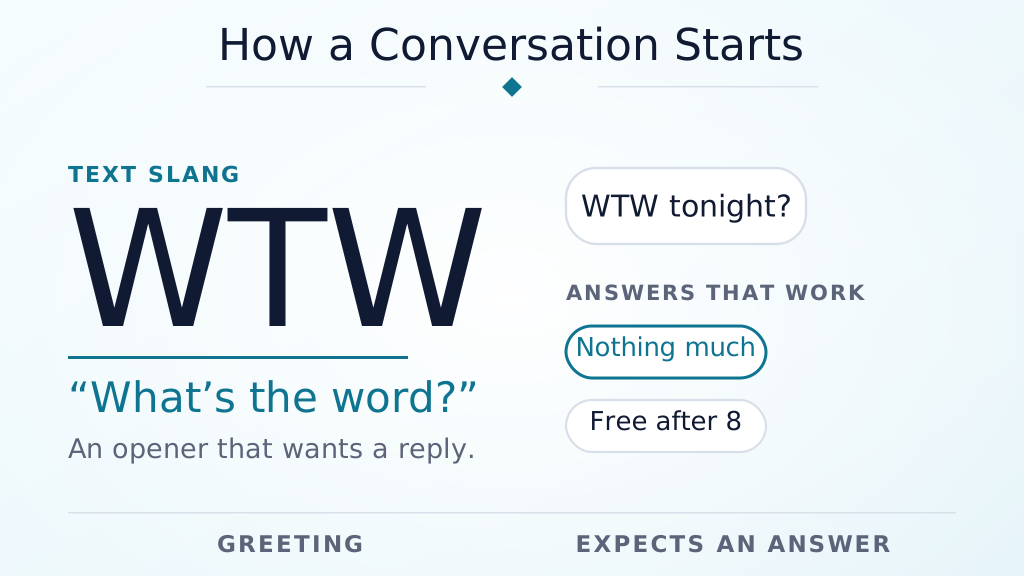
Wstęp
Czy kiedykolwiek otrzymałeś SMS-a o treści „WTW?” i zastanawiałeś się, co to znaczy? 🤔 Nie jesteś sam! Ponieważ slang SMS-owy stale się rozwija, łatwo jest zagubić się w morzu skrótów.
WTW to jeden z tych akronimów pojawiających się w wiadomościach, postach w mediach społecznościowych, a nawet w historiach na Snapchacie. Ale nie martw się – to nic skomplikowanego!
Niezależnie od tego, czy piszesz SMS-y ze znajomymi, planujesz, czy reagujesz na coś zaskakującego, WTW ma wiele znaczeń, a my jesteśmy tutaj, aby je wszystkie dla Ciebie wyjaśnić.
Zanim skończysz czytać, będziesz dokładnie wiedział, co oznacza skrót WTW, jak go używać i jak najlepiej odpowiadać, dzięki czemu możesz pisać SMS-y jak profesjonalista.
Kluczowe dania na wynos
- WTW oznacza „Jakie jest Słowo?” do przypadkowych meldowań i „Co do czego?” za niespodziankę.
- Używa się go również do sugestii dotyczących ubioru (W co się ubrać?) i rozrywki (Co obejrzeć?).
- Popularny na Snapchacie, WhatsApp, TikTok i Instagramie do rozpoczynania rozmów.
- Najlepsze do nieformalnych rozmów; unikać w ustawieniach profesjonalnych dla przejrzystości.
Co oznacza WTW w tekście?
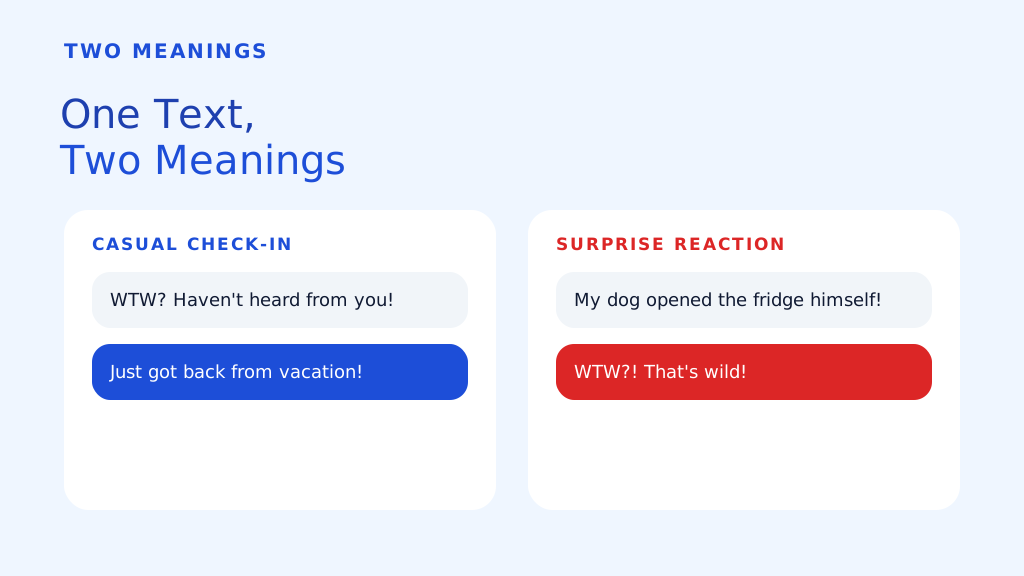
Wysyłając SMS-y lub przesyłając wiadomości online, często spotykamy akronimy takie jak WTW. Skrót ten zwykle oznacza „Jakie jest to słowo?” i jest to swobodny sposób, aby zapytać kogoś, co się dzieje lub sprawdzić, co się u niego dzieje. Choć może się to wydawać niejasne, wyrażenie to jest proste i przyjazne.
Oto kilka alternatywnych znaczeń:
- Jaka jest fala?: pyta o aktualne trendy lub plany społeczne.
- Jaka jest droga?: Można tego użyć, pytając o drogę.
WTW znaczenie w tekście jest często używany w relaksujących rozmowach między przyjaciółmi i może być świetnym sposobem na rozpoczęcie czatu. Ponieważ jest popularny w kulturze wysyłania SMS-ów, jego zrozumienie i używanie może pomóc nam w utrzymaniu wciągającego i zwięzłego charakteru naszych rozmów. Więcej informacji na ten temat można znaleźć w dalszej części artykułu na temat wyrażeń takich jak WTW Znaczenie w SMS-ach.
1. WTW może oznaczać „Jakie jest to słowo?” w tekście
Kiedy piszemy SMS-y, używając skrótu, WTW często oznacza „Jakie jest to słowo?”. To zdanie jest swobodnym sposobem na rozpoczęcie rozmowy lub skontaktowanie się z kimś. Wyobraź sobie to jako przyjazne szturchnięcie, aby zobaczyć, co dzieje się w czyimś życiu lub usłyszeć jakieś wieści.
Skrót ten jest powszechnie używany wśród znajomych, zarówno w formie tekstowej, jak i osobistej. To szybki sposób, aby zapytać, co nowego lub sprawdzić, czy ktoś ma jakieś interesujące aktualizacje. Oto prosty przykład wykorzystania WTW:
Przykład 1:
- Osoba A: "WTW? Dawno się nie odzywaliśmy!"
- Osoba B: "Hej! Właśnie wróciłem z wakacji. Było cudownie!"
Przykład 2:
- Osoba A: „WTW w ten weekend?”
- Osoba B: "Myślisz o wycieczce na plażę. Wchodzisz w to?"
W tym kontekście Osoba A kontaktuje się z Osobą B, która przekazuje pewne osobiste wiadomości. Korzystanie z WTW znaczenie w tekście dzięki temu komunikacja staje się łatwa i wciągająca.
2. WTW może oznaczać „Co jest czym?” w tekście
Kiedy piszemy SMS-y, często stosujemy stenografię. Często pojawia się wiele akronimów i skrótów. Jednym z takich skrótów jest WTW, co oznacza „What the What?” To wyrażenie wyraża zdziwienie lub niedowierzanie w swobodny sposób.
Kultura SMS-ów ma swój własny język. Używanie skrótów pomaga nam szybko się komunikować. WTW pasuje do tego wzorca, przekazując szok lub zamieszanie bez długich wyjaśnień.
Przykład 1:
- Osoba A: "Wiesz co? Mój pies właśnie nauczył się sam otwierać lodówkę!"
- Osoba B: "WTW?! To szaleństwo! Teraz musisz zamknąć swoje przekąski!"
Przykład 2:
- Osoba A: „Właśnie widziałem, jak ktoś zamawiał pizzę z ananasem i masłem orzechowym!”
- Osoba B: „WTW?! To brzmi tak dziwnie!”
Akronimy tekstowe, takie jak WTW, wzbogacają nasze codzienne rozmowy, umożliwiając nam szybkie wyrażanie naszych uczuć. Jest to część ewolucji komunikacji cyfrowej, dostosowującej się do naszego szybkiego tempa życia. Zrozumienie takich terminów wzbogaca nasze SMS-y słownictwo i ożywia rozmowy.
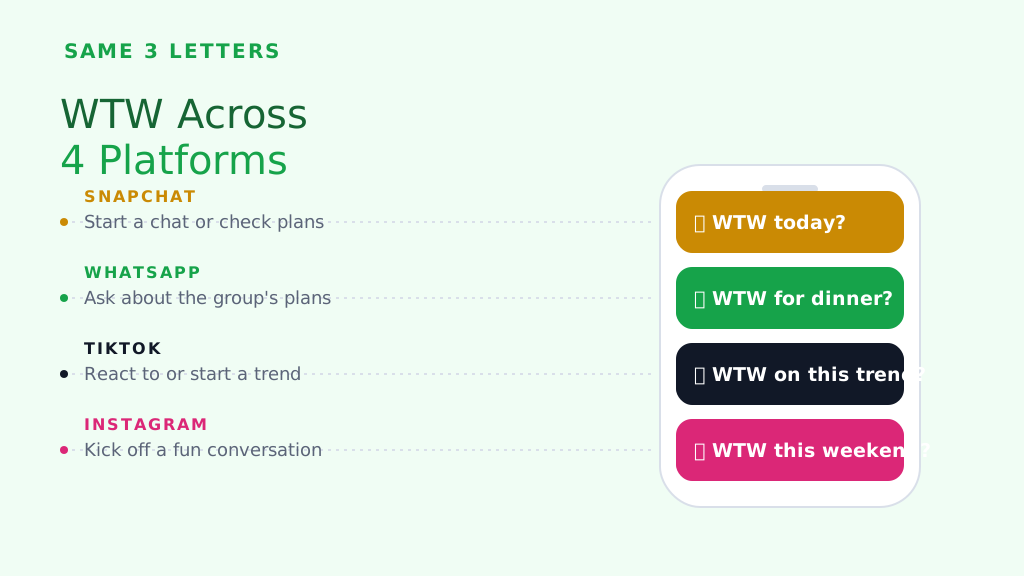
WTW na Snapchacie, WhatsApp, TikTok i Instagramie
1. Snapchat
WTW na Snapchacie jest często używany do rozpoczęcia rozmowy lub sprawdzenia, co ktoś porabia. Możemy zobaczyć, jak znajomy wysyła nam wiadomość typu „WTW?” co oznacza „Jakie jest to słowo?” lub „Co robisz?”
Przykład 1: Planowanie Hangouta
Osoba A: Wysyła snapa "WTW dzisiaj? Chcesz coś zjeść?" Osoba B: „Tak! Chodźmy na pizzę o 17:00?” Osoba A: "Brzmi nieźle! Do zobaczenia."
Przykład 2: Nieformalna odprawa
Osoba A: Wysyła snapa z selfie „WTW?” Osoba B: „Właśnie odpoczywam w domu, a ty?” Osoba A: "To samo! Myślę o obejrzeniu filmu."
Przykład 3: Angażująca historia na Snapchacie
Someone posts a story: “WTW tonight? Let’s do something fun!”
Friends might reply with their plans, keeping the interaction lively.”
2. WhatsApp
On WhatsApp, WTW is a quick way to ask friends about their current activities. It helps us seamlessly start a chat without much formality.
Example 1: Organizing an Event
Person A (in a group chat): “WTW for Saturday’s dinner? Are we sticking with the Italian place?” Person B: “Yes! I think Italian sounds perfect.”
Example 2: Checking Plans in a Group Chat
Person A: “WTW for the movie? Should we book 7 PM or 9 PM?” Person B: “7 PM works better for me!”
Example 3: Reacting to News
Person A: “I got the promotion at work today!” Person B: “WTW! That’s amazing news! Congrats!”
| Platforma | Stosowanie | Przykład |
|---|---|---|
| Snapchata | Used to start a casual conversation or check what someone is up to. | “WTW tonight? Any plans?” |
| Sent in chats to ask about someone’s activities or get an update. | “Hey, WTW with our group trip?” | |
| TikTok | Used in captions or comments to engage with followers. | “WTW? Drop your opinions below!” |
| Instagrama | Appears in DMs, comments, or stories to ask about recent posts or plans. | “WTW with your latest post? Looks amazing!” |
3. TikTok
TikTok creators use WTW in captions and comments to engage with followers, often asking for input or reactions.
TikTok Creator (Caption on a video): “WTW? Let me know your thoughts!” Comment from Follower: “This is hilarious! Keep them coming!”
Example 2: Asking About a Trend in Comments
Person A (Commenting on a trending video): “WTW about this trend? Is it worth trying?” Person B: “Definitely! It’s all over my feed!”
Example 3: Interactive TikTok Live Session
TikTok Creator (Starting a live session): “Hey crew, WTW tonight? Let’s chat about new trends!” Viewer Response: “Can we talk about the new dance challenge? It’s blowing up!”
4. Instagram
Instagram users often incorporate WTW in stories or messages to kick off a conversation in a fun and casual way.
Example 1: Starting a Conversation in Stories
Person A (Instagram Story Post): “WTW with everyone this weekend? Share your plans!” Follower Response: “Heading to a beach trip! What about you?”
Example 2: Checking In Through Direct Messages (DMs)
Person A (DM): “WTW with your latest post? Looks amazing!” Person B: “Thanks! It’s from my trip to Italy last week!”
Example 3: Reacting to a Post in Comments
Person A (Comment on a friend’s picture): “WTW? Loved the vibes!” Person B (Reply): “Thank you! That sunset was unreal!”
Other Interpretations of WTW
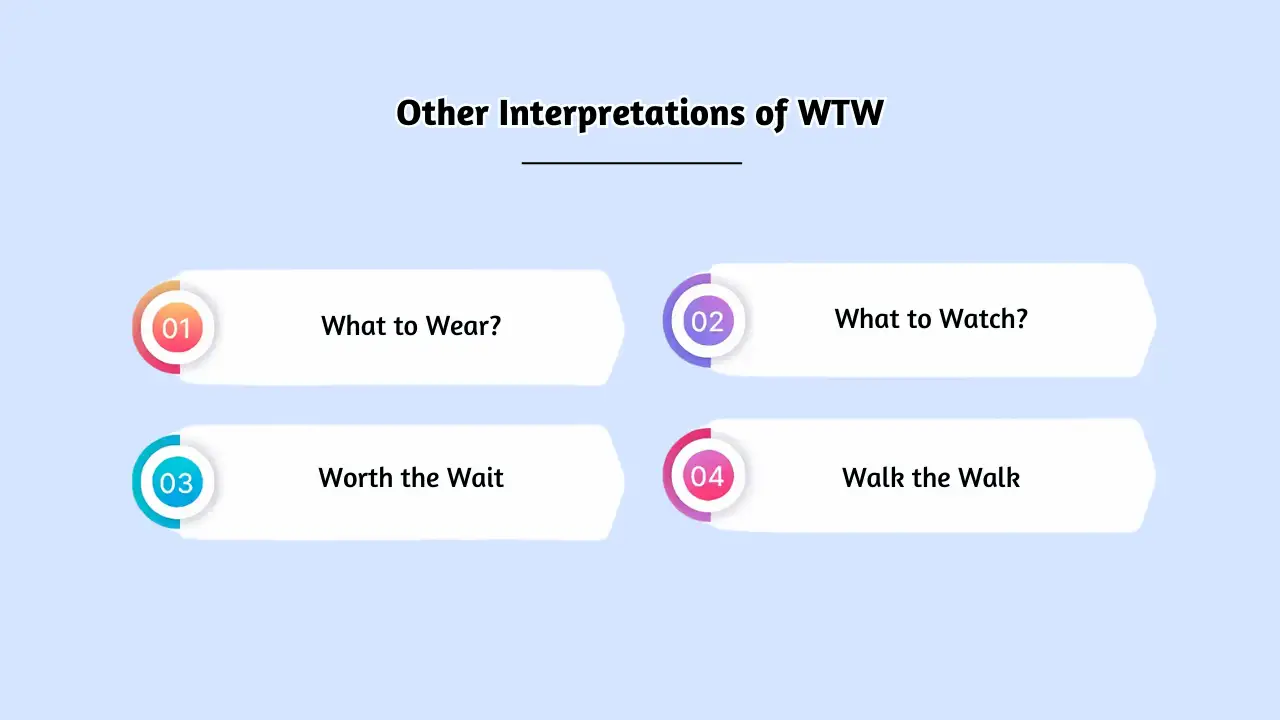
Besides the common meanings of “What’s the Word?” and “What the What?”, WTW can also have other interpretations depending on the context. These include “What to Wear,” “What to Watch,” “Worth the Wait,” and “Walk the Walk.”
| WTW Meaning | Usage Context | Example Sentence |
|---|---|---|
| What to Wear? | Used when deciding on an outfit for an event or confirming dress codes. | Osoba A: “WTW for the wedding? Is it black tie or casual?”Person B: “It’s formal! Definitely black tie.” |
| What to Watch? | Commonly used in discussions about movies, TV shows, or online videos. | Osoba A: “WTW on Netflix? I’m in the mood for a thriller.”Person B: “Watch ‘Gone Girl’—it’s amazing!” |
| Worth the Wait | Expresses that something was worth being patient for. | Osoba A: “The concert was totally WTW. Best night ever!”Person B: “I told you! They always put on a great show.” |
| Walk the Walk | Refers to people who practice what they preach and back up their words with actions. | Osoba A: “She really WTW after standing up for her team in the meeting.”Person B: “True leader vibes!” |
Być może znasz także:
How to Send a Mass Text on iPhone? Step-by-Step Guide
Spraw, aby Twoje wiadomości wyróżniały się dzięki niezawodnej, szybkiej i skutecznej komunikacji. Podnieś poziom swojej gry w wysyłanie SMS-ów już dziś!
How Can We Use ‘What’s the Word’ Efficiently?
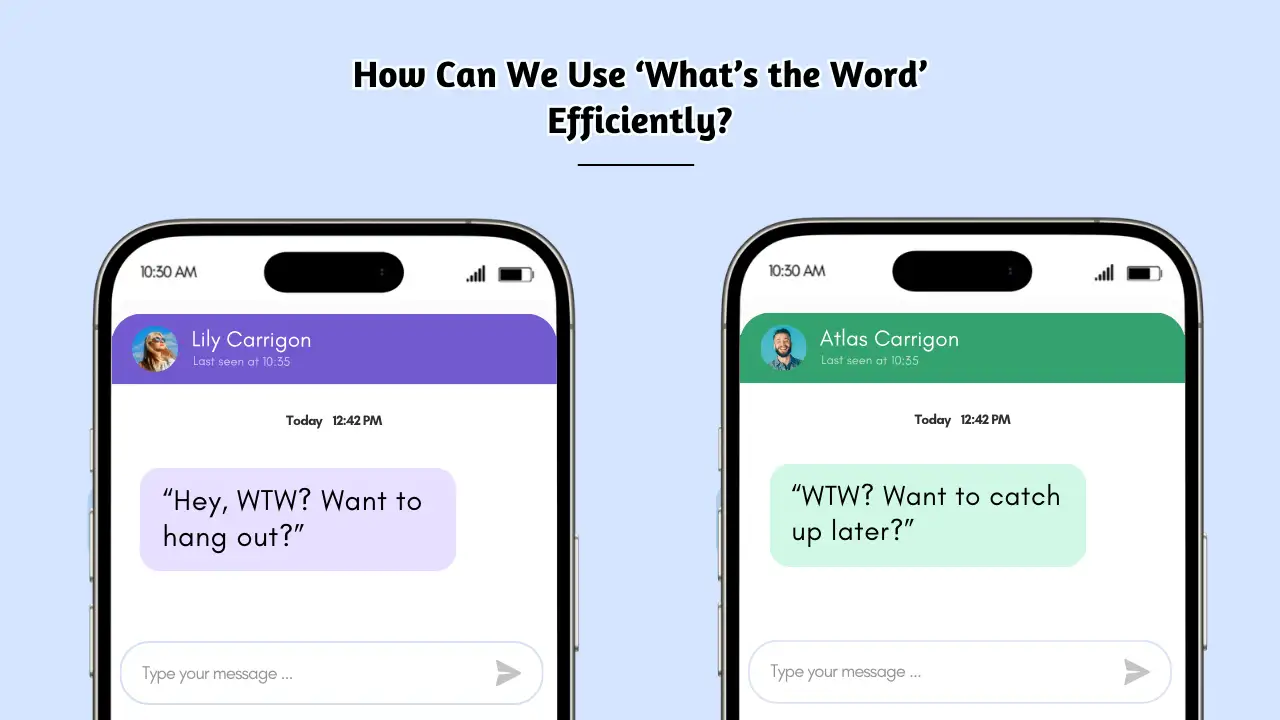
Using “What’s the Word” (WTW) in texts is a great way to stay in touch with friends. It acts as a casual way to ask about what someone else is up to. To use it well, we should consider a few points.
1. Use WTW to Invite Friends to Hang Out
WTW is a great way to casually ask friends about their availability without being too specific. It keeps the conversation open-ended, allowing the other person to take the lead.
Przykłady:
- “Hey, WTW? Want to hang out?”
- “WTW later tonight? I’m free after 6.”
- “WTW this weekend? Any plans?”
2. Use WTW Instead of “What’s Up?”
Rather than saying “What’s up?”, using WTW makes your text feel modern and conversational. It’s a quick and casual way to check in with someone.
Przykłady:
- “WTW? Want to catch up later?”
- “Hello, WTW today? Let me know your schedule.”
- “WTW this Sunday? Let’s do something fun.”
By using WTW in your messages, you can make interactions feel effortless and up-to-date while keeping things light and engaging.
How to Use ‘What the What’ Efficiently?
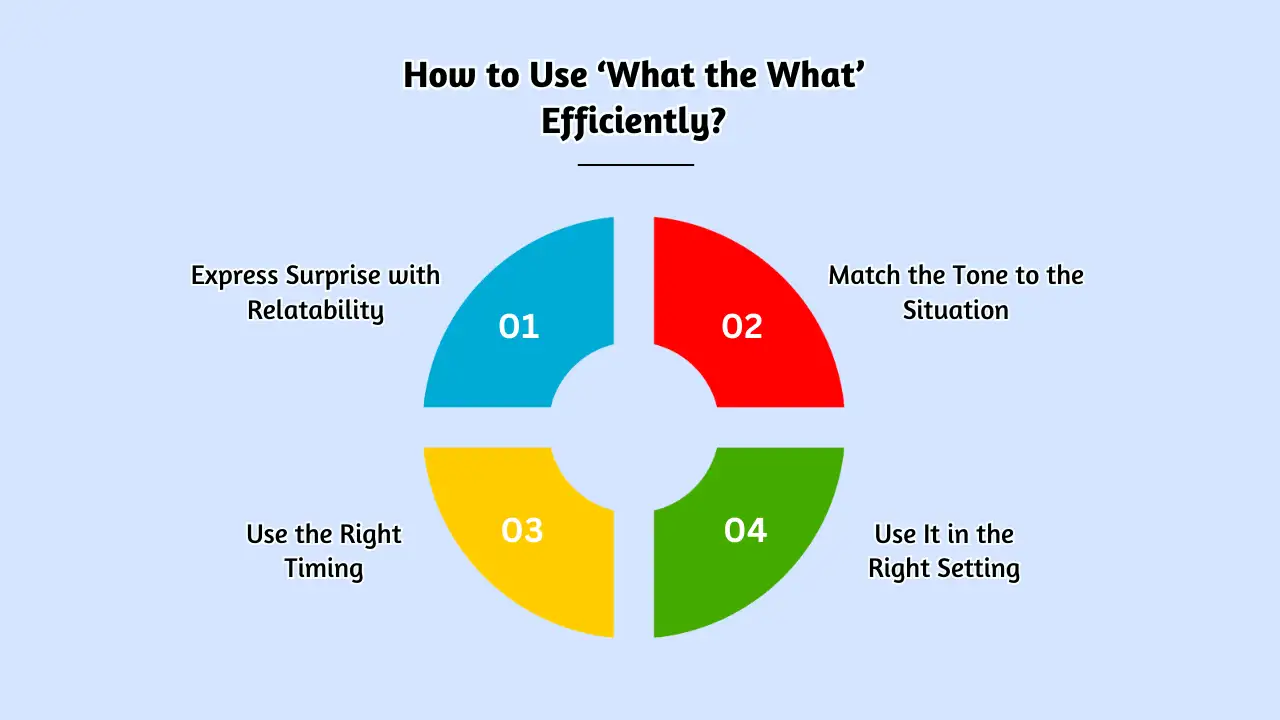
Using “What the What” in conversation can be a fun and engaging way to express surprise or disbelief. It’s an informal phrase, often used in casual settings. Here’s how we can incorporate it effectively:
- Express Surprise with RelatabilityUse “What the What” when reacting to unexpected situations, like a shocking movie twist or an unbelievable sports outcome.
Przykład:
- “What the what?! That goal was insane!”
- Use the Right TimingSaying it immediately after a surprising event enhances its impact. The quicker the reaction, the more natural it feels.
Przykład:
- “What the what?! Did that just happen?!”
- Match the Tone to the SituationThe way you say it matters. Saying it with enthusiasm or disbelief makes the reaction feel more genuine.
Przykład:
- “What the what?! No way that just happened!”
- Use It in the Right SettingThis phrase is best suited for casual conversations with friends. Avoid using it in professional or formal settings where a more neutral response may be appropriate.
Przykład:
- “What the what?! You got front-row concert tickets?”
Let’s remember that language is a tool for connection. Phrases like “What the What” add color and personality to our chats, making interactions more lively and entertaining.
How to Respond to WTW in Text?
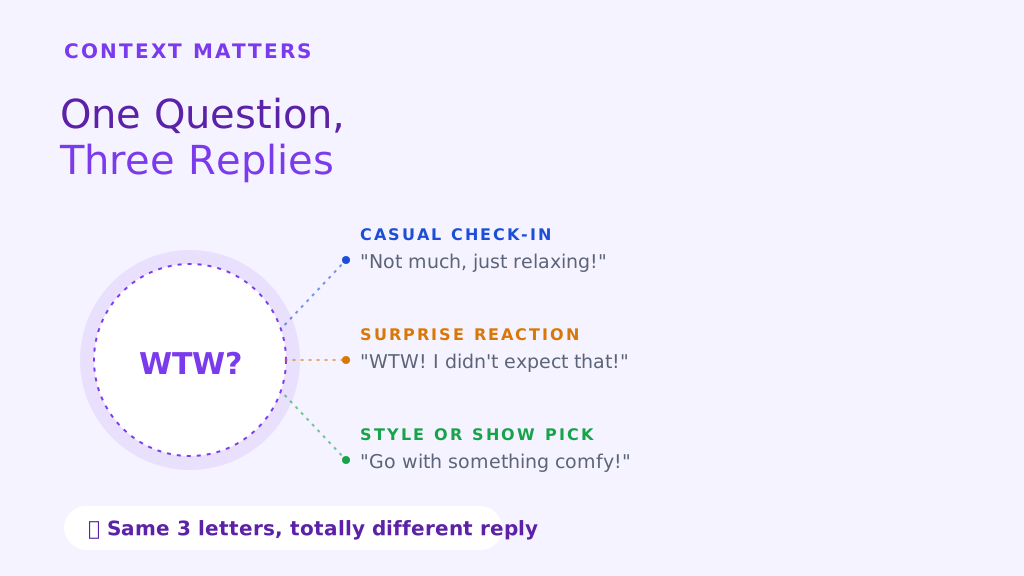
WTW can have multiple meanings depending on the context in which it is used. Your response should align with the intended meaning of WTW meaning in text in the conversation. Below are different scenarios and how to respond appropriately:
1. When WTW Means “What’s the Word?”
If someone sends “WTW?” as a way to check in or make plans, you can respond with:
- “Not much, just relaxing. You?”
- “I’m free after work. Wanna grab dinner?”
- “Nothing planned yet. WTW with you?”
Przykład:Person A: “WTW? Let’s meet today.” Person B: “Sounds good! What time are you thinking?”
2. When WTW Means “What the What?”
If WTW is used to express surprise or disbelief, your response can acknowledge the reaction:
- “WTW! I didn’t expect that either!”
- “I know, right? That was crazy!”
- “WTW, I was shocked too!”
- “Yeah, it’s unbelievable!”
Przykład: Person A: “WTW! Did you see that happen? I can’t believe it.” Person B: “Same! That was totally unexpected.”
3. When WTW Refers to “What to Wear” or “What to Watch”
If WTW is used to ask for outfit advice or movie recommendations, you can respond with:
- “WTW? I’d go with something casual for dinner.”
- “For the movie night, we could watch the new Marvel flick!”
- “WTW? Maybe a black dress for the party?”
Przykład: Person A: “I don’t know WTW for the dinner date.” Person B: “Go with something stylish but comfortable!”
Variations and Related Slang Terms to WTW
Here’s a table with common skróty tekstowe and their meanings:
| Skrót | Oznaczający | Przykład użycia |
|---|---|---|
| WYD (What You Doing) | Used to ask someone what they’re currently up to. | “Hey, WYD? Wanna grab lunch?” |
| HMU (Hit Me Up) | A casual way to ask someone to reach out or make plans. | “HMU when you’re free to chat!” |
| LMK (Let Me Know) | A request for updates or decisions. | “LMK if you’re coming to the party.” |
| WTV (Whatever) | Expresses indifference or a lack of interest in a casual way. | “It’s fine, WTV you decide.” |
| WHT (What) | Used when questioning something or expressing shock. | “WHT?! You got VIP tickets?” |
| WYF (Where You From) | A way to ask someone about their location or origin. | “WYF? I don’t think we’ve met before.” |
| WYLL (What You Look Like) | Used when asking someone about their appearance. | “WYLL? I wanna see a recent photo!” |
| T.S (Talk Soon) | A polite way to exit a conversation. | “Gotta go now, TS!” |
| OTP (One True Pairing) | Refers to a favorite romantic couple (fictional or real). | “Ross and Rachel will always be my OTP!” |
| NFS (Not For Sure) | Used when someone disagrees or feels unsure about something. | “NFS if I can make it to the event.” |
| FS (For Sure) | Shows agreement or certainty. | “FS, I’ll be there on time!” |
Each variation depends on the situation and the platform being used. These variations help us stay connected by using language that fits the context of our conversations.
Tips for Using WTW Effectively
When we include “WTW” in our conversations, it’s important to use it thoughtfully. This acronym can mean “What’s the Word?” or “What’s the Wave?” and adds a casual tone to chats. Here are some top tips for using it effectively:
- Use “WTW” in informal chats with friends or peers, not in professional settings.
- Match the sender’s tone to keep the conversation engaging.
- Understand the context, as WTW can have different meanings in different situations.
- Use emojis or GIFs to make messages more lively and expressive.
By applying these strategies, we can make our exchanges more enjoyable and effective when using “WTW” in our messages.
When Is It Best to Avoid Using WTW?
Using “WTW” isn’t always appropriate. There are situations where it’s better to use full phrases instead of this abbreviation.
- Avoid using WTW in professional settings to maintain a formal tone.
- Use full phrases with unfamiliar people to prevent confusion.
- Opt for clear language when the message is important.
- Avoid slang in serious conversations to ensure proper communication.
Podsumowanie
When we come across the acronym “WTW,” it often sparks curiosity. In the world of online communication, “WTW” stands for different things. Most commonly, it means “What’s the Word?” This is a casual way to ask what’s happening or what news someone might have. It’s like saying “What’s up?” but with a modern twist.
Another possible meaning is “What’s the Wave?” This usage refers to trends or plans, like asking someone if there’s anything interesting going on. In certain contexts, it might also ask, “What’s the Way?” usually to request directions or guidance.
The versatility of “WTW” shows how acronyms adapt to different situations. It adds a layer of informality and brevity to online interactions and texting. We see it used frequently on platforms like Snapchat or Instagram to communicate quickly and efficiently.In our digital age, such slang thrives as a tool for quick exchanges, letting us connect more easily with each other.
Power your communication with SMSLocal—fast, reliable, and ready to send!
Często zadawane pytania
WTW commonly stands for “What’s the Word?” in texting, which is a casual way to check in with someone or start a conversation. It can also mean “What the What?” to express shock or disbelief.
WTW is an acronym used in text messages to ask “What’s the Word?”, meaning “What’s up?” or “What’s going on?” It can also indicate surprise, similar to saying “What the What?”
On Snapchat, WTW is often used in messages or stories to ask what someone is up to. For example, a user might send, “WTW tonight?” to see if their friends have plans.
WTM in slang commonly stands for “What’s the Move?”, which is used to ask about upcoming plans or events. It can also mean “What’s the Matter?” when someone is concerned about a situation.
Your response to WTW depends on the context: • If it means “What’s the Word?”, respond with your current activities (e.g., “Not much, just relaxing. You?”). • If it means “What the What?”, acknowledge the surprise (e.g., “WTW! I didn’t see that coming either!”).
If a girl texts “WTW?”, she is likely asking “What’s the Word?”, which means she’s checking in or trying to make plans. It can also be a way to start a casual conversation.